Once upon a time, a business’s success was heavily reliant on its location. Let’s say you owned a shop on a busy high street; plenty of customers would likely find their way through the door and wind up making a purchase.
Meanwhile, if one of your competitors owned a similar shop that was based in a more remote location, they more or less needed to make their peace with the fact that business just wouldn’t be as good.
But now, times have changed. The busiest high street in the world is the first page of the Google search results, and any business can get there if they optimise their website properly.
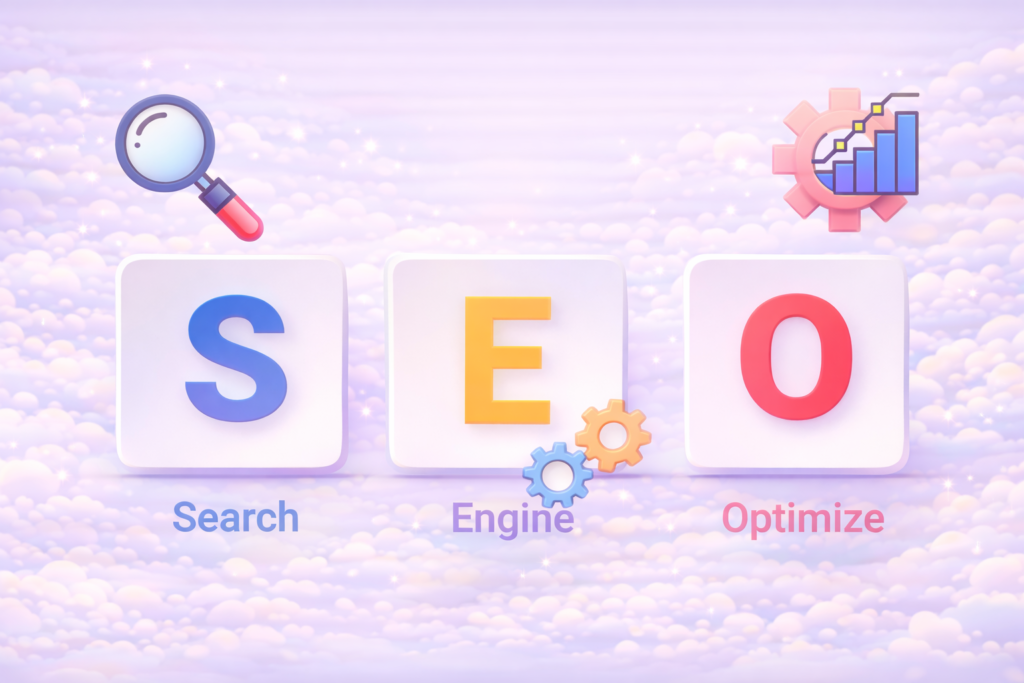
Search engine optimisation (also known as SEO) is the determining factor when it comes to being in pole position.
Despite what you might think, it isn’t some secret recipe nonsense. As far as we know, there isn’t a secret sauce, just practical methods that have evolved over the past 30 years.
If you want to learn a bit more about increasing a business’s online visibility, then you’re in the right place.
In this article, I’m going to tell you all about how SEO can connect any business with the people searching for their products.
A New Kind of Visibility
Being ‘visible’ means a lot more than it used to. Sure, shops still benefit from having an attractive window display, but their online presences will now play an equally (if not more) important role.
When customers search online for a product or service, they are shown a highly curated list of options; being included in that list is the modern-day equivalent of being on the busiest street in town.
To break it down, SEO is all about synchronising a business’s online presence with what customers are actually searching for.
To do this, we need to understand the behaviour behind searches and make sure that a website communicates clearly to and is clearly identifiable by customers and search engines. No tricks or shortcuts are necessary – just plain old optimisation.
The Digital First Impression
Since the dawn of the digital revolution, consumer behaviour has changed massively. Back in the day, if I wanted to go shopping nearby, I’d have to hop in my car, try to find a car park in London, then walk in the cold for about twenty minutes before finally finding the shop I was looking for.
But now? More often than not, modern consumers form some form of impression online first. They’ll often browse a website, check reviews, look it up on socials, or even watch a video.
This digital first impression will often colour their initial opinion of a business and establish if they visit in person or try somewhere else instead.
So how does SEO influence this? Well, a business that is ranked right at the top of the search engine results page (or SERP) feels more trustworthy.
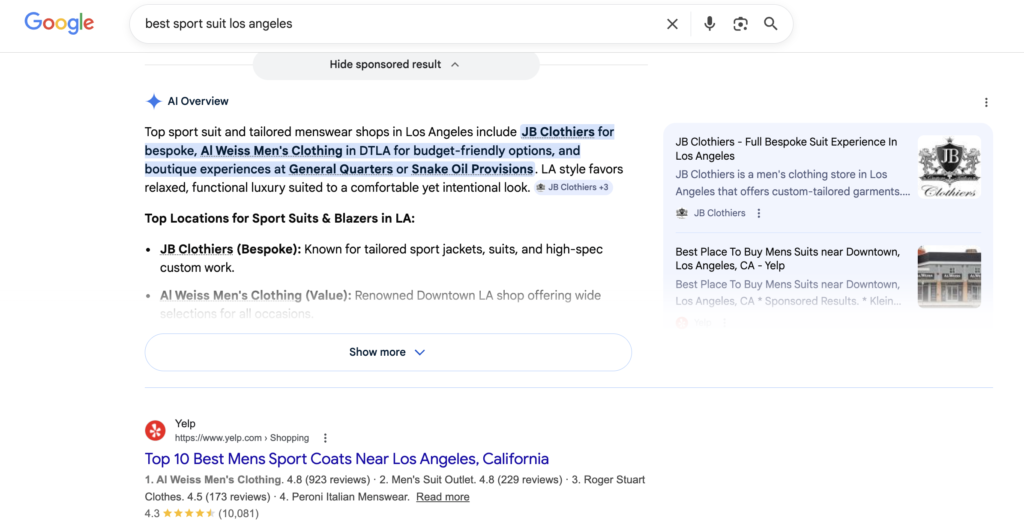
A website that loads quickly and communicates a clear message exudes credibility and confidence. At the opposite end of the spectrum, a sluggish website that’s dated will make potential customers (and search engines) run for the hills. That’s why SEO, like its other brothers and sisters in the marketing family, is about sculpting brand perception.
Local SEO
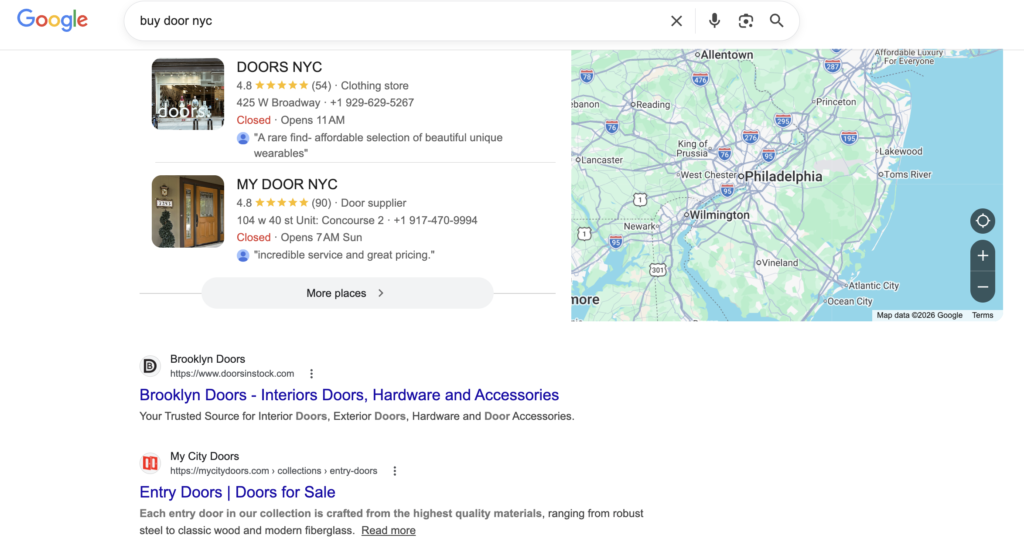
Obviously, there are plenty of businesses out there with real-world locations. For them, local SEO combines their online and offline worlds, making sure that when people search for a certain good or service nearby, the most relevant businesses will appear in the results.
Again, doing this doesn’t involve any so-called ‘black hat’ tricks (as far as I know). It’s actually quite mundane.
A business that wants to rank needs to highly update its ‘Google My Business’ page to ensure that it has accurate listings, encourages reviews and other engagement, and provides plenty of information, like opening hours and address.
Sure, this might seem fairly obvious, but a: you would be surprised how many people fall at this first hurdle, and b: these factors make a huge difference when a customer is deciding where to go.
Imagine you’re looking for a café, and find a result that has clear photos, accurate hours, and a five-star rating based on 50 reviews. Pretty good, right?
Well, now compare that to a result that’s a bit lower down on the SERP. It doesn’t include its opening hours and hardly any reviews, though they are mostly positive. The decision is obvious, right? Even though option B might well make a better coffee than option A.
Understanding Search Intent
Not all searches are created equal. There are plenty of people searching with the intent to part with their hard-earned cash, and that’s great. But loads of other people are searching for completely different reasons. Some are searching for research, while others are comparing options. At its best, SEO can align with these different types of search intent.
Let’s say, for example, someone searches for “fuse box not working”. They are probably looking for advice and potential solutions. But if someone searches ‘electrician near me’, they are ready to hire help. If a business can recognise the difference between these searches, it can optimise its website’s content to meet the demand at every stage.
With this strategy, a business can build a more complete online presence. Informational content can attract visitors who are earlier on in their buyer’s journey, while service pages are optimised for people who are ready to buy.
Your Content Framework
Content is sort of like a fuel for SEO. The most effective content is material that sticks to the EEAT framework, which stands for experience, expertise, authoritativeness, and trustworthiness.
- Experience: Having experience with the subject matter.
- Expertise: Highlights subject matter knowledge, credentials, or qualifications.
- Authoritativeness: The content creator/website is recognised as a reputable source in their subject area.
- Trustworthiness: Ensures content is honest and accurate.
A business’s content strategy can include blogs, guides, service descriptions, or infographics. A bakery, for example, might post recipes or a blog about choosing the perfect loaf.
This content can improve rankings, but it will also position the business as being knowledgeable and well-established. Browsers who find the site and think that the information is useful are far more likely to
This kind of content does more than improve rankings. It positions a business as knowledgeable and approachable.
Visitors who find useful information are more likely to trust the source and return later. On top of that, if a site’s content is good, then people are going to spend more time on the site – something that search engines can reward.
Backlinks
Backlinks are the backbone of any off-page SEO strategy. If you want to increase the authority of your site in Google’s eyes, you can do so by having other, ideally more authoritative websites linking to it. If the links are from websites that are of a similar niche or topic, their relevance can help to boost your topical authority – to check this, try using Majestic’s Trust Flow.
But not all links are great. A ‘nofollow’ link doesn’t pass on any authority with the link, while a ‘follow’ link does just that. Furthermore, links from irrelevant, low authority websites can sometimes do more harm than good – especially if they come from spammy PBNs (private blog networks).
Mobile Searchers vs. Desktop Searchers
Mobile has changed a lot over the past few years. Not only has it become the dominant mode of web browsing for most people, but it’s also changed how people use search engines.
In the olden days, searches on desktops were often broader and more strategic; in other words, they were planning for later. Now, with smartphones, people are searching with immediate intent. They want directions now. They want to find a café now. They need to know how to change a tyre now.
Reviews are Social Proof
Reviews play a monumental role in how people make decisions nowadays. That’s because they’re a form of social proof, offering opinions from other customers and evidence. A business that has consistently positive feedback will always appear more reliable and appealing.
Search engines factor reviews into local rankings, which means that they influence both ranking and perceptions. Getting satisfied customers to leave reviews can often have a noticeable impact – especially a steady amount over time.
Responding to feedback is also important. It shows users that you are attentive and promotes further engagement, which search engines will notice. Even short replies can make a difference, especially if they read as authentic and address genuine concerns.
Technical Foundations
Under the hood, technical SEO is all about how a website functions. This applies to load times, how a site runs, how it is structured, and how easy it is for search engines to read the content.
A website that loads quickly will almost always be better for engagement, and clear navigation will help visitors find what they need. Certain specifics to do with the coding itself can also affect the search engine’s ability to access the content. JavaScript, for example, is notorious for making a page harder to crawl, which can lead to the page either being indexed later or, in some cases, not being indexed at all.
Crawling and Indexing
Speaking of – what do we mean by crawling and indexing? Well, put simply, ‘crawling’ refers to the way in which a search engine ‘reads’ a page. Basically, Google and other search engines send out bots that scrape the far corners of the internet and find as many sites and pages as possible. These bots are known as crawlers. They will then analyse the page’s content, images, meta tags, and code to understand the page’s purpose and topic.
These crawlers then take the information from the page and send it back to the mothership – Google, for example, where it is stored in a database, also known as the ‘index’. Imagine an enormous library, made up of every crawlable page on the internet.
Consistency Across Channels
Now, back to the more practical side of things. Typically, a business’s online presence is usually made up of multiple channels: a website and social media accounts are pretty much essential in today’s digital landscape, and online directories are also popular as they help increase visibility to new customers.
Consistency across all of these channels is an absolute must. Information that might seem fairly obvious, like contact details, branding, and messaging, should all line up. That way, a business will create a cohesive experience for its customers and encourage trust. If there are any discrepancies, like a company’s Facebook profile having a different logo from the LinkedIn account, customers might get confused.
SEO benefits from this consistency, too. Search engines have different ways of verifying information, and if it aligns across multiple platforms, it will strengthen credibility.
Analytics and Adaptation
One of the best things about digital marketing in comparison to its traditional type is the ability to precisely measure performance. Analytics tools, like GA4, can show us how people interact with a website, which in turn can reveal flaws, recurring patterns, and opportunities.
A company can clearly see which pages get the most traffic, how users are navigating the site, and which landing pages have the highest bounce rate. This information can then be taken and used to inform improvements, like updating content and adjusting the layout.
By analysing how users behave, businesses can tweak and perfect their sites over time to create the optimal experience. Even when behaviours change, search engine updates roll out, they can analyse the impact and adjust accordingly.
Creativity Within Constraints
Yes, SEO definitely has clear guidelines and best practices, but that doesn’t mean that there’s no room for creativity. In such a competitive environment, it can often give you the edge.
This might mean that you present your site’s information in a unique way, use a more irreverent tone, or explore niche topics. Injecting a bit more personality will make your content more engaging and linger in customers’ minds for longer.
Creativity also helps businesses stand out in crowded search results. When multiple options appear similar, a fresh perspective can capture attention.
Final Thoughts
The ways in which customers engage with businesses have changed, and there’s no going back. How we discover new businesses, verify trust and quality, and even interact with them has transformed to maximise convenience for the customer.
What was once a simple storefront has now become a sprawling web that connects digital spaces to physical customers, and it’s all brought together by good SEO.
In case you haven’t quite got the memo yet, SEO isn’t about giving companies a one-time upgrade to their digital platforms that’ll give them a permanent performance boost.
It’s all about using analytics to guide consistent, razor-sharp improvements that often centre on relevance, usability, and trust, to gradually strengthen a company’s location on the most popular digital high street in the world – the search engine results page.
In the world of 2026, where attention spans are microscopic and options are infinite, visibility is essential for survival. SEO is all about making sure that your business is a part of the conversation.