
Most brands still believe that virality is random. They assume it depends on trends, trending sounds, or simply luck. This belief feels logical because social media often looks chaotic from the outside.
However, after working with short-form content for over 5 years (both for my own platforms and for clients across different industries), I have learned that virality is not random at all. It is structured, and most importantly, it is behavioral engineering.
Recent HubSpot data shows that short-form video currently delivers the highest ROI among all content formats, and over 90% of marketers who use it plan to maintain or increase their investment. Businesses are allocating more budget to this format because it consistently drives reach, engagement, and conversions.
But this creates a deeper question: if short-form video generates the highest return, and if nearly every brand is investing in it, why do so many companies still fail to achieve consistent results?
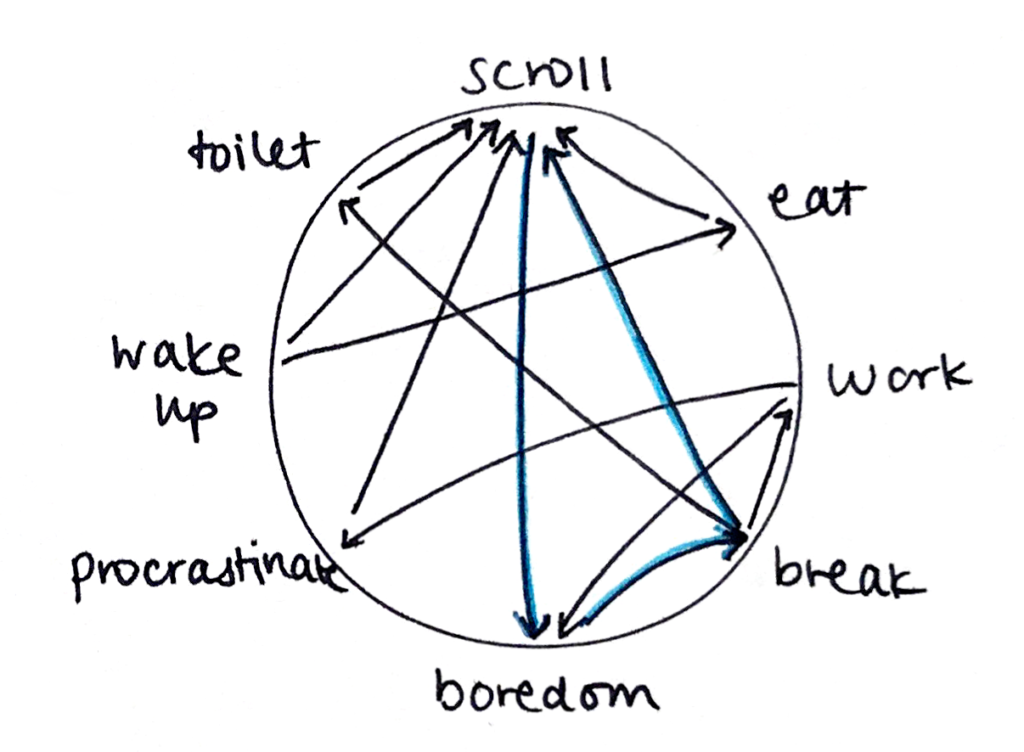
From my own experience, the issue is not creativity. Many brands think that platforms promote content based on quality. In reality, short-form platforms operate as large-scale behavioral testing systems.
Algorithms do not “push” content, they evaluate audience reactions.
They do not reward production value, they measure attention patterns. They do not prioritize brand identity, they scale predictable engagement signals.
Once you understand this shift, virality stops looking like luck and starts looking like structure. And that leads to the next logical question. If algorithms are not promoting content but testing behavior instead, what exactly are they measuring, and why do most brands misread those signals?
How do short-form algorithms actually work?
Before we analyze distribution phases or engagement metrics, we need to step back and understand something more fundamental. Short-form platforms are not content platforms, they are attention businesses.
TikTok, Instagram Reels, and YouTube Shorts do not earn money from creativity. They earn money from time spent inside the app. The longer users stay, the more advertising inventory the platform can sell.
TikTok’s algorithm, in particular, is heavily driven by watch time. If you upload a 30-second video and most viewers watch even 10 seconds, that already sends a strong signal. It means users are engaged enough to stay for one-third of the content. The platform interprets this as sustained attention.
And attention is revenue. Platforms track screen time and behavioral patterns across demographic groups. That data is presented to advertisers as proof of predictable user engagement. From a business perspective, the algorithm’s primary job is simple: keep people watching.
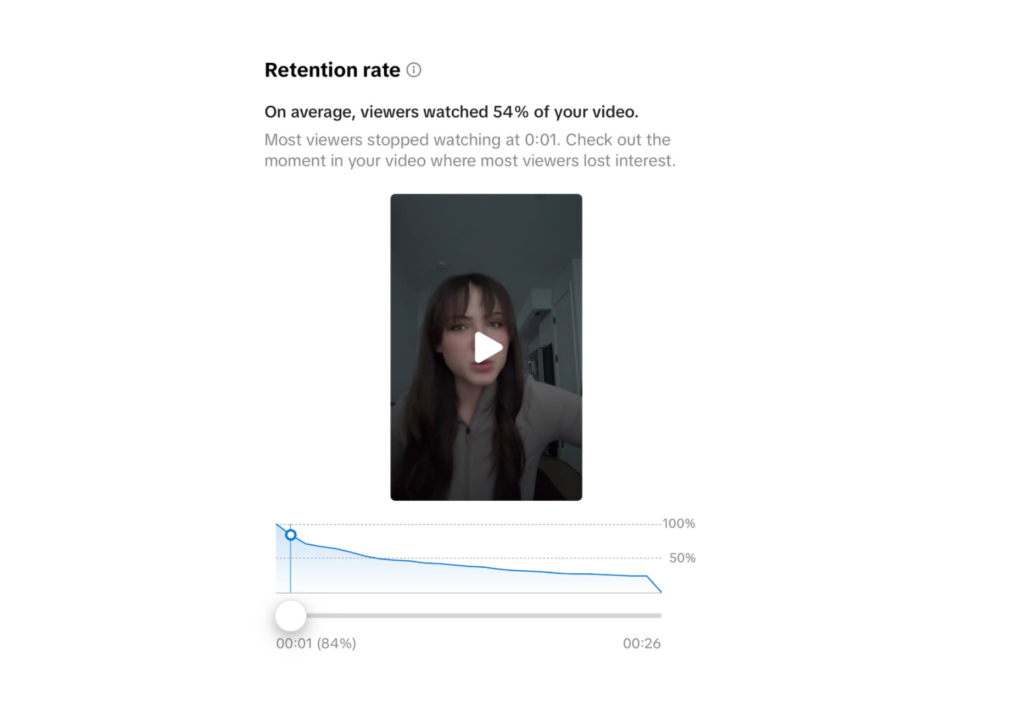
This is why virality is not about trends. It is about retention.
Videos that go viral are not always the most creative. They are the ones people watch until the end, or replay. Looped watch time is especially valuable because it signals high-interest content. When a user watches twice, the system interprets it as behavioral confirmation.
Interestingly, longer videos can sometimes outperform shorter ones. If viewers watch even 20% of a 90-second video, that represents meaningful retention time. The algorithm recognizes this as a strong signal and may amplify it more aggressively than a short video with shallow engagement.
But how does this actually happen?
Short-form platforms operate through progressive testing phases rather than instant mass exposure.
When a video is published, it enters Phase 1 — a small audience test. The platform shows the content to a limited group selected based on topic signals, hashtags, and sometimes existing followers.
This is data collection. If viewers scroll away quickly, the experiment ends. If they stay, watch, or interact, the video advances.
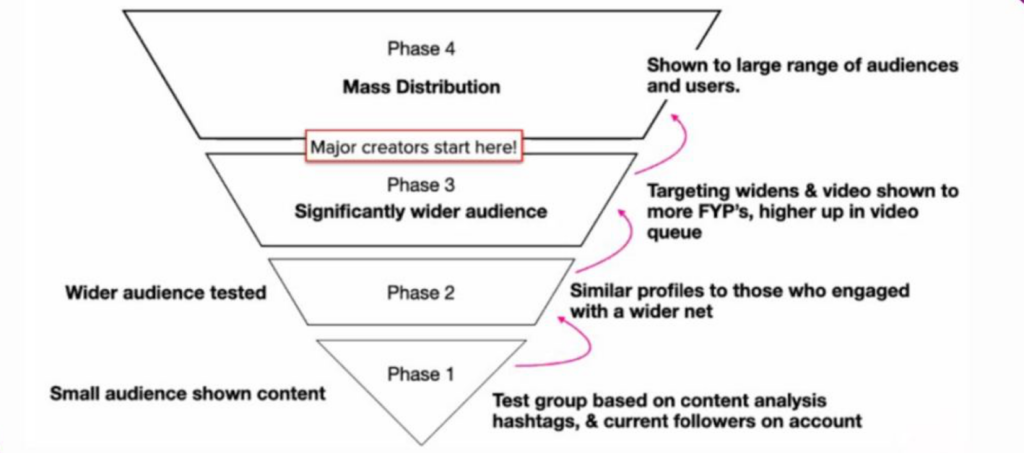
In Phase 2, the audience widens to users who share similar behavioral patterns with those who engaged in the first group. The algorithm begins pattern matching. It is asking whether the attention pattern can repeat at scale.
If performance remains strong, the video moves to Phase 3, where distribution expands significantly. It appears higher in feeds and reaches broader interest clusters. At this stage, the system treats the content as scalable.
Phase 4 is mass distribution. Here, the video reaches large and diverse audience groups. Major creators often enter at higher phases because their accounts already carry historical behavioral trust.
This structure also explains why follower count no longer guarantees reach. Short-form platforms operate on a discovery-first model, not a follower-feed model. Content is primarily distributed through recommendations, not through subscription lists.
A small account with strong retention can outperform a large account with weak engagement because the algorithm prioritizes how users respond, not how many followers exist. HubSpot’s recent social media research shows this shift, emphasizing that watch time and engagement predict reach more accurately than follower count.
What most brands get wrong?
Most brands are optimizing for the wrong things. The first major misunderstanding is the belief that quality equals production value.
Many companies invest heavily in cameras, lighting, animation, and polished editing, assuming that visual perfection guarantees reach. But the algorithm does not “see” cinematic quality. It measures attention stability.
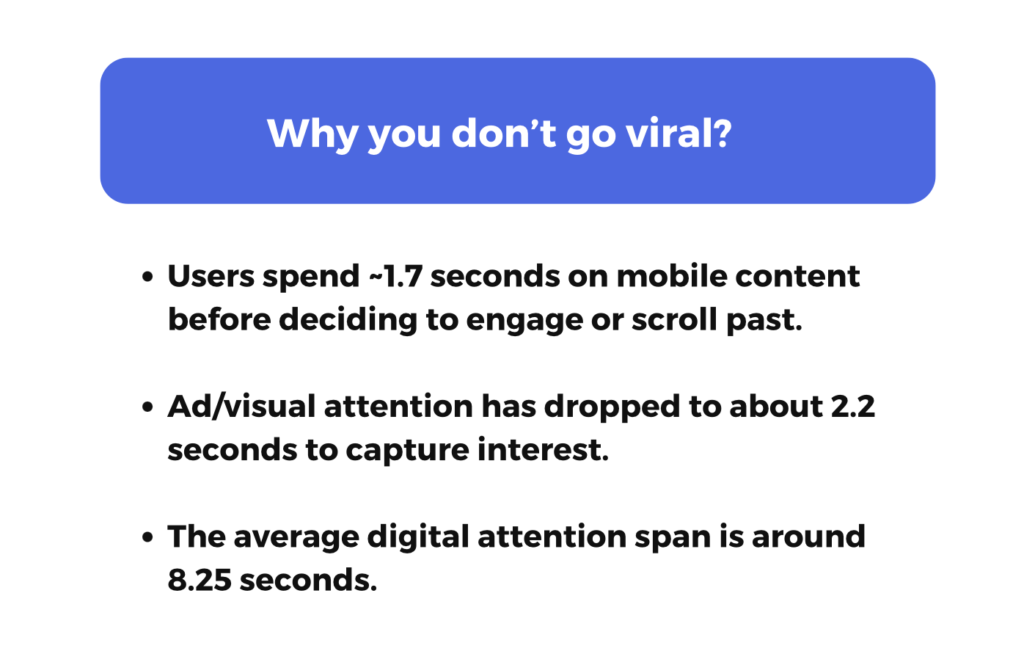
A highly produced video that loses viewers in the first two seconds will fail Phase 1 testing. A simple, direct video with a strong psychological hook can scale dramatically. This is because audiences on short-form platforms are not searching for commercials. They are scrolling for relevance.
And this leads to the second mistake — many brands create advertisements instead of content. The moment a video feels like an ad, users activate what I call an interruption response.
They recognize promotional framing and scroll away before the message even begins. Short-form platforms are built on interruption patterns — users scroll quickly, filtering signals in milliseconds.
The algorithm detects this scroll-trigger behavior instantly. In my work with Morpher Labs, a fintech and trading platform, this insight became critical. Financial products naturally trigger skepticism, fear of loss, and distrust. A traditional promotional approach would have failed immediately in Phase 1 — testing.
Instead of advertising features, we focused on psychological barriers — uncertainty, hesitation, risk perception — and built hooks that addressed these emotions within the first seconds. Rather than presenting the product, we presented the problem.
As a result, the content reached non-followers and expanded organically into new U.S. and international audiences. Growth did not come from paid traffic or promotional messaging. It came from behavioral alignment. Retention improved, engagement deepened, and distribution expanded in consecutive waves. This is the difference between advertising and behavioral content engineering.
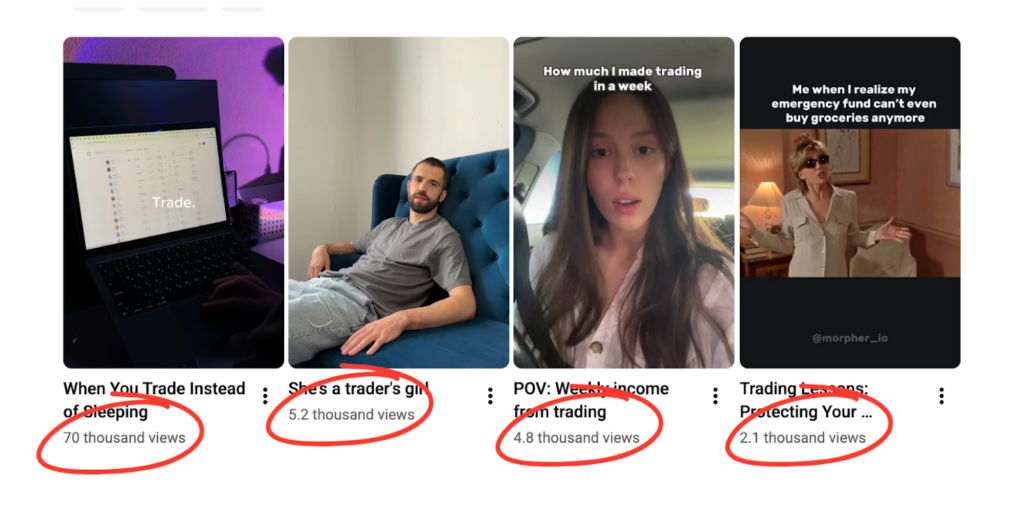
The third mistake is measuring success by views alone. Views create the illusion of performance, but reach without retention is unstable. HubSpot’s data shows that watch time, interaction depth, and share behavior are stronger predictors of sustained reach than raw view counts. Yet many brands still evaluate performance based on surface metrics.
The brands that misunderstand this chase virality as an outcome. The brands that understand it engineer attention as a process. And once we accept that most failures are structural rather than creative, a deeper question emerges. If production is not the answer, and advertising triggers resistance, what actually holds attention in those critical first seconds?
The micro-psychology of attention. Why do people scroll away so quickly?
Research across digital behavior studies shows that the average decision window on social media ranges between 1.7 and 2.5 seconds. In that short moment, the brain decides whether content is worth cognitive investment.
Neuroscientists describe it as a prediction model — the brain constantly anticipates what will happen next. If the opening feels predictable, familiar, or slow, the brain categorizes it as low reward, and scrolling continues.
This is where many brands destroy their own retention. Openings like “Hi guys, today I want to tell you…” immediately signal effort. They delay value. They ask for attention before earning it. In a short-form environment, that delay is fatal. The brain prefers the lowest mental effort for the highest reward.
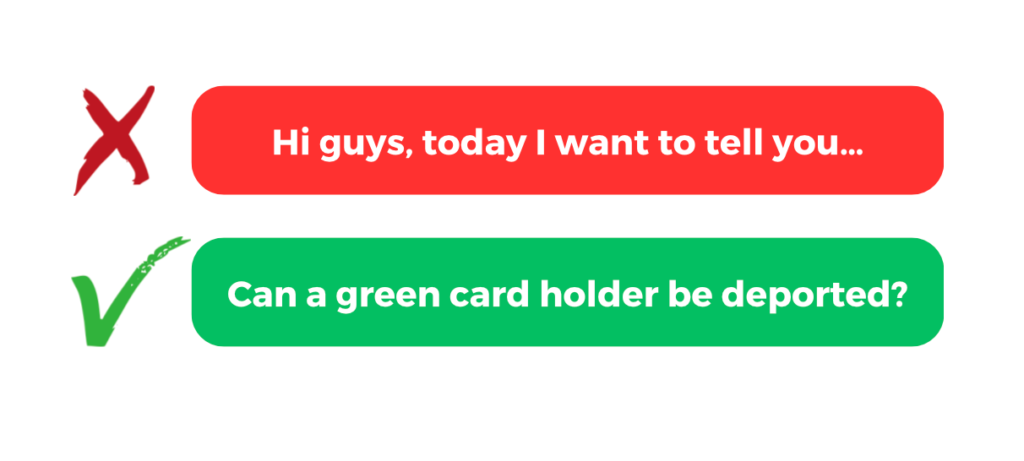
Dopamine plays a role here. Short-form platforms are built on micro-reward loops. When content creates curiosity gaps or emotional tension, the brain anticipates resolution. That anticipation sustains watch time. If the pattern feels repetitive or promotional, the loop breaks. Pattern interruption becomes essential: a strong hook disrupts expectation.
We applied this structure in our work with immigration attorney Olena Manilich. Instead of starting videos with introductions or credentials, we began with emotionally charged, high-relevance hooks addressing real fears: visa denials, green card uncertainty, deportation risks. We removed slow framing and focused on immediate problem recognition.
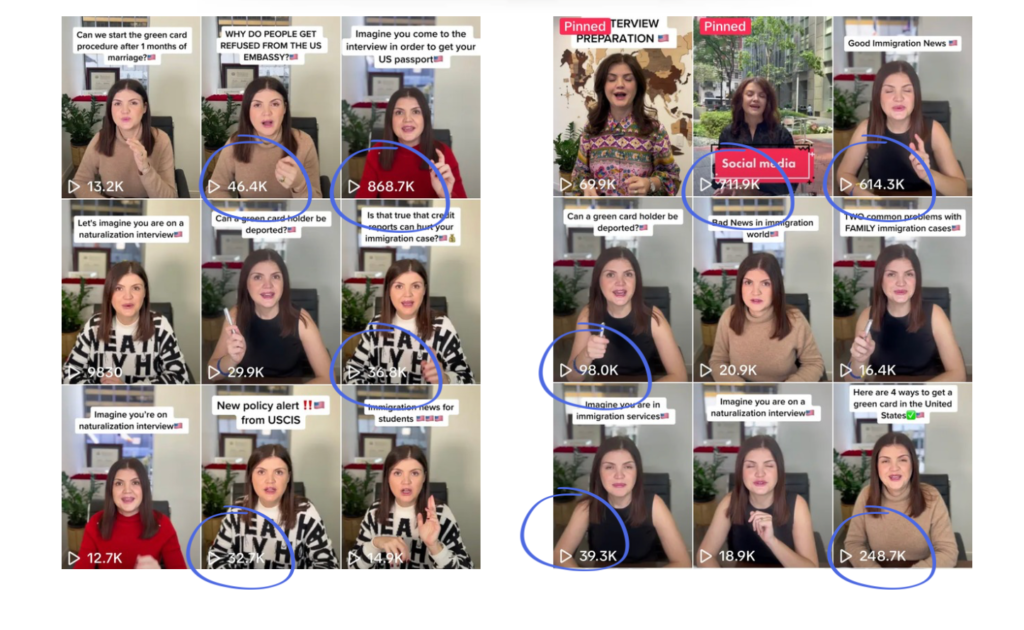
As a result, her TikTok account grew to 135,000 followers in six months without paid advertising. The growth was driven by retention and share behavior, not promotional messaging.
And once we understand how fragile those first two seconds are, the next logical question is: if the opening determines survival, what structure consistently holds attention until the end?
The structural formula of viral short-form content
If attention is fragile and algorithms reward retention, then virality cannot depend on improvisation. It requires structure.
Over time, analyzing hundreds of short-form videos across different industries, I noticed that high-performing content follows a predictable behavioral architecture. It begins with a disruptive hook. This is not a greeting, nor a context.
The hook must interrupt expectation within the first few seconds. It should challenge a belief, present tension, or introduce a risk. Its purpose is not to inform. Its purpose is to stop the scroll.
Once attention pauses, the next step is creating a cognitive gap. The brain needs a reason to continue. A statement without tension closes curiosity.
A statement that raises an incomplete idea opens a loop. This gap activates anticipation, which sustains watch time. Then comes the micro-promise — the viewer must sense that resolution is coming.
After that, a pattern shift maintains engagement. This can be a visual change, tonal shift, unexpected statistic, or reframing of the problem. The brain thrives on variation. Predictability reduces dopamine. The open loop continues tension without full resolution. Viral videos rarely resolve too early. Finally, the reward payoff delivers clarity, insight, or emotional relief. If the payoff feels meaningful, rewatch and share behavior increases.
Virality is behavioral engineering
Virality is the intersection of algorithm mechanics and human psychology. Short-form platforms are built to measure attention.
They scale content that sustains watch behavior, triggers curiosity, and aligns with how the brain processes uncertainty and reward.
At the same time, attention is fragile. People decide within seconds whether something deserves their cognitive energy. That decision is not emotional chaos. It follows the structure: prediction, interruption, anticipation, resolution.
When brands understand both sides (how platforms test content and how humans consume it), growth becomes more stable. HubSpot’s continued data showing short-form video as the highest-ROI format confirms that this environment is not temporary, but structural.
The brands that still chase trends will experience occasional spikes. The brands that study behavior will build systems that outperform spikes. Virality, when understood correctly, is not a moment of luck. It is a repeatable outcome of behavioral alignment.
About the author: Anastasiia Bilous
CEO & Founder of Swipe Agency | Organic Growth Strategist | Short-Form Video Expert
Anastasiia Bilous is a marketing strategist and entrepreneur specializing in organic growth marketing, viral short-form video content, and digital strategy for modern businesses. She is the founder of Swipe Agency, an international Gen-Z marketing agency that helps companies scale their customer base through TikTok, Instagram, and YouTube Shorts — without relying on paid advertising.
With over four years of hands-on experience, Anastasiia has worked with businesses across legal services, fintech, EdTech, AI platforms, and online education. Under her leadership, brands have gained hundreds of thousands of followers and built consistent client acquisition channels through organic social media. One notable case includes scaling a law firm’s TikTok account to over 130,000 followers within six months.
Anastasiia is also an influencer and educational content creator. Her personal social media platforms have grown to more than 250,000 followers, with over 50 million total video views. She actively researches audience behavior, platform algorithms, and content consumption psychology to develop data-driven growth strategies.
Her approach combines marketing strategy, behavioral analytics, and content production to help businesses build structured SMM systems that generate not only reach, but measurable revenue.
How Anastasiia can support readers:
• Explaining how businesses can build stable organic SMM systems without chaotic experimentation
• Sharing practical brand growth case studies through short-form video
• Analyzing platform algorithms and user behavior
• Demonstrating how to convert content into clients and revenue
• Helping brands adapt their marketing to evolving digital trends and AI tools