Digital attention is brutal. You have seconds to stop the scroll and make someone care.
That’s why video is now at the center of marketing. 91% of businesses already use it, and 93% consider it a key part of their strategy.
But here’s the catch: if everyone is using video, basic content won’t stand out.
Short-form platforms like TikTok, Instagram Reels, and YouTube Shorts have raised expectations. People want sharp, cinematic visuals that feel worth their time.
That’s where VFX tools enter the stage.
A few years ago, creating that level of quality required studio budgets. Now, that barrier is gone. As the industry evolves, so does the VFX software market, with tools becoming more accessible and easier to use.
With that said, let’s meet the best VFX software tools out there. Yes, the ones that are worth your time.
Why VFX is Becoming Important for Marketing Right Now?
Let’s be real for a second: Video is no longer the advantage; everyone is doing it.
The problem now is this: most content looks the same. Same edits, formats, and same overall feel. So people just keep scrolling.
And that’s exactly where things start to break.
If your video doesn’t catch attention in the first few seconds, it doesn’t matter how good your message is. No one sticks around to see it.
This is where VFX starts pulling weight.
We’re not talking about going full Hollywood production. Even small touches like motion graphics, clean compositing, or light animation can make your content feel more dynamic and harder to ignore.
And this isn’t just a creative opinion. The data backs it up:
- 4 in 5 brands using immersive content report improved campaign performance. (Source: https://innomate.ar/fooh-as-storytelling-turning-cities-into-narrative-canvases/)
- According to Wyzowl, live-action still leads at 51%, but animated video is already second at 23%, and that heavily relies on VFX tools.
- 89% of people say video quality affects how much they trust a brand, as Wyzowl also reports.
- Videos with visual effects keep people watching longer and increase purchase intent by 9% to 12%.
So yes, better visuals help you stop the scroll. They keep attention. And they make your brand feel more legit.
Now, to be fair, not every campaign needs heavy 3D or complex simulation work. Sometimes simple edits get the job done.
But if you’re competing in crowded feeds, visual quality starts to matter a lot more than most teams expect.
And that’s why VFX is quickly becoming part of the core workflow.
5 VFX Software Tools Every Digital Marketer Should Know
So, if VFX is starting to matter more, the next question is simple:
Which tools are actually worth your time?
You don’t need a full studio setup. But you do need the right mix of tools to handle everything from motion graphics to 3D and compositing.
Let’s break down the ones that give you the most flexibility as a marketer.
1. Adobe After Effects
If you’ve worked in video before, you’ve probably heard of Adobe After Effects. It’s one of the most used tools for motion graphics and visual effects, especially in professional workflows.
For marketers, it covers a lot of ground. You can handle compositing, motion tracking, rotoscoping, and animation all in one place. That means you can take real footage and layer in effects, text, or graphics that actually feel integrated, not slapped on.
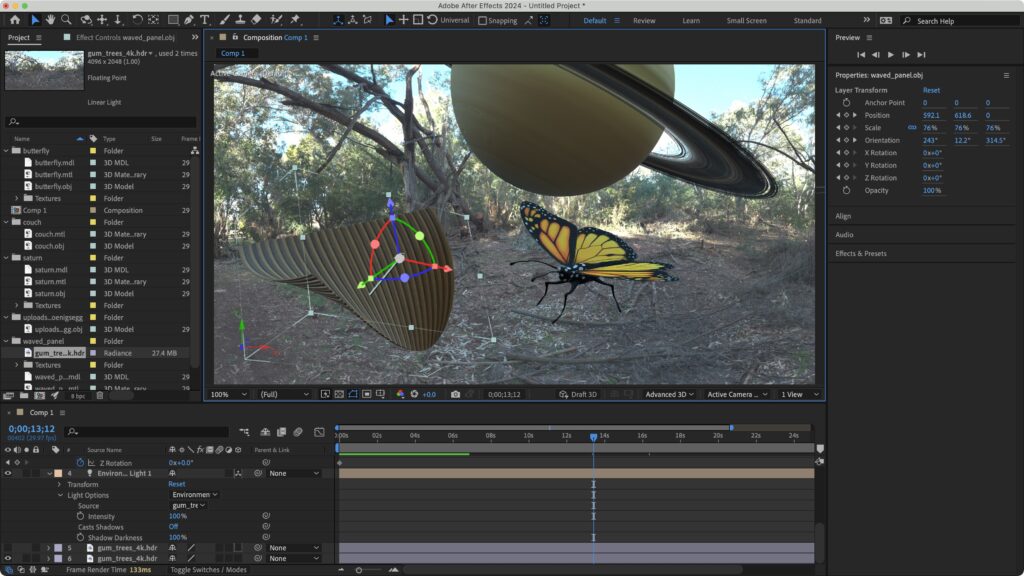
Another big plus is how well it fits into the Adobe ecosystem. It connects smoothly with Premiere Pro and Photoshop, which makes your workflow a lot faster if you’re already using those tools.
Then there’s the plugin ecosystem. It’s huge. You can create everything from 3D-style titles and particle effects to animated infographics without building everything from scratch.
Now, let’s be honest. This isn’t the easiest tool to pick up.
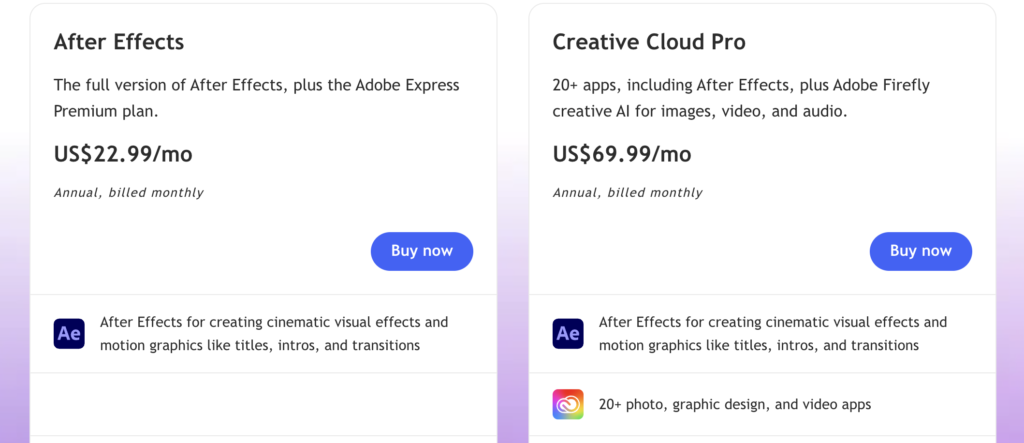
After Effects uses a mix of timeline and node-based logic, which can feel overwhelming at first. There’s a learning curve, and it takes time to get comfortable. On top of that, it’s part of the Adobe Creative Cloud subscription so that that cost can add up depending on your setup.
Still, if you’re aiming for high-end, polished content, it’s hard to beat.
You can use it to:
- Create product launch videos.
- Build branded intros and outros.
- Animate social ads with text and effects.
- Produce clean, professional explainers.
If visual quality is a priority, this is one of the strongest tools you can have in your stack.
2. Blender
Blender is a different beast.
It’s a free, open-source 3D suite that covers pretty much the entire workflow. We’re talking modeling, rigging, animation, simulation, rendering, compositing, and motion tracking.
Yes, all of that in one tool.
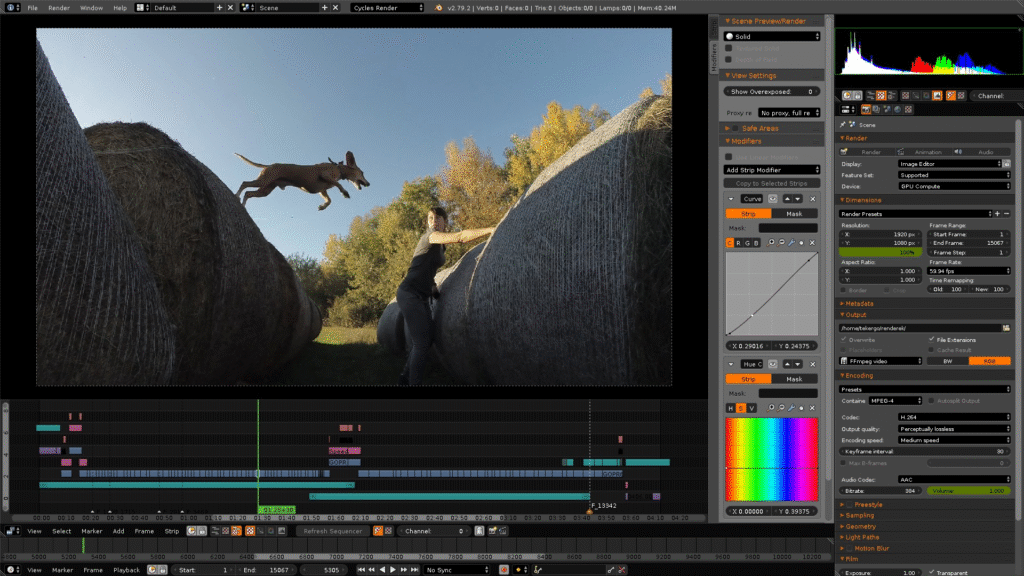
A lot of people associate Blender with indie creators or hobbyists. But in reality, it’s fully capable of producing high-end visuals if you know how to use it.
For marketers, this opens up a lot of possibilities.
You can create 3D product visualizations, animated logos, or even full scenes for brand storytelling. It also works well if you’re experimenting with AR or more immersive formats.
Its compositing tools are solid, too, so you can combine 3D elements with real footage and make everything feel cohesive.
Now, same as After Effects, there’s a catch.
Blender isn’t easy to learn. The interface and depth can be intimidating at first. But the difference is, you’re not paying for it. And the community around it is massive, with tons of tutorials and resources.
If you’re willing to invest the time, the payoff is huge.
You can use Blender to:
- Create realistic 3D product renders for e-commerce.
- Build immersive animated scenes for campaigns.
- Design interactive assets like AR filters.
- Produce custom visuals without relying on stock.
For teams that want full control over their visuals without a big budget, Blender is one of the most powerful options out there.
3. HitFilm
HitFilm sits in a sweet spot between video editing and VFX.
It combines a fairly intuitive editor with a solid set of compositing and visual effects tools. That makes it a strong option if you don’t want to jump between multiple apps just to get things done.
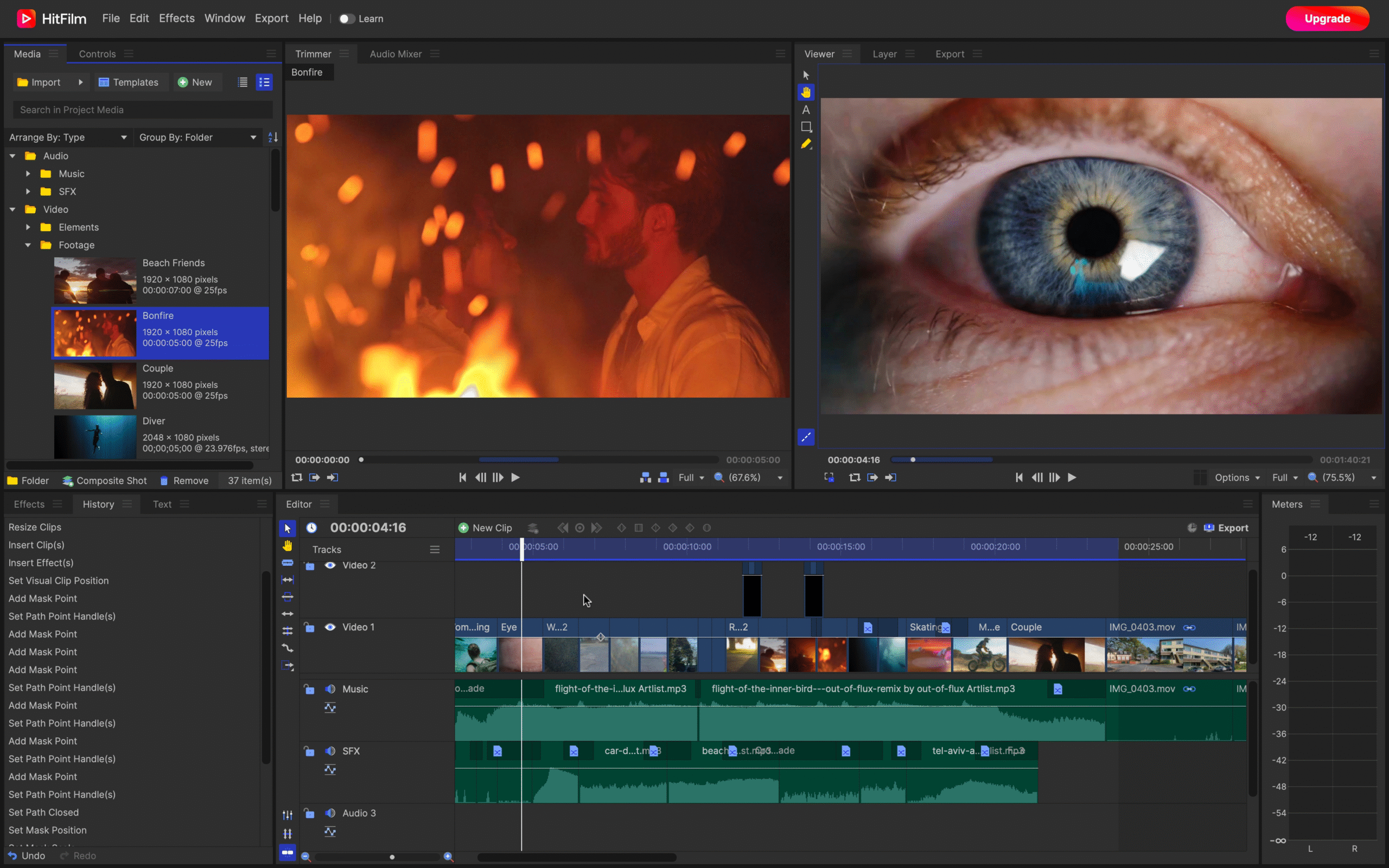
For marketers, it covers the essentials. You get color grading, green screen keying, 3D compositing, and a large library of built-in effects. Enough to create polished content without overcomplicating your workflow.
And that’s one of its biggest advantages.
You can edit and add effects in the same environment, which speeds things up a lot. No back-and-forth between tools. No messy workflow.
Also, the learning curve is much easier compared to tools like After Effects or Blender. You can get decent results pretty fast, even if you’re just starting with VFX.
On the pricing side, it follows a freemium model. HitFilm Express gives you a solid set of features for free, and you can add paid extras if you need more advanced capabilities.
You can use HitFilm to:
- Create dynamic YouTube intros.
- Add cinematic or sci-fi effects to campaign videos.
- Produce short-form content with visual flair for TikTok and Reels.
- Build engaging ads without complex setups.
If you want something practical, flexible, and easier to pick up, this is a great starting point.
4. Runway ML
Runway ML is a completely different approach to VFX.
Instead of traditional tools, this one leans heavily on AI. It’s browser-based, which means no installations, no heavy setup, and almost no technical barrier to entry.
You open it, type what you need, and it does a big part of the work for you.
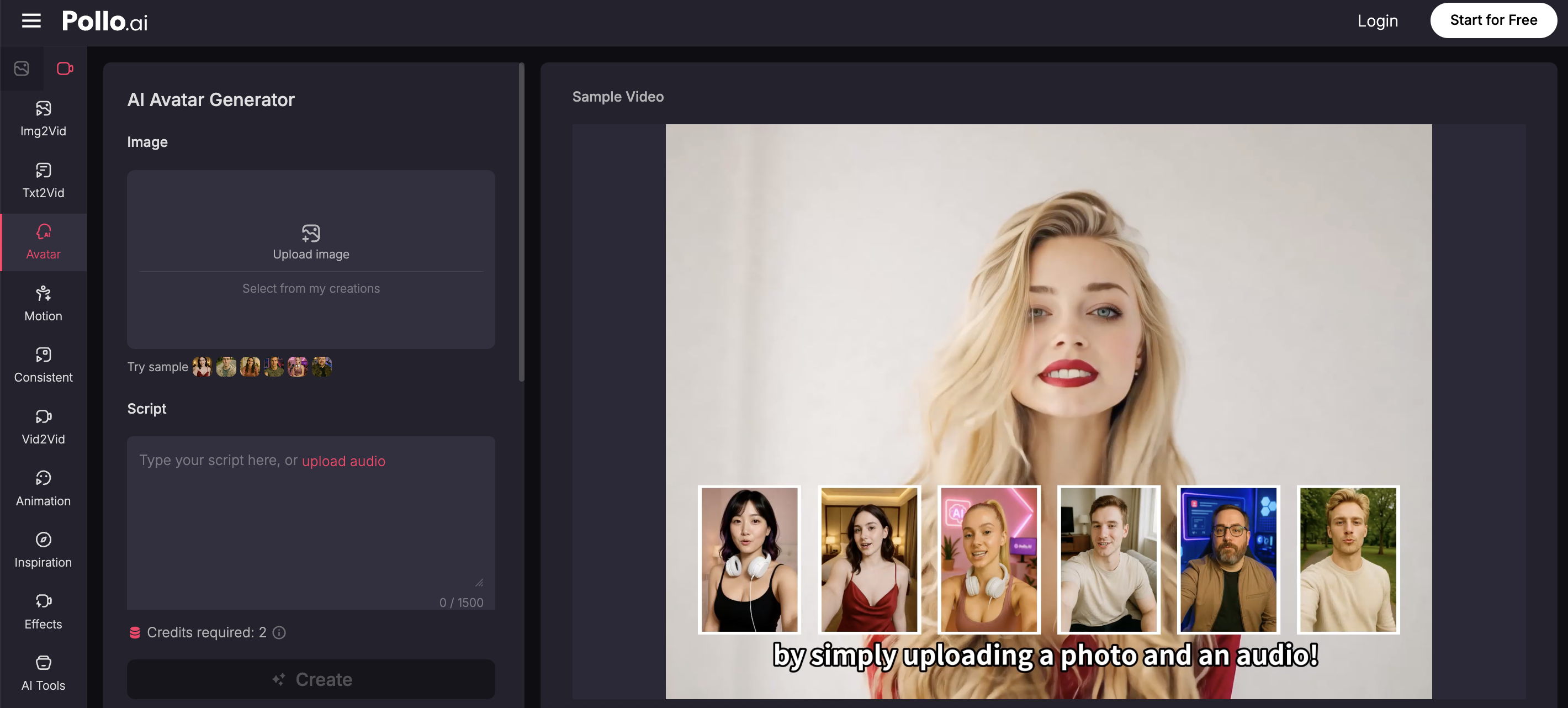
Some of its standout features include background removal, text-to-image, text-to-video, and in-painting tools that let you remove or add objects inside a video. Tasks that used to take hours can now take minutes.
That’s why it’s getting so much attention.
You don’t need advanced editing skills to use it. The interface is simple, and most actions are handled through prompts. That makes it especially useful for marketers who want fast results without diving deep into technical workflows.
Pricing is credit-based. There’s a free tier, and paid plans give you more generations and usage.
Of course, there’s a trade-off.
You don’t get the same level of control as you would with traditional VFX software. But for speed and experimentation, it’s hard to beat.
You can use Runway ML to:
- Generate custom B-roll for campaigns.
- Remove backgrounds from product shots.
- Create AI-generated visuals for ads.
- Test creative ideas quickly without production overhead.
If speed and volume matter more than precision, this tool can save you a lot of time.
5. DaVinci Resolve (Fusion)
DaVinci Resolve is one of the most complete video tools out there.
It’s widely known for its color grading, but it also includes Fusion, a powerful node-based environment for VFX and motion graphics.
That combination is what makes it so valuable.
You can edit, color grade, and build complex visual effects all in one place. No need to jump between different tools if you don’t want to.
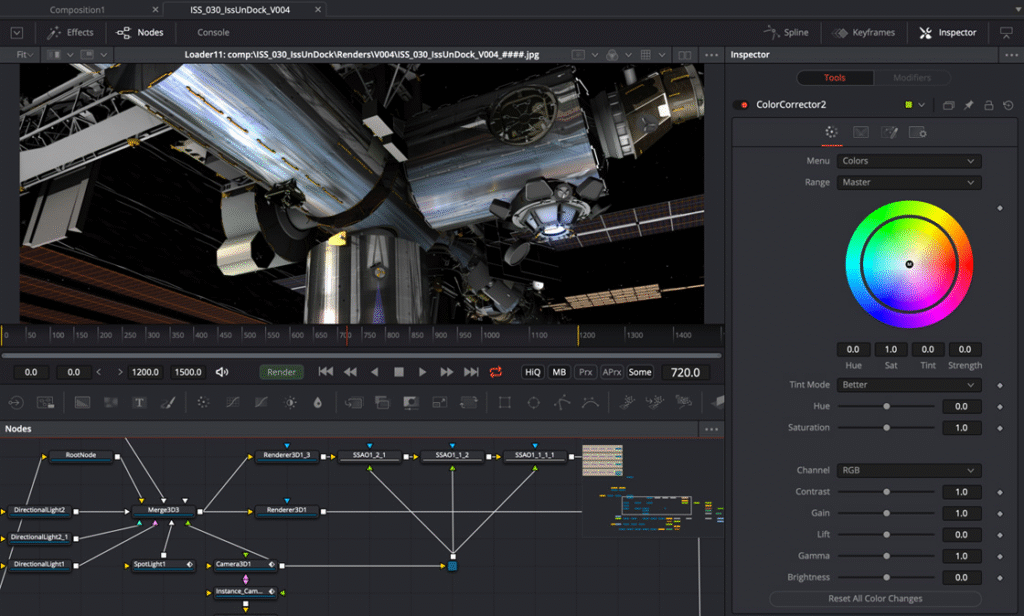
For marketers, this opens the door to high-end production quality. You get advanced compositing, motion tracking, 3D text, and precise control over how every visual element comes together.
Fusion itself is node-based, which gives you a lot of flexibility. You can fine-tune every part of your composition and build more cinematic results.
Now, that control comes with a learning curve.
Fusion can feel complex at first, especially if you’re new to node-based workflows. But for basic editing and color work, the software is surprisingly approachable.
Pricing is another big advantage. The free version is already very powerful and enough for most marketing use cases. The Studio version is a one-time purchase with extra features.
You can use DaVinci Resolve to:
- Apply cinematic color grading to brand videos.
- Create realistic product compositions.
- Build advanced title sequences for campaigns.
- Combine editing and VFX in a single workflow.
If you’re aiming for a more polished, film-level look without paying for multiple tools, this one is hard to ignore.
How Digital Marketers Can Maximise ROI From VFX Tools
Using VFX tools isn’t just about making content look impressive. If it doesn’t translate into performance, it’s just extra work.
The key is being intentional with how you use it.
Start simple. You don’t need to build everything from scratch. Templates, presets, and pre-designed assets can save a lot of time while still giving you a polished result.
Then, think distribution.
One piece of VFX-heavy content shouldn’t live in just one place. The best teams break it down and reuse it across channels. A single campaign video can turn into multiple short clips, social posts, GIFs, and even website visuals.
That’s where ROI really starts to compound.
Here are a few ways to get more out of your VFX workflow:
- Repurpose long-form videos into short-form content for TikTok, Reels, and ads.
- Use templates and presets to speed up production without sacrificing quality.
- Keep your workflow organized with cloud-based collaboration tools.
- Align visuals with your brand message, not just aesthetics.
That last one matters more than it seems.
It’s easy to overdo effects and lose the point of the content. VFX should support your message, not compete with it.
Get that balance right, and you’re not just creating content. You’re creating assets that keep delivering value across multiple touchpoints.
What’s the Future of VFX in Marketing?
VFX is moving fast. And it’s not just about better visuals anymore.
It’s about making content more interactive, more personalized, and more immersive.
AI is a big driver here.
Tools powered by AI are speeding up production in a way that wasn’t possible before. Tasks that used to take hours, or even days, can now be done in minutes. That means smaller teams can produce high-quality content without relying on massive budgets.
But there’s more.
We’re starting to see a shift from passive content to interactive experiences.
Instead of just watching a video, users can engage with it. Think virtual showrooms, AR filters, or experiences where people can explore a product before buying it.
Here’s where things are heading:
- More real-time content creation powered by AI tools.
- Increased use of AR and 3D experiences in campaigns.
- Interactive formats like shoppable videos.
- Personalized visual content based on user behavior.
Of course, not every brand needs to jump into all of this right away.
But the direction is clear.
Marketing is moving away from static storytelling and toward experiences people can interact with. The brands that adapt to this shift early will have a clear advantage.
Bottom Line: Start Using VFX Without Overcomplicating Your Workflow
At this point, it’s clear. Video is everywhere, and basic content blends in fast.
VFX is what helps you break that pattern.
You don’t need a full production team or a massive budget to get started. Tools are more accessible, workflows are faster, and even small upgrades in visual quality can make a noticeable difference in how your content performs.
The key is to start with intention.
Pick one or two tools that fit your workflow. Focus on simple improvements like motion graphics, clean compositing, or short-form edits. Then build from there.
Over time, those small upgrades stack up.
Frequently Asked Questions (FAQs)
What is the role of VFX in marketing?
VFX helps enhance video content by adding visual elements that make it more engaging and dynamic. For marketers, it’s a way to improve storytelling, grab attention faster, and make content feel more polished.
It can be as simple as animated text or as advanced as 3D visuals and compositing. The goal is the same: keep people watching and make the message stick.
Do you need advanced skills to use VFX tools for marketing campaigns?
Not necessarily.
Some tools, like Adobe After Effects or Blender, do have a learning curve. But others, especially AI-based platforms, are much easier to use and require little technical experience.
Most marketers start with basic features and build their skills over time. You don’t need to master everything to see results.
Can small businesses benefit from VFX, or is it only for big brands?
Small businesses can absolutely benefit from VFX.
In fact, accessible tools have made it easier than ever to create high-quality visuals without big budgets. Even simple effects can make your content look more professional and help you stand out from competitors.
How much does VFX software typically cost?
It varies a lot. Some tools are completely free, like Blender or the base version of DaVinci Resolve. Others, like Adobe After Effects, work on a subscription model.
There are also freemium and credit-based tools like HitFilm or Runway ML. In most cases, you can start with little to no cost and scale your investment as your needs grow.