
Hybrid work has rapidly shifted from a temporary experiment during the pandemic, to help people to work from home, to a dominant workplace model across the globe.
Today, companies no longer see hybrid work as a short-term solution, but a long-term strategy that helps to encourage flexibility, collaboration, and promote overall satisfaction in the workplace.
According to current research, more than a quarter of employees in the UK are engaged in hybrid work models, with most companies offering hybrid working.
This displays the current, high use and demand of working from home and in the office, and these numbers are only expected to become higher in the future.
Employees themselves clearly value this flexibility, with surveys showing that a significant majority display higher satisfaction and work-life balance when these options are in place.
However, this shift in workplace logistics has brought about new challenges that do not arise in in-person work.
Many organisations now face a disconnect between employees, especially between in-person and online staff, with many teams struggling to maintain a shared culture, effective communication, and efficient collaboration to seamlessly work.
Reconnecting these groups in aims of smoother collaboration and work quality for employers has then become a priority for businesses aiming to thrive in the future of this kind of work environment.
What is hybrid work today in 2026
Defining the modern hybrid work model
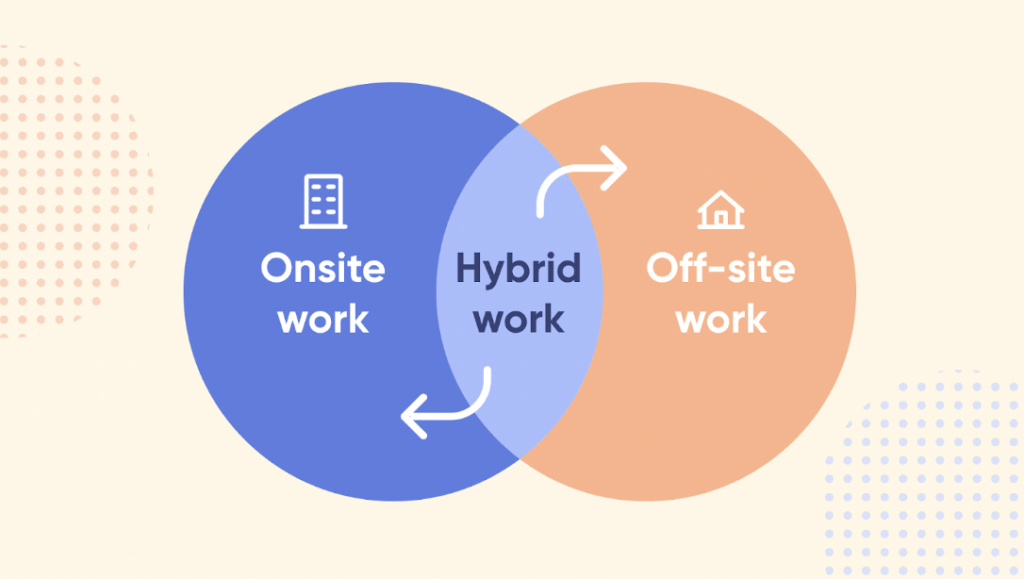
A hybrid work model blends remote work and in-office work. There are different ways that organisations implement this strategy to fit their company culture and their business model.
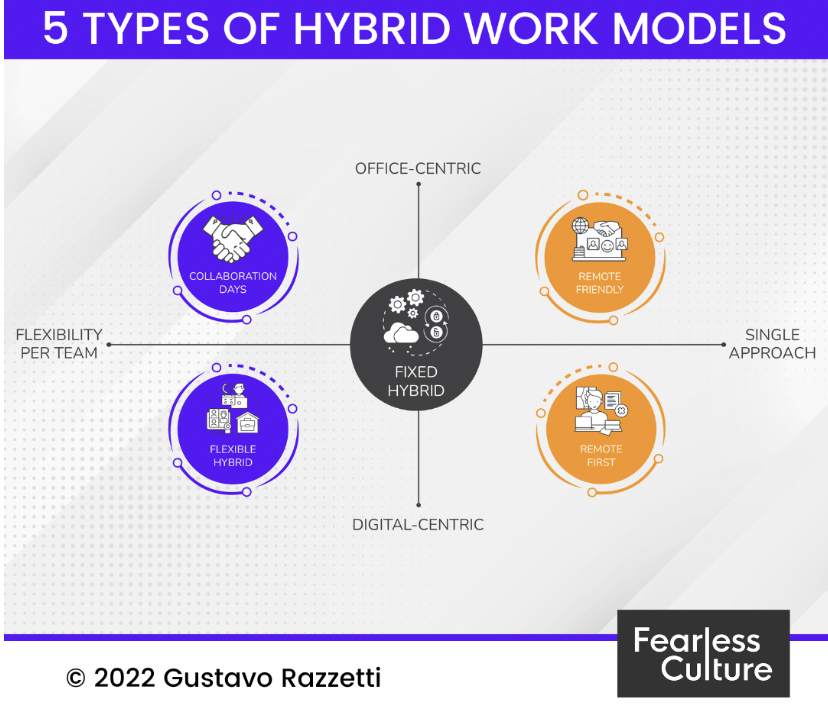
1. Scheduled hybrid
In this type of hybrid work, employees work from the office on designated days such as Tuesdays and Thursdays, and then work remotely from home the rest of the days.
This more structured approach helps teams coordinate in office days whilst allowing them to be flexible, meaning companies can plan meetings and more collaborative tasks for days that all employees are in the office.
2. Flexible hybrid
This more flexible approach gives employees more autonomy, allowing them to choose when and where they work.
This model emphasises individual flexibility and meeting each specific employee’s needs, whilst also appealing to the need for work-life balance.
3. Remote first vs office first approaches
In remote-first hybrid models, remote work is the default, with in-person meetings reserved for specific collaborative events, whereas in office-first models, the office remains the central hub, and remote work is less desired.
Both approaches aim to balance connection with flexibility, depending on the culture within the company and the preference of the employers.
Why is hybrid work here to stay?
The continued use of hybrid work after the pandemic is over displays that it is here to stay, due to its revealed mutual benefits for employees and employers alike.
- Adoption is widespread and stable. Up to 80% of companies worldwide support the model, reflecting its broad and institutional acceptance. This level of adoption signals a structural shift to work that is not temporary.
- Productivity levels hold or improve. At first, there was a lot of scepticism about hybrid work, with many thinking that it would lower productivity; however, studies have shown that hybrid work sees around 19% more productivity, with hybrid workers usually outperforming their office based counter parts.
- Employees prefer hybrid flexibility. Employees consistently report preferring hybrid work due to its better work-life balance and autonomy. As well as these benefits, employees also reported reduced commuting time as a top benefit.
The biggest challenges facing hybrid teams
There are many challenges that face hybrid teams, no matter the hybrid structure.
Communication gaps and information problems
One of the most prominent issues with hybrid work is the emergence of communication gaps between all employees, but mostly between in-office and remote employees.
Whilst tools such as Teams and Google calendars are useful for connecting people, there is still an evident gap.
Unequal access to meetings is a common flaw with hybrid work, with in-person workers gaining access to impromptu meetings and informal discussions, which cannot be accessed by those who are working remotely, creating a divide.
Cultural fragmentation
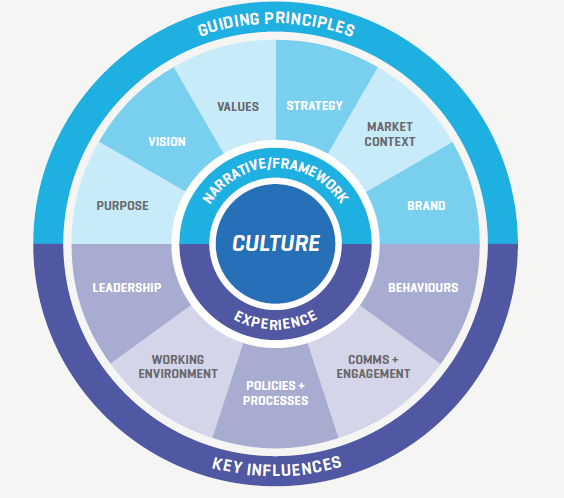
Beyond communication fragmentations, hybrid work can break down well-established organisational cultures if not managed and monitored correctly, resulting in a two-tiered system.
This can result in in-person employees gaining a closer connection to leadership and decision-making, whilst remote workers can feel excluded and kept out of important decisions.
This can lead to tensions between workers as they feel a unified sense of purpose and belonging that can lead to a drop in overall morale and productivity.
Burnout and engagement issues
Employee arrangements can significantly vary depending on the work arrangement.
Although remote and hybrid workers record the higher engagement rates, it can still be difficult to engage due to issues such as isolation and connection, blurred boundaries, and poor access to adequate technology, with 72% of workers reporting exhaustion from hybrid work.
Burnout is also a very prominent issue when working from home. Working from home, some employees can struggle to place boundaries and stop working, leading to fatigue and stress.
Digital burnout can also effect work life balance, with excessive virtual meetings and constant digital presence leading to exhaustion and distraction.
The future of hybrid work: Key trends shaping 2025 and beyond
Outcome-based performance
One of the most significant shifts in the future is moving away from measuring productivity by logging hours or physical presence towards evaluating outcomes and impacts.
Outcome-based performance focuses on clear goals and deliverables to level the playing field when it comes to in-person and remote workers.
This can result in overall higher trust and accountability on both sides, where no one can be favoured based on the location of work, which should be implemented throughout all hybrid work.
AI as a collaboration tool
As artificial intelligence grows and expands, it shows an opportunity to utilise these tools to fix the communication gap issue that is apparent in hybrid work.
Smart meeting summaries can transcribe meetings, highlight key decisions, and assign actions for those who may not be able to attend meetings or in those spur if the moment meetings that may not include remote workers. This is a simple but effective way to bridge the gap between online and offline workers, leading to higher overall satisfaction.
Redesigning the physical office
As the office is used in a different way than how it once was, it’s important that office spaces reflect this. Rather than serving as a space for desk-based work, with individual cubes for working, the office should be seen as a space for collaboration, creativity, and team alignment.
In the future of hybrid work, employees no longer see the office as a place to sit at a desk. Office days are now reserved for brainstorming sessions, team meetings, training, and relationship building, and remote work is reserved for individual work.
This should be reflected through office design, with the office becoming a welcoming utopia, where employees want to be.
How to reconnect remote and in-office teams
There are many methods that companies can use to reduce and eliminate the issues that come with hybrid work, so that companies can retain culture and work ethic whilst using this work model.
Meetings for hybrid equity
Hybrid meetings often fail when they unintentionally assign privilege to those in the room, neglecting those who are working remotely or are not in the office as often.
Therefore, to truly reconnect teams, you must implement rules and systems that ensure that there is equity for all employees.
Remote first meeting ensures that everyone participates on an equal footing, regardless of their location. This involves all individuals, whether they are in the office or not, joining online via Teams to ensure that everyone is on an equal footing.
This is especially useful for those who do not have a scheduled hybrid structure or for those impromptu meetings that could exclude those working from home.
Asynchronous updates are also essential to create hybrid equity. Not all collaberation have to happen live, asynchronous updates such as recorded video briefings, shared documents, and project management tools reduce meeting overload whilst ensuring everyone has access to information.
This can also promote accuracy in the company, as employees and employers can revisit the meetings to ensure the information that they took from them is accurate.
Create shared digital spaces
Hybrid organisations need digital space to replace hallways and conference rooms to continue consistency throughout the company’s communication.
Centralised documentation, such as project hubs or collaboration platforms allow communication, whether formal or informal, so that employees can feel connected and keep continuity and transparency within the company.
This means that everyone can access essential communication threads and essential information, regardless of location.
Any company should set company-wide communications norms to reduce friction and miscommunication.
Ensuring that everyone knows which tools are used for casual discussions and which tools are used for sharing important work. Consistency can sometimes be more important than the tool itself, as inconsistency when it comes to communication can lead to mistakes and tensions across the company when hybrid workers feel out of the loop.
Build intentional team rituals
The hybrid work culture in a team is not curated by accident; it is purposely built through implementations such as team rituals, which benefit the company as a whole, as highly engaged teams are 21% more profitable.
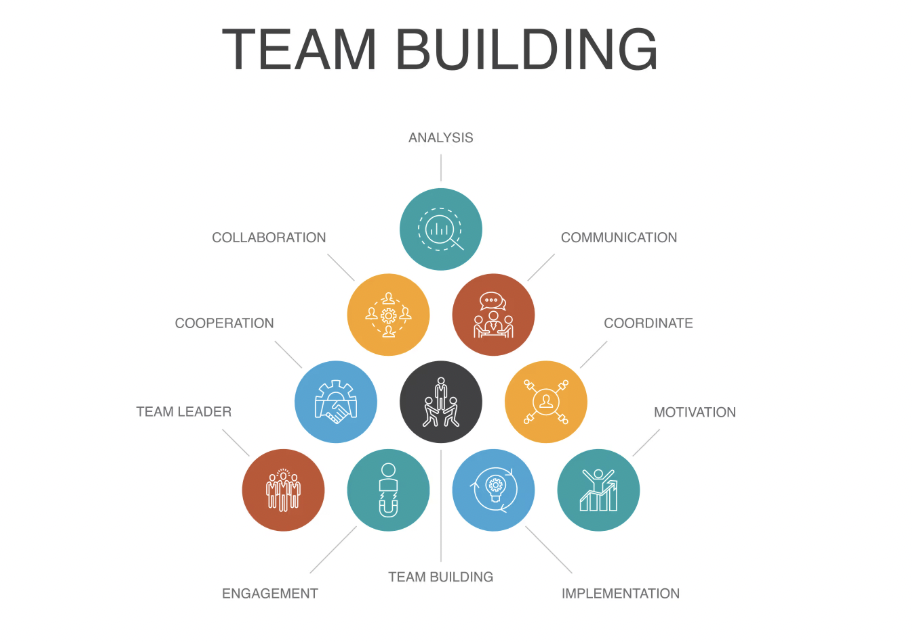
This should still apply in hybrid work, where new strategies should be in place to maintain culture. One of the most important elements of hybrid culture is hybrid onboarding, which involves new employees integrating with those who work remotely and in person.
New hires should have structured touchpoints with both remote and in-person colleagues, clear cultural narratives, and early social interaction as well as task training.
As well as an effective onboarding strategy for new employees, teams should invest in intentional and frequent social events that work across locations or are implemented when employees are all in the office.
This may include virtual coffee chats, quarterly in-person gatherings, and shared recognition moments, to not create forced fun but create mutual connections and reinforce belonging.
Shift in office design
In a hybrid model, individual-focused work often happens at home, where most employees feel that they can work efficiently.
An office that still prioritises rows of assigned desk cells risks becoming obsolete and damaging to company culture, harming connection, collaboration, and overall employee satisfaction.
Instead, companies should redesign places around collaboration office space, with zones, to encourage communication and support the new use for office spaces that is mainly centred around meetings, brainstorming, and workshops. This can be achieved through modular furniture, movable whiteboards, and reconfigurable layouts.
Office design should also expand beyond working spaces to prioritise smart technology in the office for seamless hybrid work, such as high-quality video conferencing rooms, wireless screen sharing, and reliable connectivity, removing the fiction of office and home interaction.
Companies should also ensure that office spaces are enjoyable to be in to boost productivity and satisfaction when they are in the office.
This includes access to coffee, smart lighting that moves with the day, and lift maintenance, so that access to the building is seamless and as enjoyable as possible. Overall, by prioritising office spaces, you can make the most of in-person time to cultivate and grow a hybrid company culture.
What leaders must do next?
Hybrid work is no longer an experiment; it’s an operational model that should be implemented into a strategy to be utilised to boost productivity and company culture.
However, to make it sustainable, leaders must move quickly to make a well-integrated system before it starts to damage company functions. There are a few steps that you must take before you implement hybrid policies.
- The first step is to audit existing hybrid policies by examining how decisions are made, how performance is evaluated, and the access that hybrid employees have to information compared to in-office employees.
- Invest in leadership training that reflects the realities of hybrid work. Managers must have support in building trust and encouraging team learning, not to prioritise in-person workers and unlearn that bias. Without this training, managers may struggle to implement hybrid policies.
- Finally, leaders should redesign collaboration, intentionally aligning meetings, tools, and office spaces to ensure that teams stay connected, engaged, and productive regardless of where work happens.