
Worldwide, the need for hair supplements is rising positively, as it is a factor of growing awareness of hair health and the internet’s influence on consumer behavior.
As the market becomes more successful, users are looking for answers to hair thinning, loss, and scalp health problems.
To become noticeable in a market full of competition, hair supplement brands need to use a content marketing strategy effectively.
This article talks about the brand’s pivotal strategies to gain more visibility, engage the target audience, and raise online sales, thereby resulting in brand loyalty and long-term growth.
These tactics include content creation, SEO, social networking marketing, influencer collaborations, and data analytics.
Understanding the Hair Supplement Market
The hair supplements market, a segment of the overall beauty and wellness industry, is forecasted to expand substantially over the next several years.
One of the major factors contributing to this growth is the increased global awareness of haircare, a growing trend of organic product consumption, and the rising need for hair loss and thinning-related products.
It has been estimated that about 70% of adults will undergo hair thinning or loss by the time they reach 40, and women will account for 40% of that population at the age of 50, which is a strong indication of how common these issues are.
As more consumers are choosing dietary supplements for hair enhancement, companies need to come up with a smart plan of not only advertising their products but also interacting with customers in order to get their trust and therefore have a larger market share.
1. Content Marketing Strategy: Educational and Value-Driven
Creating Relevant and Engaging Content
In the competitive hair supplement market, content marketing remains the key to customer engagement and conversions.
A well-developed plan will not only inform the users but also identify their problems, thus giving the companies an opportunity to position themselves as the leaders of the industry by providing top-notch educational content.
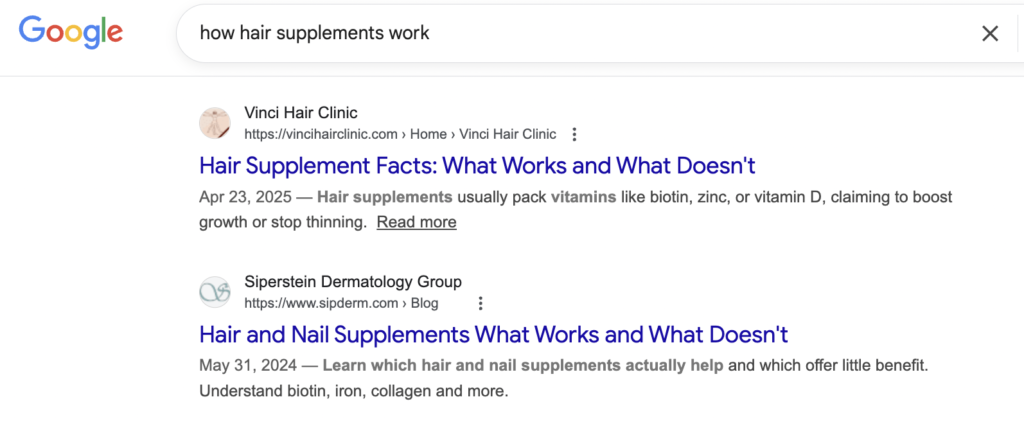
Content ideas for hair supplement brands could include:
- Blog Articles: Compose articles that discuss topics such as the health of hair, the scientific aspect of hair supplements, the most common reasons for hair loss, and tips for hair growth. An additional article may also express an opinion regarding the comparison of different supplement types and their ingredients to the consumers, so that they can make a convenient choice.
- How-To Guides: Detailed instructions or video demonstrations of a daily routine involving the use of hair supplements or how to get healthy hair through diet and lifestyle changes.
- FAQs and Myths vs. Facts: Giving that sort of info, which removes the puzzlements about hair supplements, for example, whether they are efficacious or if they bring about side effects, consequently, facilitating consumers to have the trust that the product is reliable.
Providing Solutions to Common Problems
Trying to find solutions to typical hair troubles is a sure way to garner a highly engaged audience. As an illustration, you may write a blog, make a video, or create an infographic explaining the solution for hair thinning, stress-related hair loss, or dry scalp.
When a brand gets to the consumer’s problem directly, it becomes relevant to those consumers who are looking for hair health improvements.
User-Generated Content (UGC)
The rise of user-generated content is one of the main factors that have contributed to the increased authenticity of brands.
Facilitate customers to express their product experience via writing reviews, giving testimonials, and sharing photos of the stages before and after.
UGC is a kind of social proof that is very beneficial for a brand to create a community of followers.
Due to holding a promotional event on social media or your site, where customers can provide their success stories and experiences.
2. Search Engine Optimization (SEO) to Drive Organic Traffic
Keyword Research and Optimization
The very first element in SEO is finding suitable keywords. Companies must identify the most searched words or phrases related to hair supplements, and then they should use them in their content.
These may be terms like “best hair supplements for hair growth,” “natural hair supplements,” or “how to prevent hair loss”.
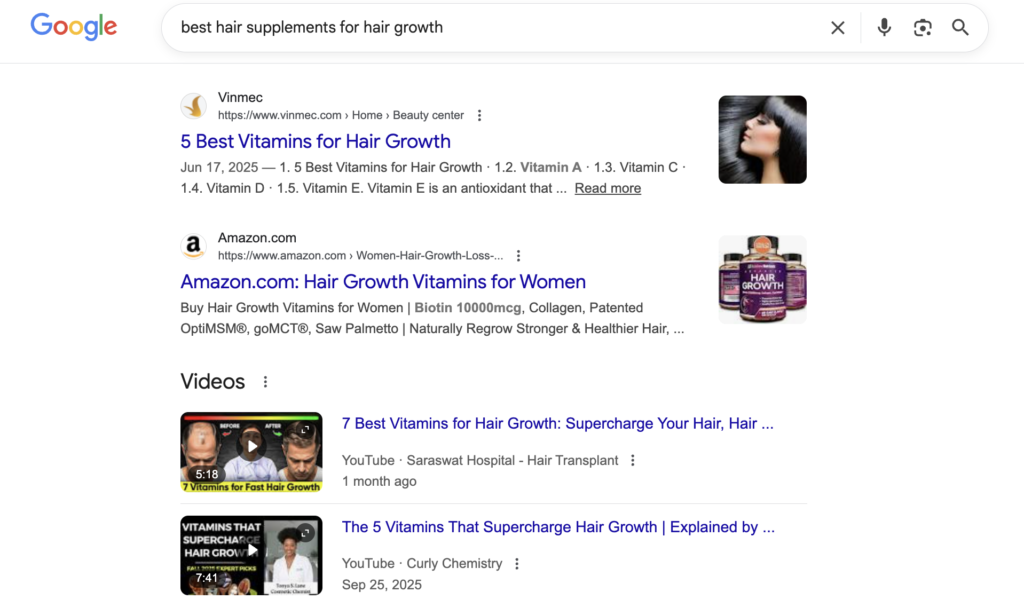
When brands use these keywords in a planned way, they can get a better position in search engine results and, as a result, attract the people who are looking for the solution to their hair problems.
Moreover, long-tail keywords, which are more detailed search queries, can also allow brands to access the small but loyal customer groups.
For example, “hair supplements for thinning hair in women” or “best biotin supplements for hair growth” might have less competition and, hence, it would be easier to get a higher ranking.
On-Page and Off-Page SEO
On-page SEO is all about making each web page of a site rank higher and bring in more relevant visitors. It mainly involves modifying titles of pages, meta descriptions, headers, and content with the use of target keywords.
Besides, making the site mobile-friendly, fast-loading, and offering a user-friendly experience are some of the important elements for SEO success.
Off-page SEO is a series of actions that are performed off-site with the intention of increasing the ranking of the site, e.g, obtaining links from high-quality sites. In short, to be able to rank higher in Google, you can write an informative article for a popular health and wellness blog or work with an influencer who then gives you a link.
3. Social Media Marketing for Brand Engagement
Proper use of social media platforms like Instagram, TikTok, and Facebook would be an absolute necessity for anyone in the hair supplement market to reach potential customers.
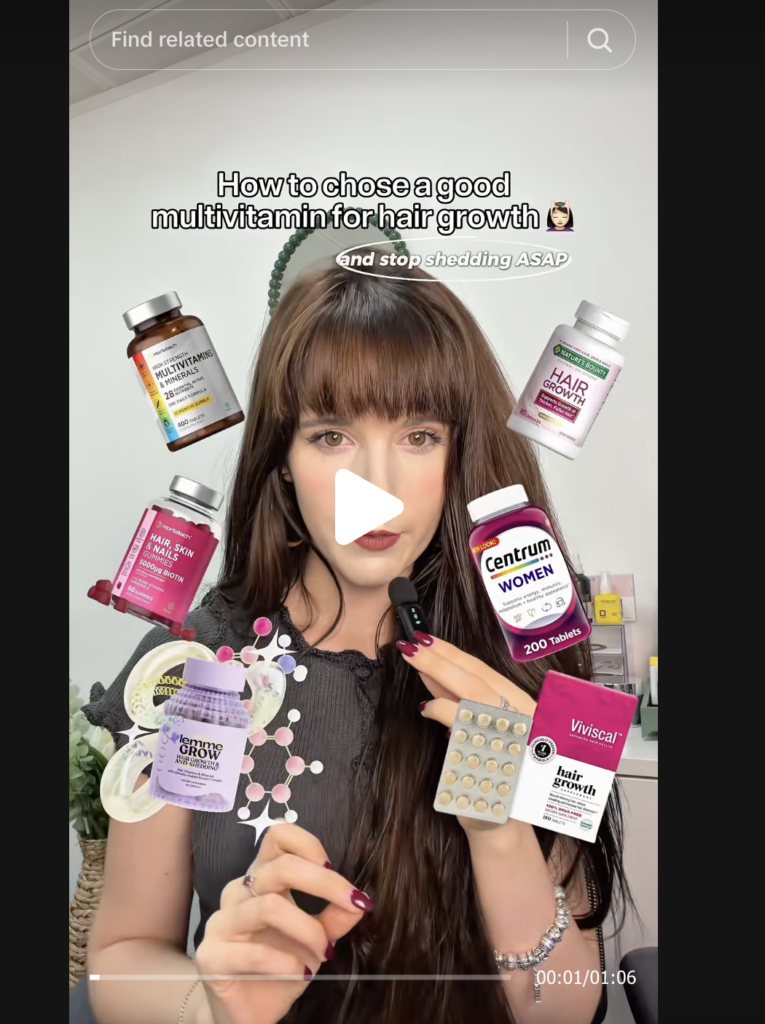
Companies are given a chance to exhibit their products, provide knowledge-sharing content, and even have a one-on-one conversation with their audience through such channels.
Creating a brand community and emotional connections with consumers are some of the social media marketing advantages that make it so effective.
Leveraging Influencer Marketing
Influencer marketing is a powerful weapon that beauty and wellness brands have leveraged to expand their customer base.
Working with influencers who have a devoted audience in the hair care or wellness area can pull a brand out of obscurity and make its name known to a great extent.
Checking whether the influencers possess the same ideals as your brand and their followers are your target audience is a vital thing.
Micro-influencers who have comparatively fewer followers are usually able to maintain a highly engaged audience, and therefore, they are especially effective in gaining trust and increasing sales.
Engaging with Followers
Social media, besides being a channel for promotional posts, is a platform that should be utilized for engagement.
Replies to comments, questions, and polls or contests creation that interaction is prompted are some of the ways to do this.
An online community of people can become loyal and, thus, a source of repeat purchases, which is the power of a strong community network.
Visual Content and Video Marketing
Images work very well for social media, and beauty products are one kind of these very successful items. On top of that, video content has been the most effective way to attract people and improve conversion rates.
So, brands may produce videos showing hair supplement usage, recording customers sharing their experience, or “behind-the-scenes” content that unveils how the supplements are made or how they work.
Short videos on TikTok and Instagram Reels are great for quick and catchy videos, while YouTube is still available for long, informative videos that provide details to the viewers about the science behind hair supplements and their benefits.
4. Data Analytics for Continuous Improvement
A regular performance review of your campaigns through the lens of your content marketing strategy is the first step to getting real results from it.
The data analytics tools are powerful when they enable one to keep track of the essential metrics, such as website traffic, conversion rates, social media engagement rates, and return on investment (ROI) on ad spend.
By identifying the content that the audience loves, which creates the most traffic and sales channels, one can undoubtedly alter the strategy to achieve the highest results.
The adoption of a data-driven approach is like having a continuous unlocking of your marketing potential, with the resulting freedom to invest in the most efficient tactics.
5. Email Marketing for Customer Retention
Email marketing is still one of the cheapest and most effective ways to attract clients and keep them buying.
A customer journey with a hair supplement brand has just started after the customer has made a purchase.
An email campaign can definitely help to establish the relationship and increase the chances of another purchase.
Emails can include:
- Product Recommendations: Recognize the necessity of a customer and suggest further products, such as hair serums, shampoos, or conditioners that they may require based on their purchase history.
- Exclusive Offers: Provide customers with incentives, combination deals, or the privilege of first access to new products as a means of customer motivation.
- Personalized Content: Implement the use of customer data to create and send personalized content like health tips for hair or lifestyle advice for hair growth.
Through email marketing, which is a consistent communication tool, brands have the opportunity to create customer loyalty and thus increase customer lifetime value.
According to Pristine Market Insights, with the increasing number of brands selling hair growth supplements, these brands need to have a complete and effective content marketing strategy if they want to sell their products online and, at the same time, present themselves as one of the leaders of the industry.
Brands that concentrate on creating educational content, optimizing their activities for SEO, using social media and influencer partnerships, as well as data analytics to adjust their strategies, will be able to attract their target audience and ensure their constant growth over time.
The future development of the hair supplement market depends largely on how well the brands will be able to keep up with industry trends and understand consumer behavior, thus allowing them to adjust their marketing strategies in a way that they will attract both new and existing customers.
When firms implement these tactics, they will not only have a chance to elevate their brands but also to build the customer base that will trust, be loyal to, and engage with their brand in the community that they have created together.