The remote patient monitoring (RPM) market changes very fast and is mainly influenced by factors such as the increasing number of chronic diseases, the digital health transformation, and the growing demand for home-based care.
This situation offers great opportunities to providers of RPM solutions, but on the other hand, there is tough competition, and in general, these solutions are quite unknown to the three groups are patients, healthcare providers, and payers.
In order to benefit from market expansion, RPM vendors need to carry out marketing activities that raise levels of awareness, trust, and customer acquisition.
This article serves as a guide to the most effective marketing strategies for the RPM solutions based on current market and industry trends.
Why Marketing Matters in RPM
- Complex value proposition: RPM systems combine the physical aspect of wearables and monitors with the digital aspect of analytics platforms and dashboards, as well as services for data management and alerts. Therefore, these require a well-coordinated, efficient communication process between different stakeholders such as patients, clinicians, and payers.
- Fragmented provider landscape: The supply side for RPM comprises a fragmented market with many small and medium-sized companies that operate in different regions and offer various qualities and standards.
- Regulatory and data-privacy concerns: Since RPM involves the collection of very personal health data, purchasers, largely institutions, are keeping a very close eye on the situation. Therefore, it cannot be overemphasized that the first and foremost thing to do is to provide the most recent and most transparent details with regard to compliance, security, and data protection.
- Need for behavior change and trust: Propelling the use of Remote Patient Monitoring (RPM) is basically a situation where older people or those who are not very tech-savvy have to get used to it, so trust, education, and comfort with the product, as well as its being simple, are all necessary, and marketing has a great share in this process.
- Growing competition and commoditization: With the increase in the RPM market, it is getting harder to tell the different products apart. Good quality solutions that are poorly marketed may not even be noticed.
Core Marketing Strategies for RPM Solutions
1. Segment-Specific Messaging & Positioning
Since RPM serves multiple stakeholder groups (patients, providers, payers), a one-size-fits-all message rarely works.
Instead, effective marketing should rely on segmented messaging.
- Patients (especially chronic care, elderly, rural): Illustrate that the care was simple, pleasant, and safe, especially the regular check-ups of chronic illnesses at home, e.g, diabetes, hypertension, and cardiac diseases, which didn’t need frequent hospital visits. It is consistent with the rise of chronic diseases and the aging population trend.
- Healthcare providers (hospitals, clinics, homecare agencies): Hospitals, clinics, and homecare agencies are examples of such institutions that constitute healthcare providers who mainly focus on the patient’s health progression, decrease of readmission rates, time and money saving, and the possibility of handling more patients remotely.
- Payers/insurers / public health systems: Communicate the dollars saved through less hospitalization, early-stage intervention, and preventive care, mainly for chronic diseases, and simultaneously, emphasize the balance between RPM and population health as well as value-based care initiatives.
- Caregivers/family members (for elderly or chronically ill patients): Mention ease, instant alerts, and the improved life standard of the loved ones.
Remote patient monitoring (RPM) sellers may deliver their messages in a more efficient way to different groups of people by customizing their communication for each segment.
2. Educational Content Marketing & Thought Leadership
As a result, since RPM can still be a mystery or a concept that is not quite fully understood, particularly in the areas where telehealth is considered to be a new trend, educating the market can play a great role in the promotion of the product.
Manufacturers, through sharing useful and informative content that provides knowledge rather than focusing on the product, can establish their brand as one of the industry leaders in the field of healthcare.
Tactics include:
- Whitepapers and market reports: Put together compact material of the recent trends with numbers, for instance, on RPM growth, decrease of readmissions, the impact of chronic diseases, and changes in the population. Referring to the effects, studies of RPM will provide more convincing power to the content.
- Blog posts, articles, and guides: Producing learning resources that make remote patient monitoring easy to understand for patients, giving them the procedure, letting them know what to expect, telling them the success stories, and showing them how RPM could be mixed with daily life.
- Webinars and virtual seminars: Setting up events with doctors, medical experts, or industry analysts who talk about the benefits of RPM, demonstrate the use of the device, and share the implementation best practices.
- Case studies and testimonials: Narrate the stories of different organizations’ journey towards an RPM model, illustrating the reduction of hospital visits, improvement of chronic disease management, and increase of patient compliance.
3. Strategic Partnerships and Ecosystem Collaborations
Most times, remote patient monitoring technologies need to integrate with the already existing healthcare system, such as electronic health records, telemedicine platforms, and hospital workflows; hence, establishing relationships can considerably promote acceptance and confidence.
Potential partners include:
- Hospitals and clinics: Partner to pilot RPM initiatives, co-brand the effort, and obtain empirical data for program extension.
- Telehealth platforms and home-care providers: Consider the use of RPM as one of the instruments of a full telehealth/home-care service; bundling is more attractive to patients.
- Government agencies and public-health programs: It is noted that a few areas, particularly in developing countries, where the local projects focused on delivering access to care mainly in the most distant locations, could be a way of financing the implementation of RPM.
- Insurance companies and payers: Work to demonstrate cost savings and then partner to include RPM in coverage plans or reimbursement models.
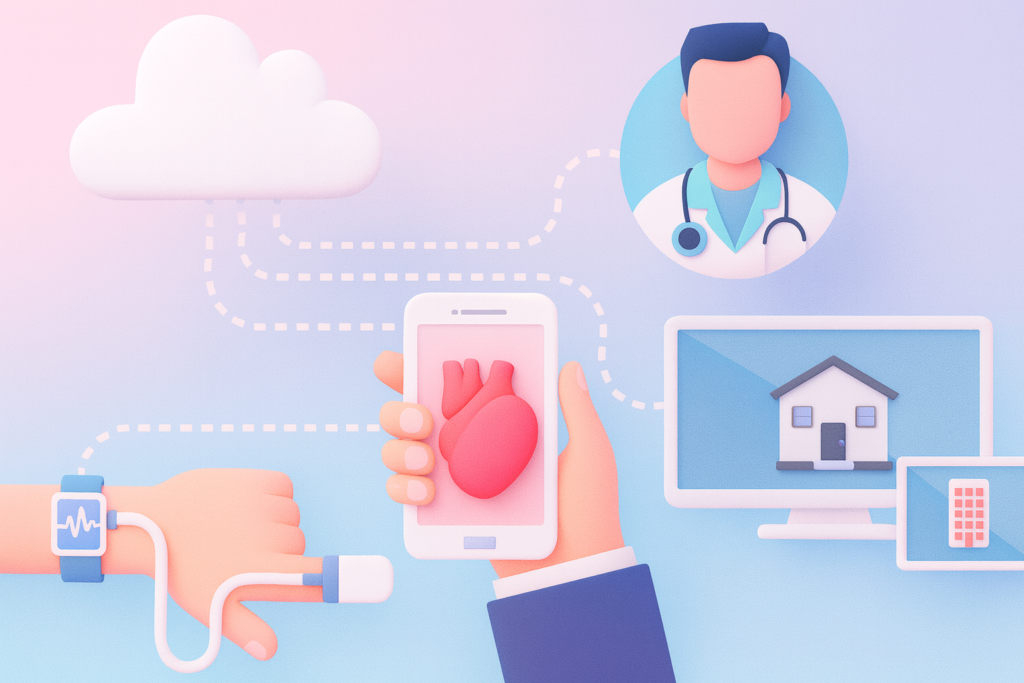
- Technology vendors (IoT, cloud providers, data analytics firms): Working together with technology vendors for next-generation remote patient monitoring (RPM) platforms that utilize cloud services, data analytics, and Internet of Things (IoT) technology is a way of facilitating the service and also maintaining the brand as being at the latest innovation.
Such a partnership strategy, besides increasing the range of the product, also facilitates the establishment of customer confidence, the easy overcoming of the impediments to the use of the product, and the solving of problems as the lack of interoperability or difficulties caused by the regulations.
4. Regulatory Compliance & Data Privacy as a Key Differentiator
Data privacy, security, and regulatory compliance have been pinpointed as the major challenges in the remote patient monitoring (RPM) market, and there are still concerns around these issues.
In order to handle these problems efficiently, vendors of RPM need to be on the front foot and engage in marketing outreach as a response.
- Communicate Compliance: Reassure potential customers by complying with data protection standards and all the necessary regulations.
- Highlight Data Security Features: Inform the clients about the implemented security measures that ensure data protection, like encryption, anonymization, secure cloud storage, and robust IoT architecture.
- Transparency in Data Practices: Be explicit with patients and healthcare providers regarding data ownership, usage, consent, and sharing policies by giving them access to these, which is a trust enhancer.
- Offer Documentation and Certifications: Provide appropriate documents, certificates, or cases that show you are in line with the rules, especially when you are selling to healthcare institutions or payers.
Remote patient monitoring (RPM) companies may differentiate themselves from the competition by effectively portraying their adherence to stringent regulations and robust data privacy practices as their major advantages.
In this way, they become more appealing to buyers who are careful because such buyers will hardly consider cheaper or less secure alternatives.
5. Leverage Digital Marketing Channels & Patient Outreach
Through the plethora of digital marketing channels available and the ever-expanding access to the internet in both urban and rural areas, digital marketing emerges as a money-saving and easily scalable user acquisition method for RPM users.
Recommended approaches:
- SEO and content marketing: Health and medicine educational materials through blogs, guides, and FAQs are potential content formats where a patient-centric approach can be implemented. These types of content are a means of changing the patient and their family’s focus on what they will definitely want to find out. In this case, words such as “home blood pressure monitoring,” “remote chronic disease monitoring,” and “RPM for diabetes” might be instances that are referred to.”
- Social media campaigns: The caregivers, the chronically ill patients, and the medical staff must be given the power to use social media as a tool for their interaction. One can share the testimonials, the infographics, and the explainer videos showing the advantages and the ease of the RPM solutions.
- Telehealth and health-app integration: If your RPM solution is connected with an app or a portal, marketing tactics such as a free trial, a demo, or referral incentives can be effortlessly combined to attract the user’s interest.
- Community outreach and patient education: In areas that are far or less developed, one can create a partnership with local health workers, NGOs, or community centers for the organization of outreach sessions. These sessions can be used as a forum for describing the benefits of RPM, giving demonstrations to raise awareness, and getting the adoption of people to adopt.
- Email marketing and patient newsletters: To healthcare providers that are already implementing RPM, send periodic newsletters that are loaded with useful tips, best practices, patient success stories, and news. This is instrumental in patient engagement and retention.
Through digital marketing, the world becomes smaller in terms of geographical barriers, and this is especially true in areas where remote access is indispensable.
The digital effort also facilitates awareness-building and customer acquisition.
6. Use Data-Driven Marketing and Outcome-Oriented Messaging
Since remote patient monitoring (RPM) is very much data-driven, the marketing strategy should focus on the measurable effects that can be touched by the customer.
- Highlight outcomes and metrics: Focus on the primary advantages that are quantifiable in numbers, for instance, the decrease of hospital readmissions, the health stabilization of chronic diseases, patient adherence, and the saving of money for healthcare providers as well as payers. Back up these statements with the figures gathered from pilot programs or actual implementation.
- Publish dashboards or infographics: Illustrate the results through simple visuals such as dashboards or infographics portraying the changes in readmission rates, reductions in emergency visits, patient compliance, or patient satisfaction.
- Segment targeting using data: Use demographic, geographic, or epidemiological data to locate and target the segments with the highest potential, for instance, elderly people living in remote areas or areas where chronic diseases are widespread, and people who have limited access to hospitals.
An outcome-based marketing strategy is most effective when dealing with institutional buyers such as hospitals, insurers, and governments, and at the same time, it facilitates the building of their trust with individual patients.
Overcoming Challenges and Market-Specific Barriers
While the strategies above can be effective, marketers must also navigate some of the inherent challenges of the remote patient monitoring market.
1. High Cost and Initial Investment
Implementing RPM hardware, devices, software, cloud infrastructure, and data security can involve considerable upfront cost, which may deter smaller providers or patients.
What to do:
– Modular or Subscription Pricing Models: Provide pricing options like modular or subscription models instead of requiring a single large payment.
– Aligning the Costs with the Savings in the Future: Illustrate the opportunity for saving money in the long run through decreasing hospital visits, readmissions, hospital staff overwork, and the better management of chronic diseases. The emphasis on such money-saving benefits can make visible the monetary return on investment (ROI) of the use of RPM solutions.
– Working Together with Insurers or Government Programs: Insurance companies or government health programs can cooperate to provide subsidies or offer reimbursement options. This will be a relief to the financial burden, both for patients and healthcare providers, thus making RPM solutions accessible.
2. Regulatory and Data-Privacy Concerns
It is not easy, especially for small RPM vendors, to be HIPAA compliant, meet medical device standards, ensure security, and still be able to perform efficiently. However, fulfilling these requirements is very important in order to gain the trust of both institutions and patients.
What to do:
– Initiate the construction of strong security and compliance systems on the front line of the business, then indicate these as a factor of distinction in the promotional literature.
– Provide clear and straightforward information on data use, consent, security measures, and adherence to regulations.
– For international marketing, invest in understanding region-specific regulatory requirements, and be prepared to adapt offerings accordingly.
There is a strong expansion of the remote patient monitoring market, which is a really enticing chance for the suppliers of the RPM solutions to increase their influence and the number of people they can help.
However, winning will not be only the result of a technologically advanced product, it needs to be a result of the company’s strategy, its thoughtfulness, and well-execution of activities that promote the product, which is reflected in more people knowing about the product, trusting it, and using it, among the different groups of stakeholders.
As per Pristine Market Insights, the incorporation of differentiated messaging, educational content, strategic partnerships, data-driven marketing, and ethical practices, along with the alignment with broader industry trends such as AI, wearable integration, and cloud-based health services, can enable RPM vendors to not only attract customers but also make a significant contribution to better patient outcomes, healthcare accessibility, and cost-efficient care.
Caring marketing, honest communication, and result-focused messaging not only mean growth to be they will pave the way for RPM solutions to become a conventional and reliable share of worldwide healthcare delivery.