
You’ve likely felt the pressure: the gap between “business need” and “IT delivery” is widening.
In the past, if a department needed a custom application, they’d submit a ticket and wait six months for a prototype. By the time the software launched, the market had already moved.
But the “wait and see” era is over.
In 2026, agility isn’t a luxury; it’s the baseline for survival.
This is exactly why enterprises are aggressively shifting toward low-code development services.
It’s not just a trend for small businesses or “citizen developers” anymore. Fortune 500 companies are using these platforms to build mission-critical systems that are fast, scalable, and, most importantly, AI-ready.
In 2023, the market size was 24.8 billion. In 2030, the projected market size is USD 101.68 billion, reaching a compound annual growth rate of 22.5%. This surge is driven by a simple reality: traditional coding cannot keep up with the appetite for digital transformation.
Let’s unpack why the enterprise world is trading manual syntax for visual logic.
TL; DR
- Enterprises are adopting low-code in 2026 not because it’s easy, but because traditional software development can’t keep pace with today’s speed and complexity demands.
- Low-code slashes development time, reduces backlog, and lets teams deliver real business outcomes in weeks instead of months.
- It unlocks scalable, secure apps with full API connectivity and built-in DevOps support, while still giving professional developers control over custom logic.
- Modern low-code platforms act as the glue for AI and machine learning services, making predictive analytics and automation accessible without heavy engineering overhead.
- Beyond speed, low-code improves collaboration between business and IT, strengthens governance, and modernizes legacy systems without risky rewrites.
- When measured properly (velocity, adoption, cost per feature), low-code consistently outperforms traditional builds and enables rapid innovation at enterprise scale.
What is Low-Code Development in an Enterprise Context?

Before we dive into the “why,” let’s clarify the “what.”
Low-code is a visual approach to software development. Instead of writing thousands of lines of complex code from scratch, developers use drag-and-drop components and model-driven logic.
In an enterprise environment, this doesn’t mean “no code.” It means specialized low-code development services that provide a foundation where 80% of the heavy lifting (security, integrations, UI frameworks) is pre-configured, allowing professional developers to focus the remaining 20% on the high-value, custom logic that makes a business unique.
The 2026 Definition of “Enterprise-Grade”
Today, low-code isn’t just a drag-and-drop UI builder. It includes:
- Full-stack capabilities: Handling complex backend logic, not just pretty forms.
- API-First Architecture: Ensuring every app can communicate with existing ERPs, CRMs, and legacy databases.
- DevOps Integration: Built-in CI/CD pipelines that allow for automated testing and deployment.
The Core Drivers: Why the Shift is Accelerating Now
The numbers tell a compelling story. According to Gartner, by 2026, low-code development platforms will be responsible for more than 75% of new application development.
This isn’t just about making things easier; it’s a response to several systemic shifts in the global economy.
1. The Critical Shortage of Technical Talent
The “Great Developer Shortage” hasn’t slowed down. There are simply more apps to build than there are senior engineers to build them. Enterprises are using low-code to:
- Empower “Junior+” Developers: Allow mid-level talent to produce senior-level output by abstracting the complexities of infrastructure.
- Reduce Burnout: Offload repetitive CRUD (Create, Read, Update, Delete) tasks to automated platforms.
- Focus Expertise: Save your most expensive engineers for complex architecture and machine learning development services.
2. Radical Reduction in Time-to-Market
In traditional development, the “Idea to Deployment” lifecycle is a marathon. With low-code, it’s a sprint. Enterprises are seeing development cycles shrink by up to 70%.
When a competitor launches a new feature, a low-code-enabled enterprise can iterate and respond in weeks, not quarters.
3. Seamless Integration with AI/ML Services
In 2026, an app without intelligence is a legacy app. Modern enterprises are looking for ways to bake predictive analytics and automation into every workflow.
Low-code platforms have evolved to become the primary gateway for AI/ML services. Instead of building custom neural networks from scratch, enterprises use low-code connectors to plug into sophisticated machine learning development services.
This allows a logistics company, for example, to build an automated route-optimization tool in a fraction of the time it would take to manually code the API integrations.
How Low-Code is Bridging the AI Gap

The most significant evolution in low-code is its relationship with AI/ML services. In the past, implementing a machine learning model required a specialized team of data scientists and MLOps engineers.
Today, machine learning development services provide pre-trained models for sentiment analysis, predictive maintenance, and computer vision.
Low-code platforms act as the “connective tissue,” allowing standard developers to “drag” a machine learning model into a business workflow.
Use Case: Predictive Supply Chain
Imagine a retail enterprise facing inventory fluctuations. By using low-code development services to build their inventory management app, they can easily integrate AI/ML services that analyze historical sales data and weather patterns to predict stockouts before they happen.
- Traditional way: 6 months of data engineering and API building.
- Low-code way: 3 weeks of configuration using pre-built ML connectors.
Beyond Speed: The Strategic Benefits of Low-Code
If you think low-code is just a “fast-forward” button for IT, you’re missing the bigger picture. The shift is driven by structural improvements to how businesses operate.
Democratizing Innovation: The Rise of the Citizen Developer
For decades, the “business side” and the “IT side” have spoken different languages. Low-code serves as a universal translator. Because the development environment is visual, stakeholders can see the application as it’s being built.
This leads to low-code development for enterprises becoming a collaborative process. When the people who understand the customer problem (sales, HR, finance) can participate in the solution’s design, the final product is inherently more effective.
Future-Proofing and Legacy Modernization
Most enterprises are held back by zombie systems. These are the legacy software that is too fragile to update but too vital to turn off.
Low-code acts as a modern “wrapper” for these systems. Instead of a risky, multi-year “rip and replace” project, firms use low-code to build modern front-ends and mobile interfaces that talk to legacy databases via APIs.
Enhanced Security and Governance
One of the biggest myths is that low-code is less secure. In reality, for an enterprise, it’s often more secure.
Top-tier low-code development services include built-in governance, compliance checks (like GDPR and HIPAA), and automated security patches.
This eliminates the “Shadow IT” problem where departments build their own insecure solutions using Excel or unauthorized SaaS tools.
Technical Breakdown: Low-Code and Modern Frameworks
Many ask: “Does low-code mean we stop using frameworks like Angular or React?”
The answer is a resounding No. In fact, low-code platforms often output code based on these frameworks.
For instance, many enterprise low-code platforms generate Angular-based front ends because of Angular’s robustness in handling complex data. However, as we discussed in our guide on The 2026 Angular SEO Playbook, these apps still need careful technical handling regarding Server-Side Rendering (SSR) to ensure they are discoverable by search engines.
Low-code doesn’t remove the need for technical excellence; it just changes where that excellence is applied.
Industry-Specific Shifts: Who is Leading the Charge?

The adoption of low-code isn’t uniform; it is being led by industries with high regulatory burdens and complex data needs.
1. Financial Services (FinTech & Banking)
Banks are using low-code to build customer onboarding portals that are both secure and user-friendly.
By integrating machine learning development services, these portals can perform real-time identity verification and fraud detection, reducing onboarding time from days to minutes.
2. Healthcare
Healthcare providers use low-code development services to create HIPAA-compliant patient tracking systems.
The ability to quickly pivot these apps allowed many providers to adapt to telehealth demands during the shifts of the last few years.
3. Retail and E-commerce
In retail, low-code is used to build personalized shopping experiences.
By leveraging AI/ML services, retailers can create apps that offer hyper-personalized product recommendations based on real-time browsing behavior.
The Governance Gap: Managing Low-Code at Scale
As enterprises shift to low-code, a new challenge emerges: Governance. If every department can build its own apps, how does IT maintain control?
This is why professional low-code development services are so critical. They don’t just provide the platform; they provide the “Center of Excellence” (CoE) framework.
The Center of Excellence (CoE) Model
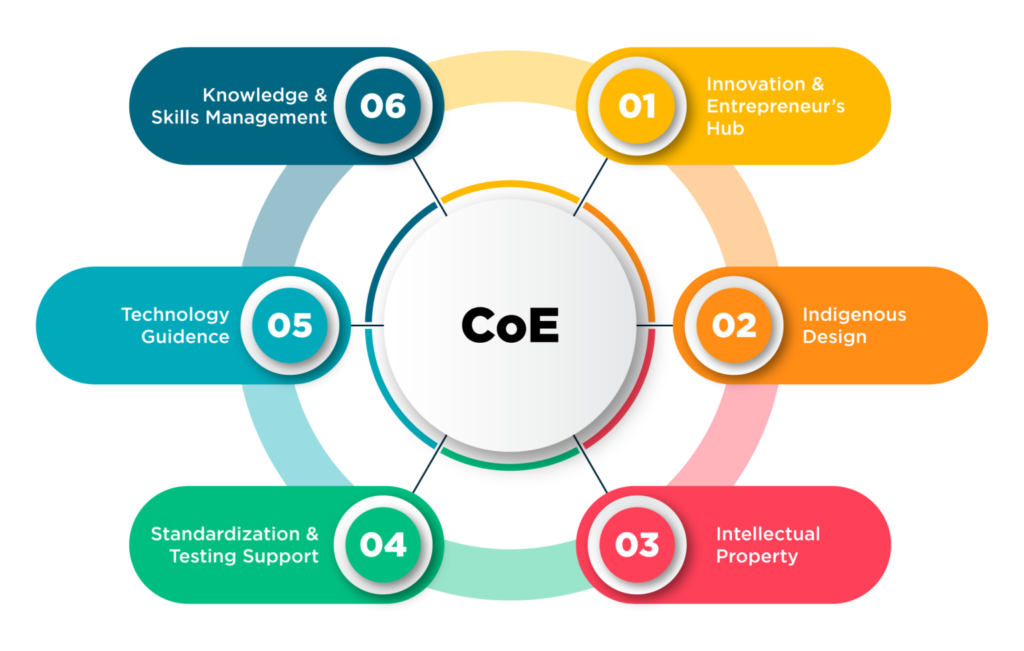
A CoE is a centralized team that:
- Sets Standards: Defines which platforms can be used and what the security protocols are.
- Provides Reusable Components: Creates “building blocks” (like a standard login screen or a specific API connector) that other departments can reuse.
- Monitors Performance: Uses dashboards to see every app being built across the organization.
Without a CoE, low-code can lead to “app sprawl.” With one, it becomes a regulated engine for growth.
Common Myths Killing Enterprise Agility
Even with the clear benefits, some leadership teams remain hesitant. Let’s debunk the myths that are quietly stalling growth:
Myth #1: “Low-code is only for simple apps.”
The Reality:
While low-code started with simple forms, it now powers high-scale trading platforms, healthcare patient portals, and global supply chain engines. If you can define the logic, you can build it in low-code.
Myth #2: “We’ll be locked into one vendor.”
The Reality:
Modern platforms are built on open standards. Many allow you to export the underlying code (often React or Java) if you ever decide to leave the platform.
Myth #3: “It will make our developers obsolete.”
The Reality:
Low-code is a force multiplier, not a replacement. It frees developers from the “boring stuff” so they can focus on high-level architecture and specialized machine learning development services.
When Does an Enterprise Need Low-Code Services?
Not every project is a fit for low-code, but the sweet spot is growing. You should consider shifting your strategy when:
- Your IT backlog is longer than 3 months: If your developers are buried in tickets for minor UI updates, you need a way to offload that work.
- You need to launch a cross-platform (Web/Mobile) solution quickly: Building natively for iOS, Android, and Web is a resource hog. Low-code does this in one go.
- Your departments are creating “Shadow IT” solutions: If your marketing team is using unapproved 3rd-party tools because IT is too slow, low-code provides a “safe” way to meet their needs.
- You want to experiment with AI/ML services without a massive upfront investment: Low-code allows you to “trial” a machine learning model in a real-world app before fully committing to a massive build.
By leveraging professional low-code development services, you aren’t just buying a tool; you’re adopting a methodology that prioritizes outcomes over lines of code.
Measuring Success: What Metrics Actually Matter?
If you decide to make the shift, don’t just track “apps built.” Focus on the metrics that reflect real-world authority and efficiency:
- Velocity: The time from “Approved Request” to “Production Deployment.”
- Maintenance Burden: The percentage of the IT budget spent on fixing bugs vs. building new features.
- Adoption Rate: How many business users are actually using the tools built? A fast app that no one uses is a failure.
- Cost per Feature: The total investment required to move a single functional requirement into the hands of a user.
The Role of Agentic AI in Future Low-Code

Looking toward the end of 2026, we are seeing the rise of Agentic AI within low-code platforms. Unlike standard AI/ML services that just provide a prediction, Agentic AI can take action.
For example, a low-code app for an HR department could use Agentic AI to not only read resumes but to autonomously schedule interviews based on the manager’s calendar and send out personalized onboarding materials.
This is the next frontier where B2B lead generation strategies and operational tasks merge into a single, automated ecosystem.
Bottom Line: The “Code-First” Era is Fading
Let’s call it what it is: the old way of building software is too slow for the 2026 economy. Enterprises that cling to manual-only development will find themselves outpaced by leaner competitors who have embraced the efficiency of low-code development services.
By shifting to low-code, you aren’t just saving time. You are creating an environment where innovation is constant, AI is accessible, and your developers are focused on the work that actually defines your brand.
If you’re serious about staying competitive, it’s time to stop writing every line of code by hand and start building with intent.
FAQs
Is low-code development expensive for large enterprises?
While the licensing fees for top-tier platforms can be significant, the ROI is usually found in reduced labor costs and faster revenue generation from new apps. When you factor in the speed of integration with AI/ML services, the total cost of ownership is often lower than traditional builds.
Can low-code handle complex data security requirements?
Yes. Enterprise-grade platforms are designed for highly regulated industries. They offer better consistency in security protocols than a manual build, where a single developer might forget a security patch in a specific line of code.
How does low-code impact the use of machine learning development services?
It simplifies the “last mile” of AI. While the models are built by specialists, low-code allows those models to be deployed into user-facing applications in hours rather than months.
Is Angular still relevant in a low-code world?
Absolutely. Many low-code platforms actually use Angular or React as their underlying framework.
How do I start the transition?
Start small. Pick a high-visibility, low-risk internal tool. Use a professional service to build it using low-code, measure the velocity, and use those results to gain buy-in for larger customer-facing projects.