To Our Customers, Partners, and Community Members
Fraud is one of the most significant threats to the growth of digital business, and in particular, online fraud.
Technologies such as one-click checkout, cross-border subscriptions, instant funding, and most importantly, card-not-present payments, have given fraudsters unprecedented opportunities.
Automated account takeovers, generation of synthetic identities, and probing and exploiting weak points in systems have been streamlined through the use of AI.
Traditional engines governed by rules and manual reviews simply can’t keep pace. They’re designed to work with fraud patterns of the past – slower, simpler, and less sophisticated.
Why is fraud now a board-level concern?
Fraud was long viewed as a liability of doing business online. That view is outdated and no longer tenable.
The global distribution of card fraud loss is expected to eclipse $400 billion in the next 10 years, with online fraud growing at a 10% annual rate.
The global eCommerce fraud toll was estimated to be $41 billion in 2022, and expected to exceed $48 billion in 2023 (Mastercard B2B). The fraud damage takes a growing company in four key areas:
- Direct Losses Due to Financial Exposure
Every fraudulent order, payout, chargeback, or refund represents a loss to the business’s profits. Many times in high-risk verticals (such as travel, gaming, etc.), fraud can stealthily siphon off a percentage of revenue.
- Dispute Processing Fees and Chargebacks
Chargeback fees, dispute processing costs, and penalties associated with the card schemes are compounding quickly. Chargebacks at higher rates may even limit a company’s ability to work with payment processors.
- Declines Due to False Declines
Companies may be “overly strict on rules” to protect themselves from fraud; however, they may inadvertently reject legit customers (i.e., large or cross-border orders).
As a consequence, they miss out on potential sales. For example, a marketplace selling tickets with an AI-powered anti-fraud platform helped recover $3 million in falsely declined orders within three months. (Business Insider)
- Damage to Reputation

When accounts are taken over or cards are misused, the customer typically blames the brand, not the fraudster. Partners and regulators have continued to expect improvements in controls each year.
The amount of public pressure to reduce fraud is increasing. In the UK, banks and technology companies have committed to sharing real-time data regarding fraudulent activity.
In fact, more than 40% of all crimes committed in the UK are believed to involve some form of fraud.
The growing concern about fraud has elevated its position to an overall strategic risk question for businesses, i.e., “How can we reduce our exposure to fraud while maintaining a great customer experience and growing our business?”
How AI-driven fraud detection works
Machine Learning aided Fraud Detection Systems utilize behavioral analytics and machine learning technologies (MLTs) to evaluate and determine (in milliseconds) whether to Challenge, or Block any Event.
Rather than solely relying on static rules such as “Block all transactions greater than five hundred dollars from new devices,” machine learning platforms use large amounts of previously recorded Event Data to analyze and identify New Patterns as they are created.
Modern fraud detection platforms combine several methodologies to determine flight risk. Two of the most prevalent are:
- Supervised models using assured review data (e.g., genuine and fraudulent events) to score the flight risk associated with a Transaction, Login, or Payout.
- Flagging anomalous behavior via behavioral analysis to determine Users/Devices or Merchants behaving outside of the expected norm, and to look for behavioral patterns that identify potential Fraud Risk.
Graph-based analysis that links Devices, Accounts, IP Addresses, and Payout Methods to find undocumented Fraud Rings.
These systems make their decisions in real time. For example, one industry report states that an AI-enabled system analyzed an entire year of Transaction History in milliseconds, together with its scoring of the current event before its completion.
IBM states AI-Enabled Fraud Monitoring Tools are able to monitor an exponentially greater number of Transactions than Human Teams can process. This way, they can continuously adapt to changing Patterns, react quickly to events where other monitoring systems cannot provide an immediate response (IBM).
Business benefits that go beyond “catching more fraud”

Fraud mitigation technology has traditionally been viewed as a pure expense. But with the implementation of artificial intelligence (AI) driven solutions, they now offer the potential for positive financial returns to businesses.
1. Increase approval rates for high-value revenue streams through smarter approvals
Businesses incur the greatest financial loss at the point of payment when they lose a customer. Legacy systems typically consider anything “unusual” in how a customer is making a purchase as “unsafe” to accept.
This results in a decline if it was made from a new device, contained a high-value basket, or utilized a foreign credit card.
Conversely, AI models utilise a multitude of data signals during transaction analysis that include, but are not limited to: device fingerprint, historical spend patterns, consistency of location, and risk status of their current network connection.
Therefore, allowing clear delineation of truly high-risk behaviour versus healthy, uncharacteristic purchase activity.
As a result, AI models facilitate greater approval rates for a business’s more lucrative customer segments, particularly within the travel, ticketing, and electronics categories, as well as within the B2B software sector, without a commensurate increase in the number of potential frauds.
2. Lower operational costs through reduced manual case review queues
Available fraud analysts are both limited in number and highly skilled. They should not be tasked with evaluating simple fraud cases all day.
By using AI models to clearly differentiate between “good” and “bad” events, review teams are able to focus on a narrower range of ambiguous cases.
Several vendors have indicated, as have numerous case studies conducted on various organisations.
They have been able to reduce the number of manual fraud reviews performed by upwards of 75%, while maintaining or decreasing the overall level of fraud within their environment once their AI models have been optimally tuned.
This change in the way fraud analysts spend their time represents a large decrease in operating expenses and allows fraud teams to spend more time on deeper fraud pattern analysis and support for new product launches.
3. Enhancing customer experience and establishing credibility
Customers expect to experience safety and convenience. Banks use AI-enabled fraud detection systems for “smart friction”.
This allows them to give quicker access to low-risk customers through faster log-in times, one-click payments, and immediate payout options, while still providing additional verification (3FA) for medium-risk customers.
Customers who qualify as low risk enjoy swift log-ins and one-click payments or fast payout options.
A medium-risk customer will usually be subjected to a step-up check with a robust identity verification platform, either through a one-time password or additional verification methods, to ensure stronger fraud prevention and online security.
In cases where a customer is considered high risk, the bank would likely block that transaction behind the scenes, often before the customer is aware that an attempt was made.
It is important to secure customer verification. The balance of both protection and convenience fosters confidence between a customer and the bank and provides that customer with an increased lifetime value and decreased churn rate post-fraud.
Developing an AI fraud capability

Although the tools and vendors used may differ, all successful AI fraud programs are built around three components:
1) Data and scoring – The use of well-labelled, accurate data combined with internal and external signals allows banks to provide scoring to enable payment and log-in transactions without delay.
2) Policies and orchestration – Risk management teams provide the framework for how scoring translates into action and allow for experimentation with different thresholds and pathways for different customer segments.
3) Analyst feedback loops – Analysts have access to dashboards and investigation tools to review cases, label outcomes, and keep those labels in the pipeline for continued improvement in machine learning models.
Each of these elements creates an ecosystem that continues to learn from both attacker behaviors and the evolving priorities of the business.
A practical roadmap for businesses
Many organisations know they should use AI for fraud, but struggle to move from talk to execution. A straightforward roadmap helps.
Step 1: Determine the complete financial toll on your company as a result of fraudulent activity.
Create an annual perspective for the true financial impact of fraud on your business:
- Direct losses due to fraud or chargebacks.
- The operational expenses of researching and disputing fraudulent payments.
The anticipated revenue loss due to a denial by the merchant due to a false result in a transaction, and less satisfied customers.
According to the Association for Financial Professionals (AFP), only a small portion of the money lost to payment fraud will be recovered by many companies, signifying how costly it will be to rely on a “reactive” fraud prevention strategy. The determination of your realistic budget to invest in fraud prevention is based on this evaluation.
Step 2: Identify the highest impact fraudulent activity scenarios by looking across the consumer’s full experience with your organisation and not just at the time of transaction.
It is critical to document all identified fraud schemes throughout the consumer’s life cycle because they will likely show the areas where you can invest in AI solutions, such as card-not-present activity (e.g., your website), fraudulent seller payouts (third party), and new customer signups for financial or subscription offerings.
Step 3: Implement focused pilot projects.
As part of a pilot project, focus first on those flows that have a defined dollar impact, show small excellent data quality, and can provide you with early indicators of success:
- High-value card-not-present transactions.
- Payments to third-party sellers, gig workers, or affiliates.
- New customer sign-up for financial or subscription products.
By initially concentrating on a small and defined portion of the transaction process, your risk is minimized.
However, you can demonstrate to the organisation that your solutions are creating value. Thus, the opportunity to expand your programme’s coverage into more transactions and additional channels will become apparent.
Step 4. Combine rules, models, and expert judgment
AI shouldn’t be a closed system that takes the place of human knowledge.
For obvious warning signs and compliance requirements, business rules are still useful. Models are useful for complicated patterns that are difficult to articulate using straightforward reasoning.
When new schemes emerge, human analysts verify edge cases, adjust thresholds, and offer context.
The best programs approach fraud control as a dynamic system that combines expert review and automation.
Risks, limitations, and governance
AI is powerful but not magic. Poor implementation can create new problems.
Key risks include:
- Data quality issues. Biased, incomplete, or stale data will produce unreliable scores.
- Overfitting to yesterday’s fraud. If models are not retrained or monitored, they may miss emerging attack patterns.
- Excessive friction. Aggressive settings can annoy genuine customers.
Strong governance is essential. That includes agreed success metrics, expectations for explainability, approval workflows for policy changes, and a shared view between risk, product, and compliance teams.
Building Trust in a Low-Trust Digital Environment
One of the most underappreciated effects of increased online fraud has nothing to do with technology or consumer rights. Rather, it has to do with trust.
As users become more aware of data breaches, phishing scams, or payment fraud, their willingness to take risks decreases.
And yet, they demand that their online experience does not lose its speed, usability, or seamless nature.
Artificial intelligence, in terms of fraud protection, can help fill this gap by facilitating something that can be termed as invisible security.
It means that, rather than requiring all users to undergo a similar security protocol, a process facilitated by behavioural intelligence, users are provided with a smooth experience while their high-risk actions are scrutinised in the background to gain confidence over time, rather than having to generate that confidence through a specific protocol.
In this regard, trust can be viewed as a consequence of consistent experience rather than a quality to be promoted.
This balance can lead to better retention rates and an increased lifetime value for companies within competitive digital environments where changing brands is simple.
The Importance of Behavioural Baselines in Accurate Detection
One reason why AI-based fraud detection is more effective than traditional systems is its capability for behavioural baselining.
Normal looks different for each and every system as “normal” is defined by users, geography, devices, and more. Traditional systems are ineffective as they are universal, and fraud is very contextual.
The models can learn what normal behaviour looks like against a variety of user segments and over a variety of timescales.
They understand how a real first-time user differs from a returning customer, as well as the differences in behaviour during peak periods versus off-peak periods of usage, for instance. It’s anomalies against these patterns that now become the trigger factors for risk rather than simply actions taken.
Such a method works well for low and slow-type fraud where the attacker maintains a pace lower than the conventional level.
As noted above, AI systems are able to find discrepancies that go unnoticed until the actual loss is created.
Fraud Prevention as an Ongoing Learning Entity
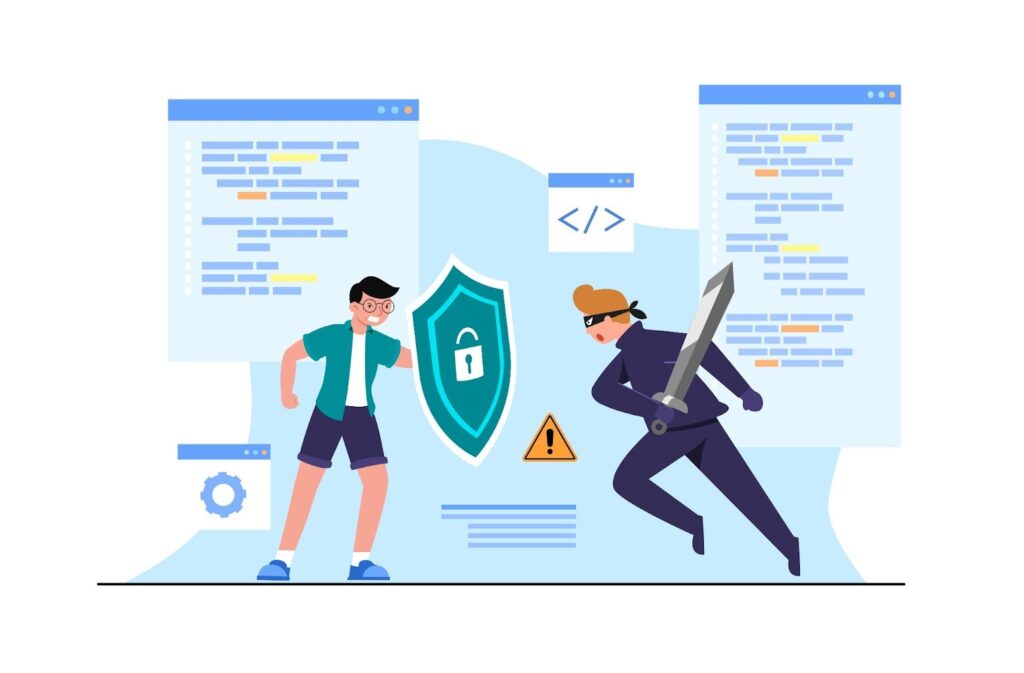
In contrast to rule-driven software, which tends to get worse with age, AI-powered fraud detection learns and improves with experience.
Every outcome helps to fuel a positive feedback cycle that enhances future results. Successful fraud instances hone the detection threshold, while non-fraud examples eliminate unnecessary hurdles.
An important aspect of this is that it is necessary within the dynamic environment that exists, where fraud strategies are also constantly and rapidly evolving in nature.
As the fraudsters find a way through the defences and adapt accordingly, the systems involving AI also adapt at an even more rapid pace.
Thus, what is developed is not just another barrier but is dynamic in nature and is also able to evolve along with the environment that exists in the related platforms.
However, it also points to the need for effective governance. Well-defined processes around receiving feedback, escalations, and model assessments will be crucial in making sure that the learning is always on track and aligned with business goals and ethics.
The Strategic Transformation from a Cost Centre to a Value Driver
Traditionally, fraud prevention was seen as a cost of doing business to be managed, not maximised. AI turns this philosophy on its head, unlocking the value within fraud data.
These behavioural insights can, in turn, point out operational inefficiencies. These could include user onboarding processes which are attractive to suboptimal users, abuseable business models, or promotion processes which are susceptible to exploitation.
When this information is shared, it can enable intelligent decision-making in many different departments.
Organisations that acknowledge the change begin to see the value of fraud intelligence as a competitive differentiation tool in the market.
The change in mindset reflects a transition in the types of questions that are asked. The old ones are: “How much fraud did we stop?” Organisations have moved to: “How much better do we understand our platform today?”
The Way Forward: Business Priorities Moving Ahead
The use of generative Artificial Intelligence (AI) by fraudsters to create fraudulent phishing emails, fake documents, and synthetic identities is already happening.
Law enforcement agencies are reporting international schemes that exploit vulnerabilities across multiple payment providers, as well as digital platforms.
Shared intelligence networks will allow Bankers, Fintechs, Platforms and Telecoms to share anonymised risk indicators with each other.
For companies that are focused on growth, the strategic issue is no longer whether or not to utilise AI in detecting fraud. More importantly, the question is how quickly organisations can design, deploy, and improve modern AI-driven fraud detection stacks.
Companies that view fraud detection using AI technology as an ongoing business capability, rather than a one-time purchase of a tool, will be in a better position to approve more good customers, stop more bad actors, and grow confidently without a hidden fraud tax on each transaction.