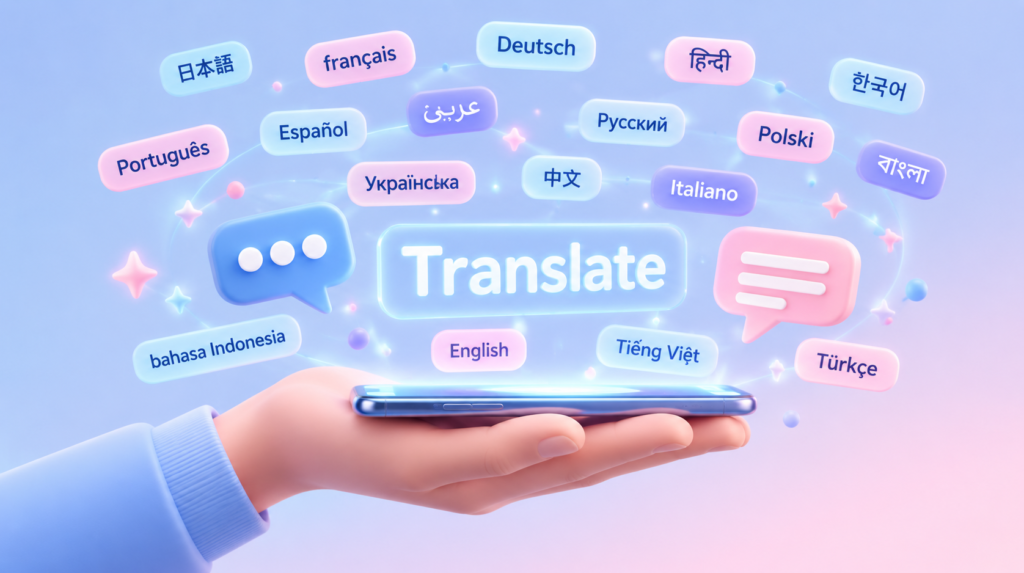
Most growth teams do not treat translation as a major workflow decision until something breaks. A campaign needs to launch in three markets, a pricing page has to be localized, a support library is suddenly customer-facing in another language, or a sales deck needs to sound credible to buyers who do not read the source language.
The common shortcut is to paste the copy into an AI model, glance at the output, and ship it. The harder question is not whether AI translation is useful. It is whether the team has any signal that the output is reliable enough for the business context it will enter.
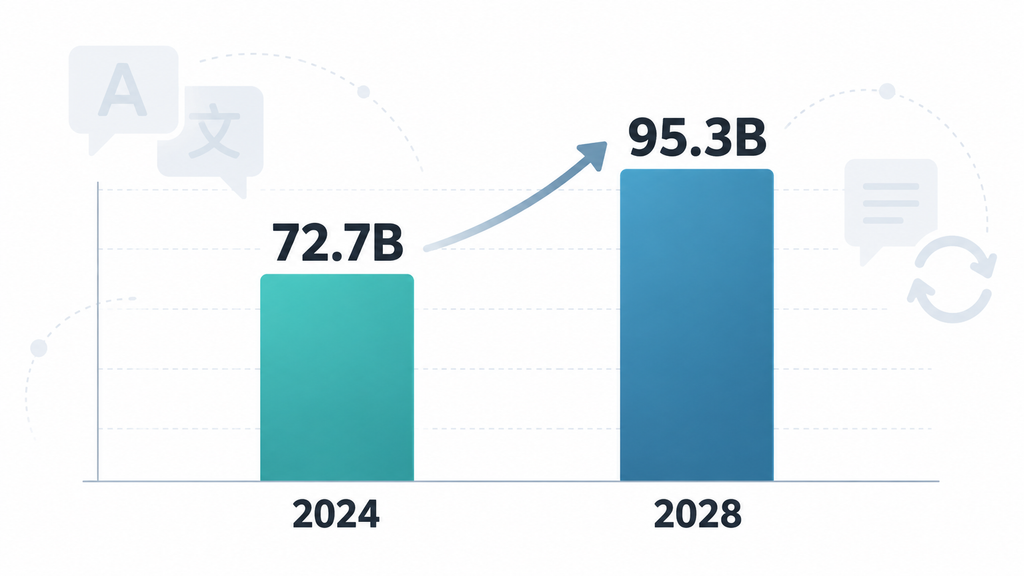
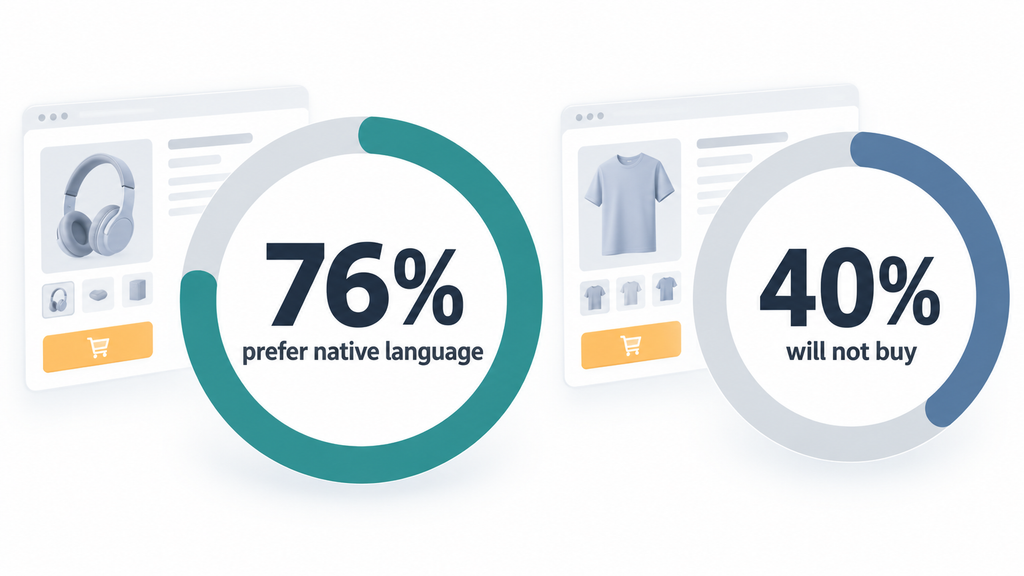
This is not a small edge case. Nimdzi estimates the language services market reached USD 72.7 billion in 2024, while CSA Research found that 76% of online shoppers prefer product information in their native language and 40% will not buy from websites in other languages.
This is where model disagreement becomes useful. When two AI systems translate the same sentence differently, the difference is not just a technical curiosity.
It is a signal that the sentence may carry ambiguity, tone, context, or market-specific meaning that the team needs to review before publishing.
A running body of testing from MachineTranslation.com by Tomedes has put that problem under a microscope: over 100 controlled AI translation tests across marketing, product, support, and business content. The findings are not really about which single model is best.
They are about how often models disagree with each other in the first place, and what that disagreement costs teams who never find out about it.
A closer breakdown of how often AI models agree on a translation puts a number on something most marketers only sense anecdotally: two AI tools can be given the exact same sentence and return meaningfully different answers, with no signal to the user about which one to trust.
Disclosure: the testing referenced in this article comes from MachineTranslation.com by Tomedes. Treat the numbers as product-side research unless a methodology, sample, and time period are provided for publication.
Why “the AI got it wrong” is the wrong question
Ask a marketer whether ChatGPT or DeepL translates better, and you will get an opinion, not an answer. The honest answer is that it depends on the language pair, the content type, and the specific sentence, because these models fail in different places for different reasons.
Testing across a batch of complex multilingual product, support, and campaign materials, run against three separate models, is a useful illustration.
One model produced a 12% error rate specifically on honorifics in Asian-language output, a category of error that is invisible to anyone reading only the source English.
A second model hallucinated numerical dates in business copy, inventing figures that were not in the source text at all.
A third preserved meaning but consistently missed the formal register required for German B2B sales collateral, the kind of tonal miss that reads as unprofessional to a native reader even when every word is technically correct.
None of these are simply “bad AI.” They are ordinary failure modes of single-model translation, and they show up differently depending on what you feed the model.
That is precisely why comparing models on a single benchmark score misses the point growth teams actually need answered: not “which model wins on average,” but “where does this specific model quietly fail, and would I catch it before a customer did?”
Separate benchmarking on mixed technical and marketing text put three widely used models through the same 5,000-word test.
One model reached 94.2% accuracy but was noticeably better suited to European languages like French and Spanish. Another scored 91.5% and handled instruction manuals well but stumbled on marketing slang and idiomatic phrasing.
A third scored 89.8%, cleaned up typos effectively, but fabricated facts in two sentences it was never asked to embellish. Three respectable scores, three different failure profiles, and no way to know in advance which one would fail on the paragraph that mattered most.
What disagreement actually costs
Here is where it stops being an academic curiosity and starts being a growth problem. In a user survey run alongside this testing, 34% of respondents admitted they were not confident enough in an AI translation to publish it without checking it first.
Among non-linguists specifically, the people most growth and marketing teams actually staff this work with, 46% said they spent more time manually comparing outputs across tools than the AI saved them in the first place.
That second number is the one worth sitting with. The entire pitch of AI translation is speed. If nearly half of non-linguist users are opening multiple tabs, running the same sentence through two or three tools, and eyeballing the differences by hand, the speed advantage has already been spent before the content ships.
The pattern holds at document scale too. Among users translating large documents, 50-plus pages, without a predefined glossary or defined workflow, 29% reported needing to correct more than 7% of the translated sentences when relying on a single model.
On a 50-page document, a 7% correction rate is several hundred sentences that need a human pass before the document is customer-ready.
Correction load drops by roughly half once a document is checked across multiple models instead of one.
The comparison is worth noting: when the same category of document was routed through a layer that checks multiple models against each other before selecting an output, the share of users needing that level of correction dropped to 14%, roughly half.
Separate internal analysis of mixed business content found consensus-based selection reduced error-style drift by 18 to 22% compared with trusting a single engine’s output outright.
The disagreement is the signal, not the noise
The instinct in most content and localization workflows is to treat model disagreement as noise to filter out, usually by picking a preferred model and sticking with it. The testing above suggests the opposite: disagreement between models is one useful signal because it tells you where a translation may be uncertain before a native speaker ever has to catch it.
This is close to how experienced localization teams already work, just without the AI framing.
A professional translation workflow does not rely on one unreviewed pass when the copy affects revenue, brand perception, or customer trust.
WMT24’s general machine translation shared task makes the broader point clear too: even in formal evaluation settings, context and human judgments still matter because machine translation is not a solved problem.
Ofer Tirosh, CEO of Tomedes, put it this way when SMART, a multi-model consensus system, was covered by industry publication Slator: “We’ve evolved beyond pure comparison into active composition, and SMART surfaces the most robust translation, not merely the highest-ranked candidate.”
The point generalizes past any one product: the value is not in picking a favorite model, it is in building a workflow where uncertainty is surfaced early enough for the team to decide what should happen next.
How to resolve disagreement before choosing a workflow
A disagreement signal is useful only if the team knows what to do with it. The goal is not to compare every translated sentence forever.
The goal is to separate ordinary wording variation from the small set of choices that affect meaning, tone, or customer trust.
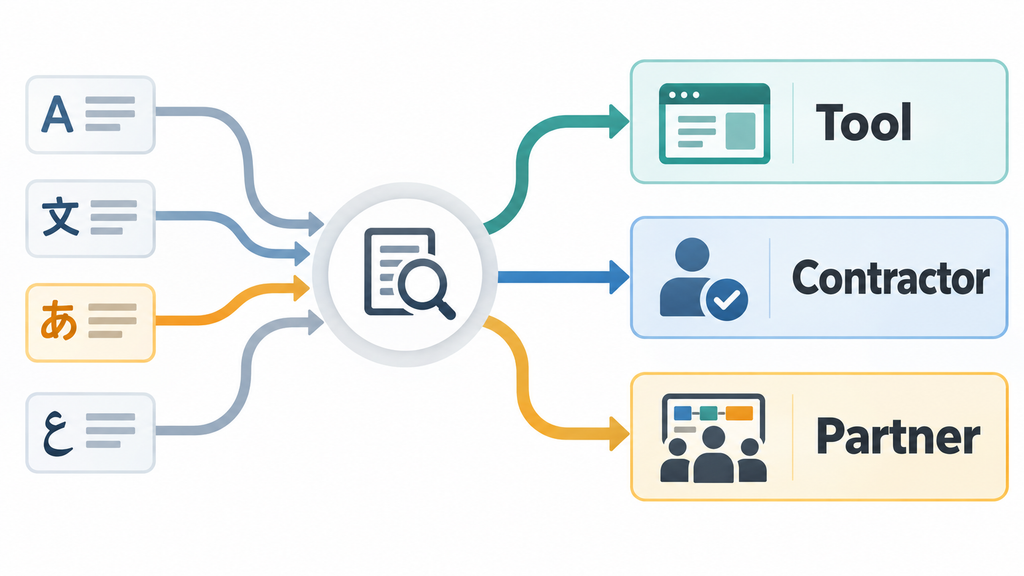
Once a team has that review loop, the workflow decision becomes easier. If disagreements are rare and easy to classify, a tool-first process may be enough.
If they require brand judgment, a contractor may be the right layer. If they repeat across markets and assets, the company probably needs a localization partner with a stronger QA process.
What this means for choosing a localization workflow
Once the team can see uncertainty, the buying decision becomes clearer. The practical question is not AI versus human review. It is which workflow gives the team enough speed, quality control, and accountability for the content being shipped.
For low-risk content, a tool-first workflow can be enough if the team has a reviewer, a glossary, and a way to catch inconsistent outputs.
For brand-sensitive content, a contractor can add the judgment a tool lacks. For repeatable localization programs, an agency or partner may be worth the cost because the value is not only translation quality; it is process, accountability, and QA discipline.
This is the GrowthFolks lens on the problem: the right choice depends on decision signals, not vendor promises.
The same principle shows up in GrowthFolks’ writing on AI search and agency discovery, where trust depends on proof, positioning, and evidence rather than visibility alone.
How to use disagreement as a vendor evaluation signal
When a company evaluates a translation tool or localization provider, the useful question is not only “how accurate are you?”
It is “how do you know when the output deserves a second look?” Strong answers usually include visible uncertainty signals, glossary handling, reviewer workflows, and a clear escalation path for brand-critical content.
That is also why localization decisions resemble other agency or vendor decisions.
When GrowthFolks discusses the point where brands start outsourcing a video funnel, the issue is not whether an outside partner can make content; it is whether the partner can support the parts of the funnel where quality, context, and proof matter most.
Building a disagreement check into your own workflow
- Run brand-critical copy through more than one model before it ships. Pricing pages, paid ads, onboarding emails, and client-facing reports are worth the extra check.
- Treat register and tone as a separate failure category from factual accuracy. A translation can be technically correct and still sound too stiff, casual, or generic for the market.
- Log where models disagree over time. Patterns emerge fast: a specific language pair, a specific content type, or a specific model that consistently drifts.
- Reserve human review budget for the business content where a mistranslation would affect conversion, customer trust, or brand credibility.
None of this requires giving up on AI translation speed. It requires treating a single model’s output the way a good editor treats a first draft: useful, fast, and not yet something you would put your name on without a second look.
Frequently asked questions
Is model disagreement always a sign that a translation is wrong?
No. Disagreement often means the source sentence has more than one defensible interpretation, tone, or wording choice. That still matters for a business team because the published version has to make one choice. If the sentence appears in a product flow, ad campaign, sales deck, or support article, the team should know when the choice was straightforward and when it was contested.
When is an AI translation tool enough?
A tool-first workflow can be enough for lower-risk content when the team has clear terminology, a reviewer who understands the market, and a way to catch inconsistent output. It is strongest when the content is repetitive, factual, and easy to verify, such as short product updates, help center drafts, or internal enablement material that will still receive a quick review before publication.
When should a company hire a contractor or localization partner?
A human-led workflow is usually stronger when the content carries brand judgment, persuasion, or market nuance. Landing pages, paid ads, sales decks, onboarding emails, and case studies often need more than accurate wording. They need the right level of formality, local phrasing, and confidence that the message still sounds like the company after it has crossed into another language.
What should buyers ask before choosing a localization workflow?
Ask how the workflow catches uncertainty. A useful tool or vendor should be able to explain how terminology is handled, how tone requirements are captured, how reviewers know where to focus, and what happens when outputs disagree. The goal is not to eliminate every judgment call. The goal is to make the important ones visible before the translated content reaches customers.
Conclusion
The localization failure index is not a warning that companies should avoid AI translation. It is a reminder that translation quality depends on the workflow around the output. If a team can see where models agree, where they diverge, and when human judgment should enter the process, it can choose a tool, contractor, or localization partner with more confidence.
For growth teams, that is the practical takeaway: do not buy translation speed in a way that hides uncertainty. The better workflow is the one that surfaces uncertainty early, routes review where it matters, and protects the customer-facing content that carries the brand into another market.
Sources
- Nimdzi 100 market overview
- CSA Research, Consumers Prefer their Own Language
- CSA Research, Do B2B Buyers Value Localized Experiences?
- WMT24 General Machine Translation Shared Task overview
- MachineTranslation.com, How often do AI models actually agree on a translation?
- GrowthFolks, AI Search Is a Growth Channel Now