TLDR: Example of how the four layers create a modern outreach stack
To recap, the modern outreach has four layers:
- Data intelligence fuels targeting with dynamic intent, behavioral triggers, and micro-ICPs to hit ready buyers.
- Infrastructure and deliverability ensure high inbox placement, so outreach efforts don’t go to waste.
- Hyper-personalization increases relevance by crafting context-aware messages at scale.
- Feedback and optimization tools and tactics track metrics in real-time for sustained scalability.
In application, here’s what that can look like. Feel free to create a third column for your current tools to cross-check if you have all the layers covered.
| Layer | Tools or Processes |
| Data intelligence | – B2B databases – Data enrichment tools – CRM or Pipeline Manager *There are some tools in the marketplace that offer all three examples above. |
| Infrastructure and deliverability | – Domains or email infrastructure – Warmup and deliverability tools – Authentication records monitoring |
| Hyper-personalization | – Prospect database – Multichannel sequence buildersAI SDRs |
| Feedback Loop | – Reports and dashboards – A/B testing tools and data |
In 2026, outreach has a new face. We’re not just talking about new strategies, new theories, and new “best practices.” Modern outreach is holistic, and each tool and tactic employed must be done with clear intention and precise alignment with overall business goals.
That being said, the modern outreach stack isn’t straightforward. If you want your outreach to soar in 2026, you can’t copy and paste from a template and expect it to work.
This article will guide you through building your modern outreach stack with the tools and tactics that will actually help you scale.
What does outreach look like in 2026?
Inboxes are stricter
It’s harder than ever to get your foot in the door. Google and Yahoo implemented new bulk sender requirements, which include mandatory SPF, DKIM, and DMARC authentication, one-click unsubscribe options, and a spam complaint threshold of 0.3% for Gmail senders.
Senders who go over this threshold often risk delivery issues or blocking.
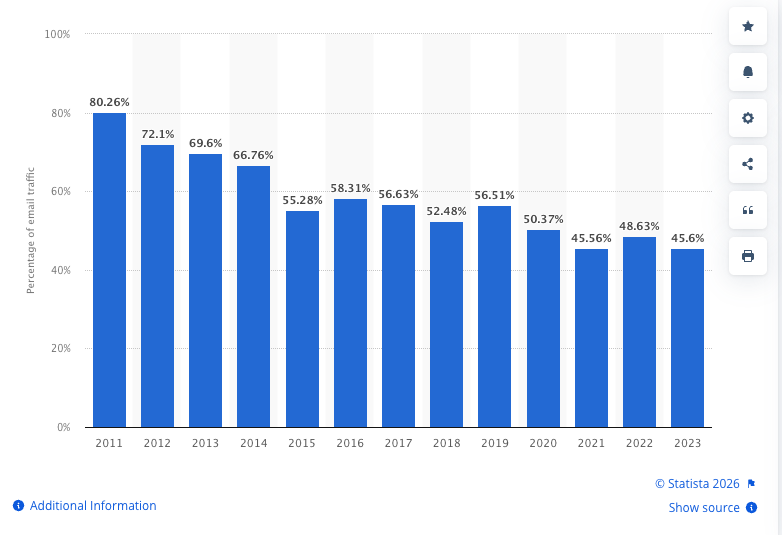
It’s not just the tech setup that affects deliverability, though. There are other factors like sender reputation and email content, among others.
With nearly 45.6% of emails globally identified as spam in 2023, the challenge is clear.
What this means for outreach and sales teams:
- Deliverability is not a setup task or a simple bullet point in a checklist. It’s an ongoing commitment.
- Poor list hygiene or aggressive scaling can damage domain reputation quickly.
- Monitoring spam rates and authentication compliance is no longer optional.
Bottomline: You can’t “send your way” into having a full pipeline. Inbox placement is earned.
Buyers are more selective
According to Gartner, buyers usually spend only 17% of their time meeting with potential suppliers when they’re considering a purchase.
The rest of their time is spent researching independently or meeting with internal teams.
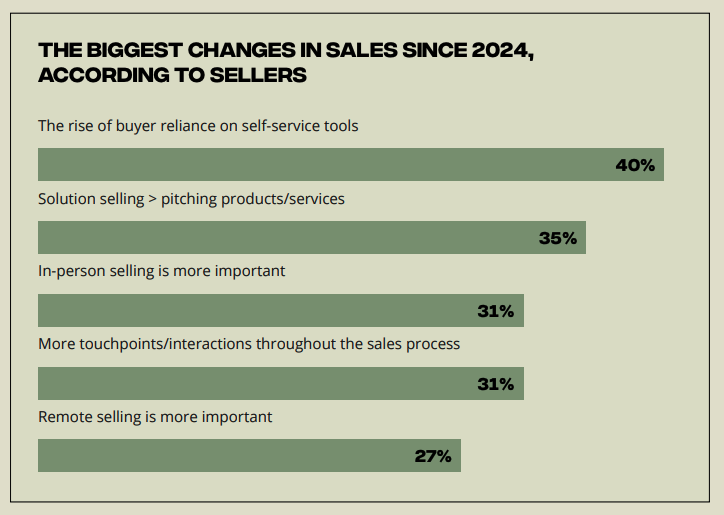
Screenshot from HubSpot’s State of Sales 2025 Report
Meanwhile, HubSpot’s State of Sales Report shares that 40% of sellers reported “the rise of buyer reliance on self-service tools” as the biggest change in sales since 2024. This further supports the data from Gartner.
What this means for outreach and sales teams:
- Buyers are filtering aggressively before responding. So if a buyer books a call with your sales team, then it means they’ve already invested effort into understanding your solution. You must respect this by providing new insights that they didn’t come across in their self-research.
- Generic messaging gets ignored almost instantly. Outreach must align tightly with real problems and timing signals, too.
Bottomline: Relevance used to be a competitive advantage, but in 2026, it’s the minimum requirement to get attention.
AI has made mediocre outreach dangerously easy to scale
There’s no doubt that Artificial Intelligence (AI) has changed outreach in 2025. In fact, 56% of sales professionals use AI in their daily activities.
The benefits are amazing: automated prospecting, automated outreach, and more volume.
What this means for outreach and sales teams:
- The barrier to sending “good enough” emails has disappeared. Inbox noise has increased.
- Quality has become a second priority to speed. Scaling poor messaging is now faster and more damaging.
Bottom line: Simply using or integrating AI into your outreach stack will not automatically create an advantage.
So what should a modern outreach stack actually look like? It’s not a random collection of SaaS tools. It’s not a list of tactics to turn into a checklist or base your KPIs on. It’s a structured system built around four core concepts or layers:
- Data intelligence: Not just using data, but high-quality lead sourcing, enrichment, and intent signals
- Infrastructure and deliverability: Solid email sending systems, proper warmup, and continuous optimization
- Hyper-personalization at scale: AI-assisted crafting of tailored messages at scale
- Continuous feedback and optimization: Real-time access to data and metrics
Layer one: Data intelligence
Let’s get one thing out of the way: list-based outreach is failing.
Before: the goal was to have high-quality lists.
Today: the goal is to move away from static CSV exports towards dynamic signal-based targeting.
Here’s another example:
- Static lists give you basic job title + industry targeting, which ignores buying readiness
- Dynamic signals predict behavior and lead outreach teams to prospects most likely to convert
As you build your outreach stack, go with data intelligence tools that offer the following features or solutions:
- Intent signals
- Buying triggers
- Website visitor identification
- AI-assisted lead scoring
- Micro-ICP segmentation
Layer two: Infrastructure & deliverability
When it comes to sales outreach and marketing, effort doesn’t automatically translate to results. No matter how creative your email is or if you apply all best practices, none of it will matter if your emails land in spam.
As the spam filters of mailbox providers keep getting stricter and stricter, a positive sender reputation has become a must-have.
However, establishing a good sender reputation and a consistent positive deliverability rate are also challenging. There are many moving factors that affect deliverability, and in 2026, these can no longer be ignored.
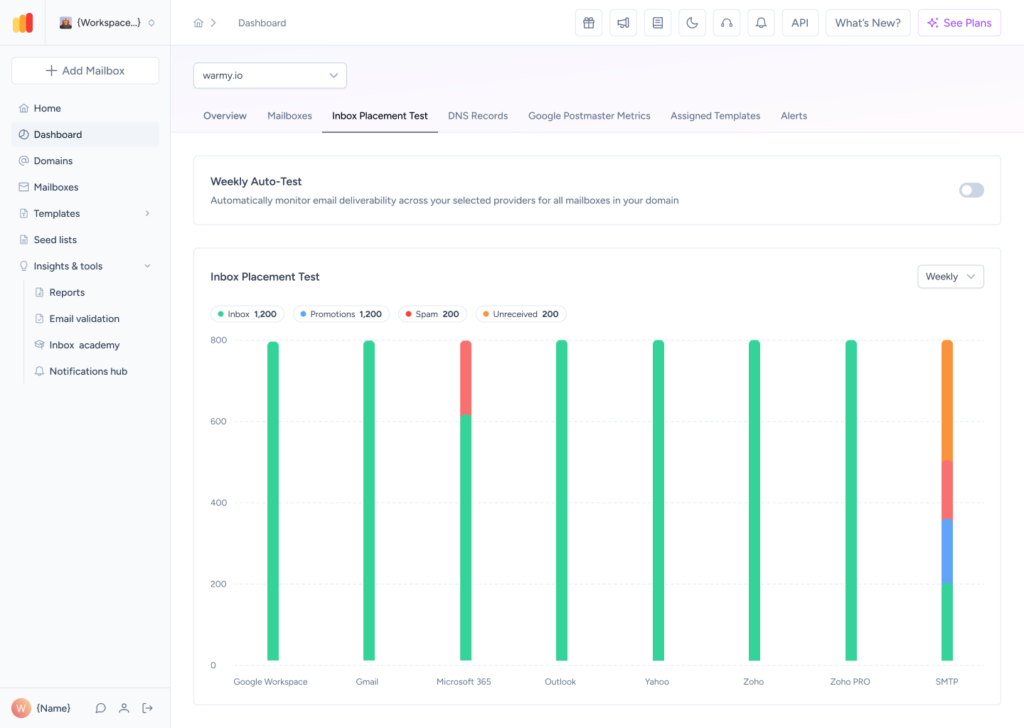
The modern outreach stack must include the following tools and tactics:
- Separate sending domains for outreach to minimize risks and to monitor specific data
- Mailbox distribution strategy to mimic human patterns and avoid volume caps or limits. There are many free tools, like Warmy’s Mailbox Calculator, which let you know the optimal number of mailboxes to use.
- Initial warmup for new domains or previously inactive mailboxes. This gradual ramp-up of sending volume, coupled with positive engagement, builds trust with Email Service Providers (ESPs). This sets you up for success by the time you launch your large-scale campaigns.
- Continuous warmup as deliverability is not a setup checklist. It’s an operating function, a practice, a commitment. Explore AI-powered email warmup solutions that do this behind the scenes. Plus, an email deliverability tool is able to monitor inbox placement, spam rates, domain health, and even blacklisting incidents.
- Real-time access to metrics affecting deliverability. Aside from spam rates and inbox placement, this also includes proactive and continuous monitoring of domain health and authentication protocols.
Layer three: Hyper-personalization at scale
The benefits of personalization have long been known to email marketing experts.
However, “hyper-personalization” is exactly as it sounds: tailoring messages to each individual. This moves away from basic personalization—first names, job titles, company name, industry, location, and so on.
Generic first-line automation like “Hey [First Name], I noticed you’re at [Company]” feels scripted because almost everyone does it. It can trigger instant deletes and inbox fatigue.
AI-written emails without human intervention add volume but zero relevance. Buyers are now spotting templated language that ignores their unique context or timing.
Additionally, hyper-personalization isn’t just about copywriting. It’s about the entire customer journey.
This is what truly scales, and these are what you must include in your outreach stack:
- Context-aware hooks: Reference specific triggers that align with their buying signals. This can include recent funding, new expansions, or even content shared on social media. (Example: I saw your recent post on your Q4 expansion…)
- Segment-specific messaging angles: This takes it a level further than basic segments like location or demographics. This means tailoring pain points by micro-ICP. (Example: Talk about tech issues with CTOs, but talk about ROI with CFOs even if they’re within the same industry.)
- Dynamic personalization blocks: These will still work, but must be implemented sparingly so they come across as natural and not forced. Overuse of dynamic first name tags, for example, tends to sound robotic. Additionally, explore implementing even more advanced dynamic blocks like custom case studies or metrics pulled from intent data. This makes each email even more unique.
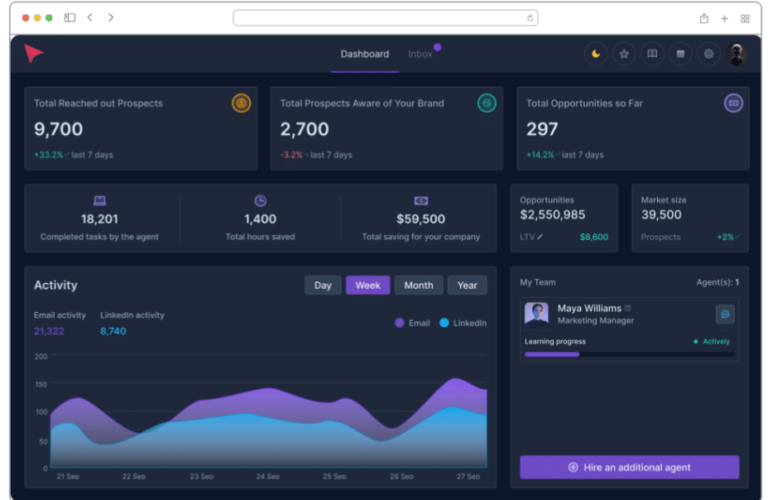
- Leverage AI to create tailored experiences: AI SDR tools, when used properly, can be powerful sales assistants that work across email, phone, and even LinkedIn for faster, more efficient, yet personalized outreach. With AI SDR tools, outreach can be done at scale, and sales teams can focus more on the actual sales call while the AI agents do the prospecting, qualifying, scoring, initial messaging, following up, and even setting the appointment.
Layer four: The feedback loop
Visibility makes scalability possible. If you don’t know what’s working and what’s not, you might as well be moving blindly.
The best source of feedback is your very own data. A lot of sales teams focus on tracking open rates, response rates, and meetings booked. The modern outreach stack must include tools that can track these metrics that can point you towards what needs attention:
- Spam rate and inbox placement by provider
- Domain health score
- Bounce rates and anomalies
- Template-level deliverability
6 reminders for scaling outreach
Scaling outreach in 2026 is more about discipline and consistency instead of tools. These reminders keep your stack aligned, protecting your pipeline while driving growth.
1. Data evolves
Your prospects change jobs or industries. Their companies’ goals change, too. If you reach out with outdated information, it will reflect poorly on the company you’re representing. Regularly refresh intent signals and ICP segments. Stale lists damage domains faster than bad templates.
2. Deliverability is not a one-time thing
Monitor inbox placement and spam rates per provider. Do this regularly, not just before a big campaign launch.
3. Your level of personalization reflects your research effort
Skip first-name fluff. Instead, reel them in with information that aligns with their specific pain points and where they are on the buyers’ journey. There is a huge difference between outreach that jumps straight to a generic solution and outreach that’s relatable and speaks directly to prospects’ situations.
4. Practice safe experimentation
Implement tests without damaging your deliverability. Live campaign testing can trigger spam complaints, expose spam traps, and ultimately end up doing more harm than good.
The modern testing framework includes A/B testing templates during warmup and comparing the deliverability rate per version. You can also test your subject lines on a lower-volume segment with high engagement rates before scaling to the larger group.
5. Being present on more channels is not automatically better
Simply being present on all channels does not mean your outreach will generate more sales. True multi-channel sequencing prioritizes logic over volume and seamless experiences over more prospects.
In 2026, multichannel outreach will work best with behavior-triggered follow-ups, branching based on activity, and signal-based follow-ups. In a nutshell, modern outreach reacts to behavior, and it meets prospects where they are.
6. Humans still have ownership over AI
AI drafts and teams edit for nuance. This is what kills trust faster than spam filters. AI will play an integral role in modern outreach; there’s no question about it.
However, the teams that will scale are the ones that use AI to its full potential and not just generate slop.
Outreach is a system, not a hack
The era of “just send more” died with 2026’s filters and buyer skepticism, cementing the theory that volume without structure burns domains and trust.
The use of AI accelerates both good systems and bad ones, enabling elite teams to scale even further and mediocre practices to fail.
Additionally, teams that treat outreach like infrastructure are the teams that not only capture attention but also deliver relevance.
Build the system. Ditch the shortcuts. Your target customers deserve it.