You don’t want your brand to be that brand; the one that makes someone slam their laptop shut in a meeting because an unexpected video, meme, or image pops up.
Sounds extreme, but it happens more than you’d think.
If you’re putting out any kind of digital content (on social, blogs, newsletters, internal portals), you need to think about where and how people will view it.
Offices, coworking spaces, coffee shops, commutes… Not every setting is the right place to get hit with explicit language, graphic visuals, or sensitive themes.
Adding a clear NSFW warning helps your audience engage on their terms. Beyond protecting their experience, you’re protecting your brand from unnecessary risks.
In this guide, we’ll unpack what an NSFW warning actually is, when it makes sense for businesses to use one, and how to apply it in a way that respects everyone involved.
Let’s begin.
What Does NSFW Mean?
NSFW means “Not Safe for Work.” It started as a quick tag on forums and email threads, back when clicking the wrong link could get awkward fast.
The idea was simple: warn people before they open something graphic, explicit, or just not great to view in a professional setting.
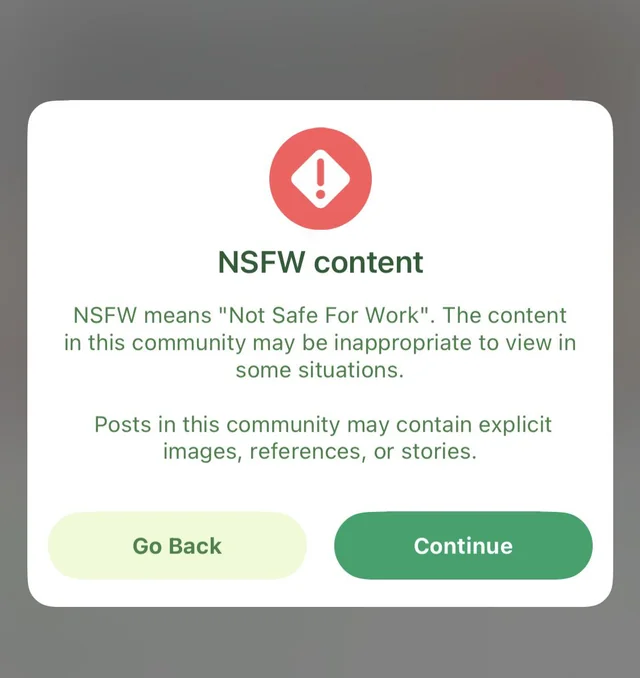
Now it’s everywhere. Posts, memes, videos, private chats. The NSFW warning tells people, “This content might not land well depending on where you are.”
It’s not about censoring. The point here is context, and giving your audience the heads-up they need.
Types of Content Typically Marked NSFW
When most people hear “NSFW,” they think of adult material, but the term actually applies to many kinds of content that may be inappropriate for professional or public settings.
Below are 5 main categories.
🔞 1. Adult or Mature Themes
This includes any content intended for a grown audience, such as:
- Discussions related to intimacy or adult products
- Artistic or educational material that involves the human body
- Media with mature themes
These topics should be labeled clearly so viewers know what to expect.
🩸 2. Intense or Sensitive Visuals
Some content may be difficult to view or may not be suitable for shared environments, including:
- Safety, medical, or training materials that show injury-related scenarios
- News or documentary footage involving difficult real-world events
Even when presented for educational purposes, this type of content benefits from a warning.
🗣️ 3. Strong or Unfiltered Language
Content may require caution if it contains:
- Frequent or intense profanity
- Harsh or confrontational tone
- Direct quotes from emotionally charged situations
These elements can feel out of place in professional settings.
⚠️ 4. Emotionally Heavy or Potentially Triggering Topics
Certain subjects may affect people differently based on personal history or experiences. Examples include:
- Discussions involving personal hardship
- Mental health-related topics
- Sensitive social or workplace issues
Providing a heads-up helps readers prepare for emotionally complex material.
💡 5. Borderline or Context-Dependent Content
Some content isn’t explicit but still might be uncomfortable to open in a meeting or shared space, such as:
- Heated debates
- Edgy or adult-leaning humor
- Memes or imagery that may be misinterpreted without context
In these cases, an NSFW tag acts as a courtesy to the viewer.
NSFW vs. NSFL vs. Other Warnings
While NSFW is widely used, other labels help identify types of sensitive material:
- NSFL (Not Safe for Life): Used for extremely intense or distressing imagery far beyond typical NSFW content.
- CW (Content Warning) and TW (Trigger Warning): Signal potentially sensitive themes such as trauma, mental health discussions, or emotionally heavy material.
These labels provide viewers with context and help them make informed choices about what they consume.
Why NSFW Warnings Matter Nowadays?
NSFW warnings aren’t just a leftover from forum days. They serve a real purpose when you’re publishing content that could catch someone off guard.
And for businesses, ignoring that context can lead to backlash you didn’t see coming.
Let’s break down why these warnings still matter:
Protecting Your Audience in Public or Professional Settings
People don’t only browse content at home. They open posts during meetings, scroll in open offices, or check messages around family.
If something sensitive pops up at the wrong moment, it can turn into a real issue, internally or publicly.
Here’s why it matters:
- Work policies: Many workplaces have zero tolerance for adult or graphic material, no matter how it shows up.
- Perception: Someone glancing at your screen doesn’t know if it’s research or poor judgment.
- Shared spaces: Screens are visible on planes, buses, and cafés. That includes kids.
- Device sharing: Families often use the same devices. One bad click can reach the wrong person.
A clear NSFW warning gives people a chance to choose the right time to view that content.
It also helps your brand avoid being the reason someone gets uncomfortable. Or worse, reported.
According to an IAB report, 68% of consumers lose trust permanently in brands whose ads appear next to offensive content. Another study shows that three-quarters of consumers feel the same when brands are seen next to inappropriate material.
That kind of damage is hard to undo. A simple warning can help you avoid becoming the brand that made someone uncomfortable at work.
Respecting Personal Boundaries and Emotional Safety
Not everyone reacts the same way to sensitive topics. What seems harmless to one person can be upsetting to someone else.
Warnings give people space to decide what they’re okay with, and when.
They help by:
- Acknowledging that triggers are personal.
- Respecting mental health and emotional states.
- Making space for cultural and personal differences.
- Letting people opt in instead of being surprised.
For teams publishing content, this shows awareness. You’re not assuming how people feel; you’re giving them the choice.
Compliance With Platform Policies and Laws
Platforms don’t just suggest labeling sensitive content; they expect it.
Here’s what that looks like in practice:
- Social platforms like Reddit, Instagram, and TikTok flag or blur explicit content unless it’s tagged properly.
- Search engines penalize pages that combine general-audience content with unfiltered material.
- Communities (Discord, Slack, forums) have their own rules and tagging expectations.
- Age restrictions apply to content that crosses the line into adult territory.
Staying compliant isn’t just about avoiding penalties. This is also part of building user trust.
Here are stats worth noting, shared by Gitnux:
- 75% of consumers avoid brands with unsafe ad placements.
- 82% say brand safety boosts their trust.
- 68% would go as far as to boycott brands associated with offensive content.
Using an NSFW warning shows your brand knows the rules and plays by them.
Preventing Unintentional Harm or Embarrassment
Even when there’s no rule break, surprise content can derail a moment.
A graphic image opened in a classroom. A joke viewed mid-meeting. Or even a sensitive clip seen by someone who wasn’t expecting it.
NSFW warnings help prevent that. They signal what’s ahead, so people can engage when they’re ready, or skip it if they’re not.
The Financial Impact of Ignoring Brand Safety
Let’s talk numbers for a second. As also noted by Gitnux:
- 41% of digital display ads show up next to unsafe content.
- 15% of ad spend goes to waste because of poor inventory control.
- Brands lose an estimated $20 billion every year due to unsafe ad placements.
If your posts aren’t labeled correctly, or if your account gets flagged because of repeated issues, it’s not just about reputation.
It can hit your budget, too.
When Businesses Should Use NSFW Warnings
For companies, agencies, marketers, and professional creators, NSFW warnings are a part of brand protection, legal compliance, and audience trust.
Using them correctly helps prevent PR issues, protects internal teams, and maintains a professional online presence. Below are the key business situations where an NSFW tag is essential.
Sexual or Explicit Adult Content
From a business standpoint, anything involving sexual themes is extremely sensitive. Brands must avoid unintentionally exposing employees, clients, or website visitors to inappropriate material.
Even content used for education, health, fashion, or product demos may include imagery that needs an NSFW warning.
Businesses should tag NSFW when content involves:
- Lingerie, intimacy products, or sexual wellness items
- Nude or semi-nude models (even in artistic or medical contexts)
- Sex-related discussions (education, Q&A, guides)
- Image-based case studies involving anatomy
- Market research referencing explicit media
Why it matters for companies:
- HR concerns: Employees opening explicit content at work may face warnings or create uncomfortable situations for coworkers.
- Brand reputation: A single untagged explicit image can damage a brand’s credibility.
- Client professionalism: Clients browsing your content shouldn’t be surprised by adult themes.
- Ad policies: Platforms like Google, Meta, and TikTok restrict or penalize untagged sexual content.
Using NSFW warnings helps brands stay respectful, transparent, and compliant, while still being able to publish necessary adult-related or educational material.
Violence, Gore, and Graphic Imagery
Businesses in fields like journalism, public safety, healthcare, sports, or research may need to show graphic visuals.
But without proper warnings, they risk damaging trust, creating emotional distress, or breaching workplace guidelines.
Tag content if your business shares:
- Crime reports, investigations, or news footage.
- Medical/surgical demonstrations or case studies.
- Accident photos, safety training videos, or injury reports.
- Graphic scenes from documentaries or fieldwork.
Why businesses must warn:
- Shocking imagery can harm employee well-being.
- Distressed users may associate negative emotions with your brand.
- Unmarked graphic content reduces engagement and increases bounce rates.
- Corporate clients expect professionalism and predictable content.
Clear warnings help protect both the viewer and the brand.
Strong or Potentially Offensive Language
Tone matters, especially for businesses. Even if your brand uses humor or casual language, strong or offensive words can alienate customers or violate platform rules.
Content requiring caution includes:
- Customer stories using profanity
- Transcripts of heated conversations
- Comedy or personality-driven posts with strong language
- User-generated comments containing slurs or insults
- Industry case studies involving harsh communication
Business risks of untagged offensive language:
- Complaints to HR or management
- Loss of clients who expect professionalism
- Decreased brand trust and lower customer retention
- Restricted reach or platform moderation penalties
Using NSFW tags helps control context and sets expectations, especially for brands that allow edgy, bold, or unfiltered content.
Disturbing or Sensitive Themes
Businesses increasingly cover serious topics like mental health, harassment, or social issues. These are important conversations, but they require thoughtful warnings.
Content that needs a sensitivity-based NSFW tag includes:
- Case studies involving abuse or workplace harassment
- Discussions around addiction, trauma, or crisis support
- News or analysis involving death or tragedy
- HR or training materials addressing sensitive employee scenarios
Why businesses must be careful:
- Employees or customers may have personal trauma triggers.
- Sensitive topics can cause emotional distress if unexpected.
- Missteps can lead to negative press or social backlash.
- Warnings show that the brand prioritizes empathy and safety.
Adding a warning strengthens trust by respecting the emotional needs of your audience.
Borderline Cases & When in Doubt
If your business content might make someone uncomfortable in a meeting, client call, or shared office space, it’s safer to tag it. NSFW warnings act as risk protection, giving users control and preventing misunderstandings.
When unsure, choose the warning; it only helps your brand.
Best Practices for Clear and Effective NSFW Warnings
If your brand shares sensitive content, how you label it matters just as much as the content itself.
A clear NSFW warning helps protect your audience, your team, and your business. It keeps things professional, avoids workplace issues, and builds trust with people who interact with your brand.
Here’s how to get it right, without overdoing it.
Evaluating Content Risk Before Publishing
Before you hit publish, take a moment to assess the content. Is it something someone could safely view in an office, on a shared screen, or during a Zoom call?
If the answer’s even slightly no, it’s worth tagging.
Ask yourself:
- Does it include nudity or adult themes, even for educational purposes?
- Is there graphic, medical, or violent imagery?
- Does it contain harsh language, slurs, or offensive quotes?
- Is the topic emotionally heavy, like trauma, abuse, or death?
Tagging early helps avoid HR issues, customer complaints, and brand damage. It also gives internal teams a clear playbook so the process stays consistent.
Creating Clear and Accessible Warning Labels
A warning only works if people see it (and know what it means) before the sensitive part shows up.
Make it obvious and readable. Don’t overthink it.
Here’s what that looks like:
- Be specific: Skip the vague “NSFW” when you can. Add context:
- NSFW: Sexual Content
- NSFW: Graphic Medical Image
- NSFW: Strong Language
- Put it up front: The warning should appear before the content, not after. That includes:
- At the top of blog posts
- Above videos
- Over thumbnail images
- In email subject lines
- Keep it consistent: Use the same format across your channels (same icon, colors, layout) so people learn to spot it quickly.
- Think accessibility: Use high-contrast text, clear fonts, and mobile-friendly formatting. The warning should be visible at a glance, even on small screens.
A good label shows respect. It gives people a choice. And it keeps your brand from becoming “that account” people complain about.
Using Blurred Previews, Click-to-Reveal, and Age Gates
Sometimes, a label isn’t enough on its own. If you’re sharing a sensitive image, video, or link, it helps to add another layer of control.
These tools make a big difference:
- Blurred or pixelated previews: Let users click to reveal full content, great for visuals that might not be safe in all settings.
- Click-to-reveal or spoiler tags: These keep things hidden until the viewer opts in. They’re common on forums, CMS platforms, and messaging tools.
- Age gates: If your brand operates in alcohol, adult wellness, or other restricted categories, age verification is a must for compliance.
Why use them? Simple. Because they lower the risk for your users and your brand. They show intention, professionalism, and care.
Balancing Utility With Overuse
NSFW warnings help when used with intention. But if you flag every other post, people start tuning them out. Or worse, assuming you’re trying too hard to play it safe.
A few checks to stay balanced:
- Don’t tag standard industry content unless it clearly needs it.
- Review edge cases as a team so there’s consistency.
- Pay attention to user feedback; if people say the warnings feel excessive, adjust.
The goal is clarity, not caution overload. The NSFW tag should stand out, not blend into your everyday content strategy.
Platform-Specific Considerations (Social, Blogs, Forums)
Every platform handles sensitive content differently, and getting it wrong can lead to hidden posts, reduced reach, or even account restrictions.
Know the rules wherever you post:
- Social media (Instagram, TikTok, Meta, etc.). Sensitive content must be tagged or blurred. Violations can lead to removal or shadowbanning.
- Websites and blogs. Use banners, modals, or “reveal” buttons for sensitive sections. Keep explicit material below the fold when possible. Follow SEO best practices for labeling.
- Forums and communities. Follow each platform’s specific content tagging formats (spoiler tags, NSFW tags). Moderate submissions and enforce the same standards you expect from your brand.
Keeping your content visible depends on playing by the rules. NSFW warnings are part of that equation.
Misconceptions and Challenges
NSFW warnings are everywhere, but that doesn’t mean businesses always use them correctly.
Misunderstandings can create gaps in content safety, trigger moderation issues, and lead to confused internal workflows.
Below are the most common mistakes and how to avoid them.
NSFW Doesn’t Just Mean Sexual Content
One of the most common assumptions: NSFW equals nudity.
That narrow view leads brands to ignore other content that’s just as sensitive—or sometimes even more likely to cause trouble in a professional or public setting.
Other examples that qualify:
- Graphic medical visuals (surgical procedures, injury photos, clinical material).
- Violent or disturbing imagery (accidents, war footage, crime scenes).
- Harsh language (slurs, profanity, unfiltered transcripts).
- Emotionally intense topics (trauma, abuse, addiction, mental health crises).
If you only tag sexual content, you’re just covering the most obvious risk. Broader criteria lead to better decisions and fewer complaints.
Overusing the NSFW Tag Can Hurt Your Brand
Some teams lean too hard on the NSFW warning, tagging anything remotely sensitive. It might feel safer, but the effect is the opposite.
Here’s what happens when you overuse it:
- People start ignoring the label entirely.
- Your content looks riskier than it is.
- Your brand starts to feel disconnected from its audience.
- Your team gets inconsistent on what to flag and what to skip.
The fix: build internal guidelines. What counts as sensitive in your space? A health brand might not tag a surgery image that a lifestyle brand would absolutely flag. Aligning with that definition helps keep your standards sharp.
Don’t label everything. Just label what matters.
Platform Rules Are All Over the Place
Each platform has its own take on sensitive content, and they don’t always align.
What flies on Twitter might be flagged on TikTok. A post that’s fine on your blog might get blurred or blocked on Instagram. And thanks to automated moderation, your content can get taken down even when it follows the rules.
Typical issues:
- Posts removed or hidden with no explanation.
- Ads rejected for unclear “sensitivity” reasons.
- Accounts are restricted or shadowbanned.
- Educational or harmless posts are misclassified as adult content.
Beyond frustration, this affects performance and visibility.
In fact, 7 out of 10 brands and agencies have faced brand safety issues, and 10% say it happens regularly.
Understanding each platform’s standards (and tagging content accordingly) can help you avoid that kind of disruption.
Bottom Line: Make NSFW Warnings Work for Your Brand
If your brand puts out content regularly, skipping NSFW warnings can create problems you didn’t plan for. And they’re easy to avoid.
NSFW labels help your team set clear boundaries and give your audience control. That keeps your posts respectful, your team consistent, and your reach protected across platforms.
The smart brands don’t overuse them. They build a system, set the bar for what needs tagging, and move on.
So, call things what they are, flag what needs it, and let your audience choose when and how to engage.
FAQs
What is an NSFW content warning?
It’s a quick heads-up that the content might not be okay to open at work or in public. Simple as that.
Why is NSFW called “Not Safe for Work”?
It started on internet forums and emails, where people would tag links that could cause problems if opened in the office. The term stuck and spread.
What is NSFW in business?
For companies, NSFW refers to any content that wouldn’t fly in a professional environment. Think nudity, graphic visuals, harsh language, or emotionally intense material.
What kind of business content can be considered NSFW?
More than you’d expect. A medical image, an interview full of profanity, or a case study about trauma can all require tagging. Especially if someone might open it mid-meeting.
Is NSFW the same as sensitive content?
They overlap, but they’re not identical. Sensitive content covers a wider range. Meanwhile, an NSFW warning is more specific to what might cause problems in shared or work-related spaces.
When should my brand include an NSFW warning on content?
Whenever there’s a real chance someone might regret opening it in a public or professional setting. If you’re on the fence, check your internal standards, or build some.
What happens if I don’t label NSFW content properly?
You could end up with complaints, platform restrictions, or lost trust. One mistimed post can do more damage than you think.