
The taxi industry has changed more in the last five years than it did in the previous fifty. Riders expect real-time tracking, upfront pricing, and cashless payment as a baseline.
Anything less and they open a competitor’s app. For anyone building or upgrading a taxi app in 2026, the bar is higher, but so is the opportunity.
This article covers what is actually happening in taxi app development right now, where the real opportunities sit, and which providers are worth talking to if you want to get a product live.
What Has Actually Changed in 2026
Riders Expect More Than Just a Booking Button
A few years ago, a taxi app needed three things to feel complete: book a ride, track it, and pay. That was enough. It is not anymore.
Riders now compare apps the way they compare restaurants on small details. How fast does the app load? Is the fare shown before confirming? Does the driver arrive on time as the app predicted? Does the receipt show up automatically? These are not features anymore. They are expectations.

Apps that skip these details get uninstalled fast, and negative reviews compound quickly. Building in 2026 means accounting for this from the start, not patching it in later.
Electric Vehicles Are Entering Taxi Fleets
EV adoption in taxi and cab fleets has picked up considerably in markets across Europe, Southeast Asia, and parts of the Middle East. This creates a direct impact on app development. Apps need to show battery range estimates, factor in charging time when assigning long-distance trips, and, for some markets, let riders filter for EV rides specifically.
Not every market is there yet. But if you are building a platform for a city where EV fleets are growing, this is worth building for now rather than retrofitting later.
Multiple Vehicle Types Under One App
Single-vehicle apps are losing ground to platforms that offer sedans, SUVs, bikes, autos, and minivans all through one booking interface. Riders want one app that covers all their transport needs. Operators want one admin panel to manage everything.
This shift has a direct effect on development scope. It is not just a visual change: the backend needs to handle different fare logic, different driver categories, different commission rules, and different cancellation policies per vehicle type.
Scheduled Rides Are Now a Core Feature
Ride scheduling booking a trip hours or even a day in advance used to be treated as a nice extra. In 2026, it is a mainstream expectation, especially for airport trips and corporate accounts. Apps without scheduled rides push those users to competitors that offer it.
Corporate and Business Accounts Are a Growth Channel
A growing number of businesses manage employee transport through taxi apps. They need invoices, monthly billing, trip approval workflows, and spending limits per employee. These are not small add-ons; building proper corporate account functionality takes real development effort. But the revenue from business accounts is consistent and predictable compared to individual riders.
Where the Real Opportunities Are in 2026
Tier-2 and Tier-3 Cities Are Wide Open
The major metros are crowded. In most large cities, Uber, Lyft, Grab, Ola, or a strong local competitor already owns the market. Competing there requires massive marketing spend and deep pockets.
Tier-2 and tier-3 cities are a different story. Ride-hailing adoption in smaller cities is still early in many countries. Local operators who know the market, have driver relationships, and can offer a reliable app have a genuine advantage over international platforms that treat smaller cities as an afterthought.
The opportunity is real, but only for operators who build a product that actually works reliably, not a broken clone they can barely maintain. Success also depends on effective growth strategies that help local operators acquire and retain customers in competitive markets.
Niche Services With a Focused Audience
General ride-hailing is competitive. Niche services are not. Women-only cab services, school transport platforms, medical transport apps, and senior-focused ride services all address specific groups with specific needs. A purpose-built app for one of these audiences with features designed around that audience faces far less direct competition than a generic cab app.
Outstation and Intercity Trips
Most ride-hailing platforms focus on short, in-city rides. Intercity and outstation trips are a separate segment that many platforms handle poorly. Building a taxi app specifically around intercity routes with distance-based pricing, round-trip booking, and driver rest stop planning addresses a real gap in a lot of markets.
Driver Ownership Models
Some operators are experimenting with giving drivers equity stakes or profit-sharing arrangements, with the app acting as the platform. This is more of a business model than a development trend, but the app needs to support transparent earnings reporting, driver performance tracking, and direct payout management to make it work.
What the Development Actually Involves
Building From Scratch vs. Using a Ready Platform
Building a taxi app from scratch in 2026 is a significant undertaking. A full product rider app, driver app, admin panel, and backend built by a competent development team takes between four and twelve months, depending on feature scope. The cost ranges from tens of thousands to hundreds of thousands of dollars depending on where the team is based and how complex the requirements are.
Most operators, especially those launching in a single city or region, do not go this route. They use a ready-made taxi app platform or Uber clone product, configure it for their market, and launch in weeks rather than months. This is the practical path for the majority of new taxi businesses.
The case for building from scratch is narrow; you need very specific features that no existing platform offers, and you have both the budget and the timeline to wait for it.
The Tech Stack Matters More Than It Used to
A few years ago, almost any working tech stack was good enough for a local taxi app. In 2026, performance expectations are higher, and the technical bar has moved with them.
Apps need to handle real-time location updates smoothly without draining the phone battery. The backend needs to process booking requests and driver matching quickly, even during peak hours. Payment processing needs to be secure and fast. These are not optional.
When evaluating a platform or a development agency, ask specifically about the tech stack they use and whether it has been tested under real load. Vague answers about “modern technology” mean nothing.
iOS and Android Both Matter
Dropping one platform to save cost is a mistake in most markets. Rider behavior splits between iOS and Android vary by country, but in most markets, both platforms have significant user bases. A taxi app that only exists on one platform immediately cuts out a portion of the potential rider pool.
Driver apps are similarly split. Many drivers in emerging markets use Android exclusively. Make sure the driver app works well on mid-range Android devices, not just flagship phones.
Leading Providers of Taxi App Development Services
Choosing who builds or supplies your taxi app is as important as the feature list. Below are providers with established products in this space, described based on what they publicly offer.
Uberclone.co
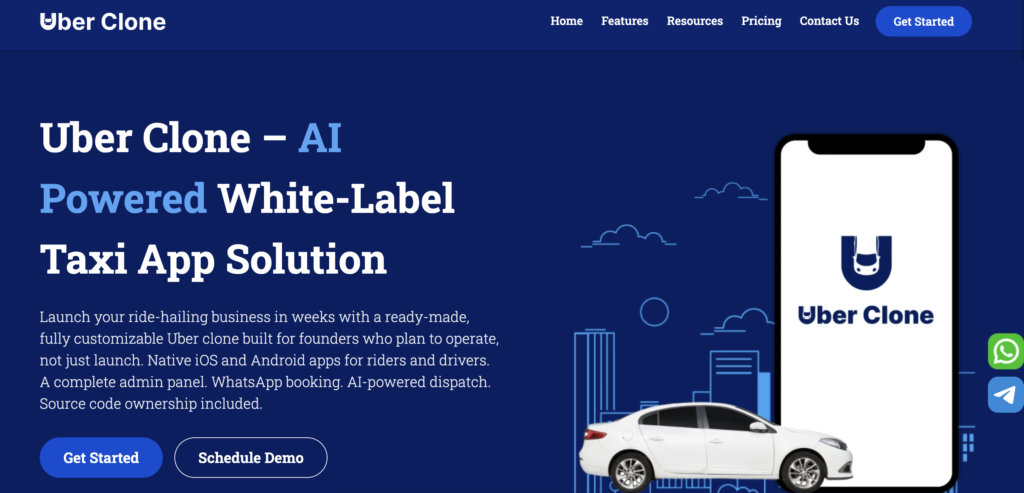
Among the many Uber Clone Script providers in the market, Uberclone.co stands out as a cleaner option for operators who want a focused taxi app without extra layers of complexity. Their platform is built specifically around ride-hailing; there are no bundled modules for unrelated services eating into the product quality.
The product includes rider and driver apps for iOS and Android, plus a web admin panel. Core features cover live GPS tracking, upfront fare calculation, payment processing, driver management, booking history, and promo code support.
Clients receive the full source code. The product runs on your own servers. Uberclone.co has no ongoing hold over your platform after the handover.
Deployment is faster than most source code solutions because the product is already structured for launch rather than requiring heavy configuration from your end. A developer is still needed for server setup and app store submissions, but the baseline product does not require rebuilding before it is usable.
Good fit for: Founders launching a local or regional taxi service who want a working, owned product without a long development wait.
Elluminati
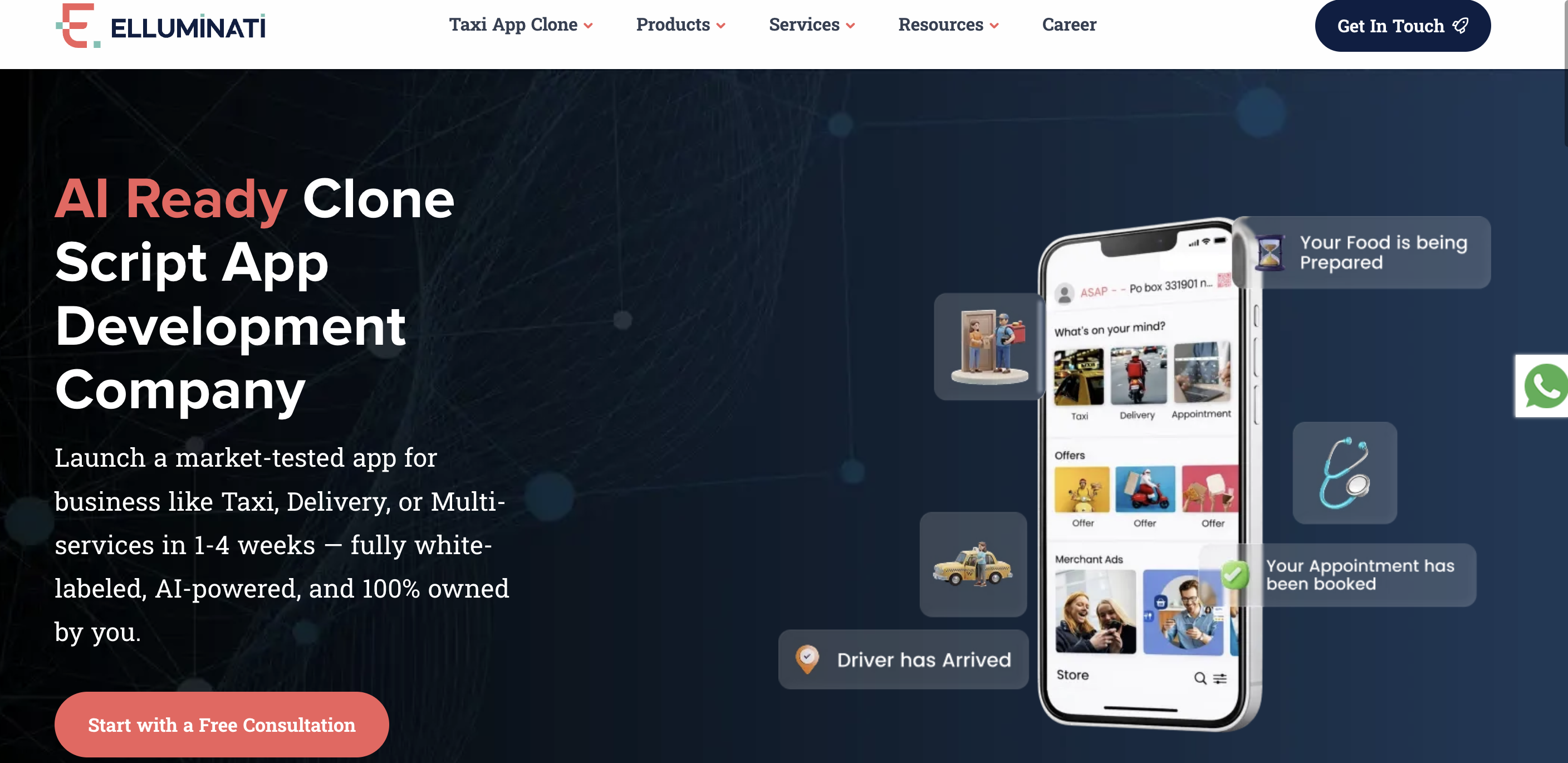
Elluminati has been building on-demand software since 2015, and their taxi product reflects years of refinement across real client deployments.
They ship with more out of the box than most clone products:
- Rider and driver apps for iOS and Android
- Dispatcher panel for manual trip management alongside automated assignment
- Admin dashboard with driver verification, zone-based pricing, commission controls, and reporting
- Multi-vehicle category support: one system handles sedans, bikes, autos, and larger vehicles
The source code goes to the client. Your platform lives on your infrastructure, not Elluminati’s.
One thing worth noting about Elluminati: because they have deployed EMile across multiple countries, the product already accounts for things like multi-currency, regional payment methods, and local language support. These do not need to be custom-built from scratch.
Custom development and post-launch support are available as paid services for operators who need additions beyond the standard product.
Good fit for: Businesses planning to run multiple vehicle categories or launch in markets with specific regional requirements, and who have a developer to handle deployment.
Appdupe
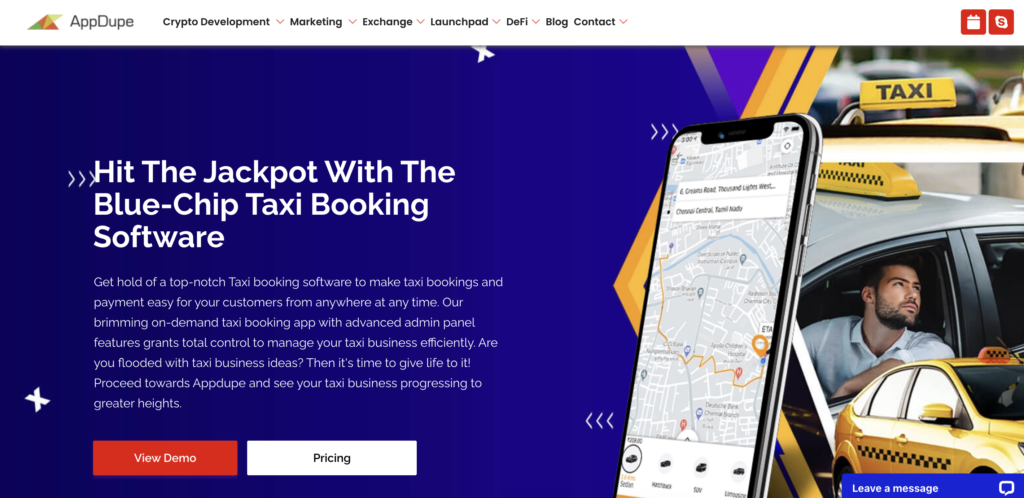
Appdupe covers ride-hailing as one of its primary development verticals. Their taxi app product includes rider and driver apps for both platforms, an admin panel, GPS tracking, scheduling, payment integration, and driver earnings management.
What makes Appdupe worth considering for some operators is its end-to-end service. They handle app store submission, a step that trips up many first-time founders because Apple and Google have specific technical requirements for ride-hailing apps. Appdupe manages that process as part of its service delivery.
They also offer custom development as an add-on. Operators who need a specific feature, a particular payment gateway, a custom booking flow, or a corporate account module can get it built through Appdupe rather than finding a separate development team.
Timelines and pricing are discussed directly based on what each client needs.
Good fit for: Operators who want a single vendor to handle the product, any custom additions, and app store publishing end to end.
Yelowsoft
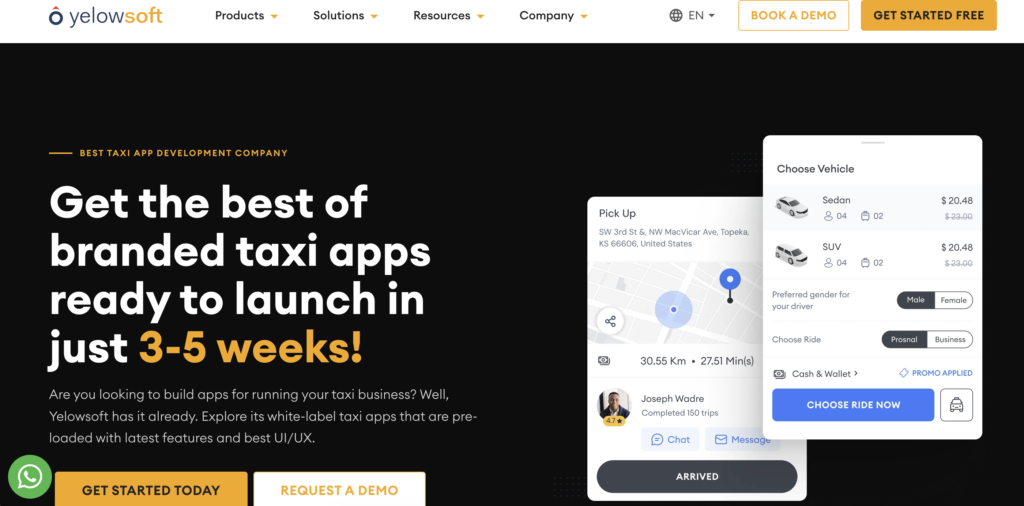
Yelowsoft offers taxi and ride-hailing software on a subscription basis. You do not buy code; you pay monthly and use their hosted platform.
The product leans toward structured fleet and taxi operations rather than startup-style deployments. It includes zone-based pricing, a corporate booking module, driver duty slips, and automated driver allocation tools. A fleet manager or taxi company running multiple shifts and vehicles daily will find these tools genuinely useful.
Because Yelowsoft hosts the platform, server management is not your problem. You log in, configure your settings, and the infrastructure is handled. The trade-off is straightforward: you do not own the backend, and you are dependent on Yelowsoft’s uptime and pricing decisions going forward.
Good fit for: Established taxi operators or transport companies that want operational software up quickly and prefer a managed setup over owning and running their own servers.
Jugnoo
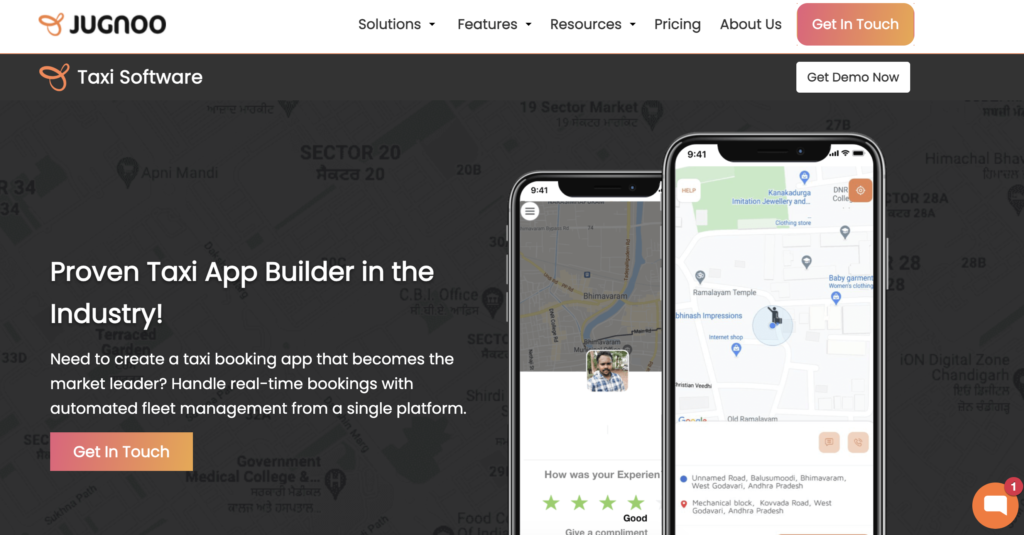
Jugnoo’s entry into the software market came from actually running a ride-hailing service. They operated auto-rickshaw and cab bookings handled by real drivers, real riders, and real operational problems, then packaged what they built into a white-label product for other operators.
That background shows in the feature set. Shared rides, auto-rickshaw booking, dispatcher workflows, and local payment handling were not added because a competitor had them; they were built because Jugnoo needed them to run their own service.
Their platform covers taxi services, auto-rickshaw booking, and food delivery. Both a SaaS version and a licensed source code version are available depending on what the client needs. The licensed version gives full ownership; the SaaS version is quicker to set up.
Good fit for: Operators in markets where mixed vehicle types, shared rides, and local urban transport patterns are common, particularly relevant across South and Southeast Asia.
Questions to Ask Any Provider Before Signing
Do not skip these regardless of which provider you are leaning toward:
- Has the product been live on the Apple App Store and Google Play? Ask for the app names. Search for them yourself.
- What happens when a payment gateway changes its API? Who fixes it, how fast, and at what cost?
- Can I speak to two existing clients? A provider confident in their product has no reason to say no.
- What does the source code handover include? Documentation, deployment instructions, and database setup guides ask specifically.
- How does the platform handle mobile app security, user data protection, and payment information? Ask about encryption, access controls, and security updates.
- How long does a typical deployment take from payment to live app? Get a real number, not a range so wide it means nothing.
One Last Thing
The taxi app market in 2026 rewards operators who treat the technology as a business tool rather than a trophy. The app does not win customers; your drivers, pricing, and reliability do. But a poor app destroys customer retention faster than almost anything else.
Get the product right, pick a provider who stands behind it, and put your energy into the operations that actually grow your business.