Imagine your company acquires three brands in two years.
Each one arrives with its own CMS, content model, and dev team. A single legal update now means changes in four systems. Launch a cross-brand campaign, and you’re coordinating teams that can’t share a single component.
Every acquisition adds debt instead of opportunity.
This isn’t hypothetical. For companies running a portfolio of brands, it’s Tuesday.
It’s also why more of them are leaving Sitecore. The usual suspects get blamed: licensing, a complex setup, the pull toward headless. Those are real. But they aren’t the deepest reason.
The real question is harder.
Can one platform let every brand move on its own while developers manage a single foundation underneath?
If you’re shopping for a Sitecore alternative, that’s the question that matters.
Why enterprises leave Sitecore
Sitecore earned its reputation. Plenty of global companies still use it to run complex sites and personalization.
The problem isn’t that Sitecore can’t do enterprise work.
It’s that many companies changed faster than the platform under them.
A big company rarely runs one website anymore. It runs:
- Multiple consumer brands
- Regional sites
- Online stores
- Mobile apps
- Customer and partner portals
- Channels that didn’t exist when the CMS was installed
Meanwhile, engineering wants reusable services instead of one tightly coupled system, and marketing wants to ship campaigns across every channel at once.
Older CMS setups strain under both.
The complaints sound the same from company to company:
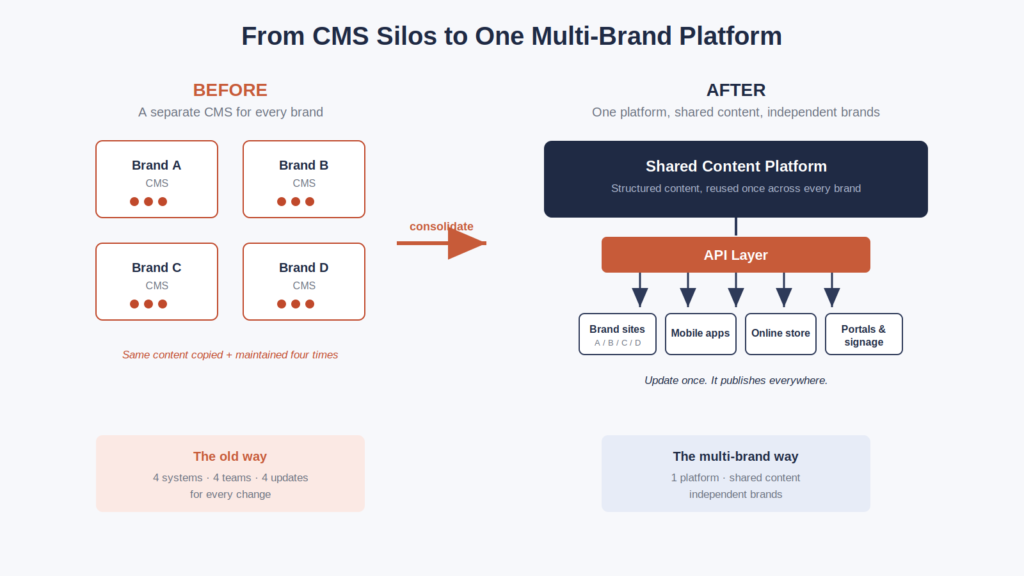
- A separate CMS for every brand
- The same content copied across teams
- Slow upgrade cycles
- Content welded to page layout
- Painful overhead after every acquisition
None of this is unique to Sitecore.
Most traditional platforms were built when running a few websites was the whole job.
Today you’re running a portfolio, not a website.
And swapping one CMS for another without fixing how you operate just moves the same mess somewhere new.
The real problem isn’t content management. It’s multi-brand operations.
Here’s what I’ve watched go wrong.
When companies shop for a CMS, they compare feature lists.
Does it do localization? Workflows? Preview? Does it plug into our martech?
Fair questions.
They just don’t explain why some CMS projects pay off while others turn into expensive nothing.
The real test is simpler:
Can your CMS add a brand without multiplying your headaches?
Picture a company running six brands across Europe and North America.
Each has its own voice, design, editors, and product catalog.
But they all share the boring, critical stuff: legal disclaimers, product specs, sustainability policies, compliance copy.
That split starts a tug-of-war.
Central IT wants one set of integrations, permissions, and servers.
Brand teams want to change their own content models without waiting in a developer queue.
Most platforms make you pick a side.
Either every brand bends to one rigid structure, or every brand runs its own island.
Neither scales.
The platforms that win let you keep shared plumbing underneath and independent editing on top.
That’s the real reason headless and composable CMSs took off.
What to look for in a multi-brand CMS
Replacing Sitecore isn’t about the longest feature list. It’s about matching how your company actually runs.
Five things are worth checking before you book a single demo.
Shared infrastructure, separate lanes: Brands should share one platform but still move independently, so engineering integrates in one place without forcing every team into identical workflows.
Structured content, not pages: Old systems store content as finished web pages. Modern ones store it as reusable pieces. Write a product spec once, and it feeds your sites, apps, displays, and partner portals. No recreating it five times.
Brand autonomy: Every acquired brand grows its own taxonomies, approvals, and schedules. Forcing them all into one global schema just creates friction. Look for platforms that let each brand keep its own structure under shared rules.
Real content reuse: Legal copy, specs, media, brand guidelines get duplicated everywhere because sharing them was never easy. The right platform makes shared content reusable while letting brands tweak the local wording.
API-first delivery: Content shows up on sites, apps, stores, signage, voice, and channels you haven’t planned yet. API-first keeps content separate from presentation, so your devs pick the frontend and new channels don’t blow up the roadmap.
Incremental migration (no less important): Few companies rip and replace overnight. Moving one brand at a time, in stages, while the old system keeps running, takes the risk way down.
Comparing the best Sitecore alternatives
No CMS is “best.” Each one bets on a different idea of how content should work.
So don’t ask which has the most features. Ask which fits how you’ll grow over the next five years.
| Platform | Best For | Multi-brand | API-first | Visual Editing | Watch Out For |
| Hygraph | Companies running multiple brands and channels | Excellent | Yes | Limited | Needs a structured-content mindset |
| Contentful | Composable stacks with strong engineering | Excellent | Yes | Limited | Pricing climbs as you scale |
| Contentstack | Governance-heavy organizations | Excellent | Yes | Basic | Heavier to implement |
| Storyblok | Marketing teams that live in visual editing | Very Good | Yes | Excellent | Less suited to highly custom setups |
| Sanity | Developer-led teams wanting full control | Good | Yes | Good | More engineering ownership |
| Adobe AEM | Companies already inside Adobe’s tools | Excellent | Hybrid | Excellent | High cost and complexity |
Here’s where each one earns its place.
Hygraph
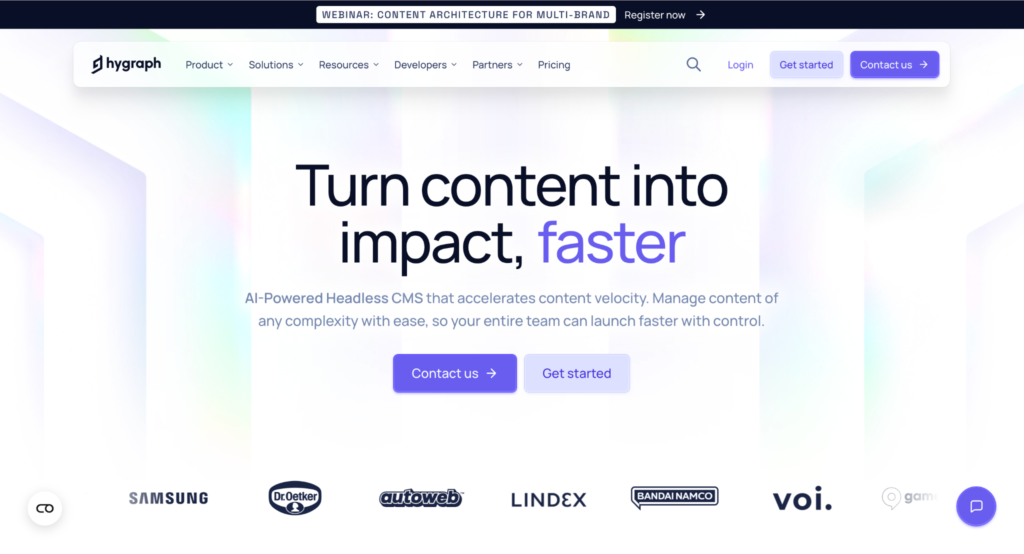
Hygraph is a structured content platform purposefully built for multi-brand management. Content lives as reusable data and ships to any channel through GraphQL.
If your biggest headache is running several brands that share content but not identity, this is where it shines.
You get one platform for engineering to govern, while each brand keeps its own content models and editors.
It’s also kind to companies that grow by acquisition: onboard a new brand on its own and migrate it over time, instead of forcing a global rebuild.
Where it’s not the obvious pick: if you want marketers assembling pages visually with little developer help, you’ll feel the gap.
Contentful
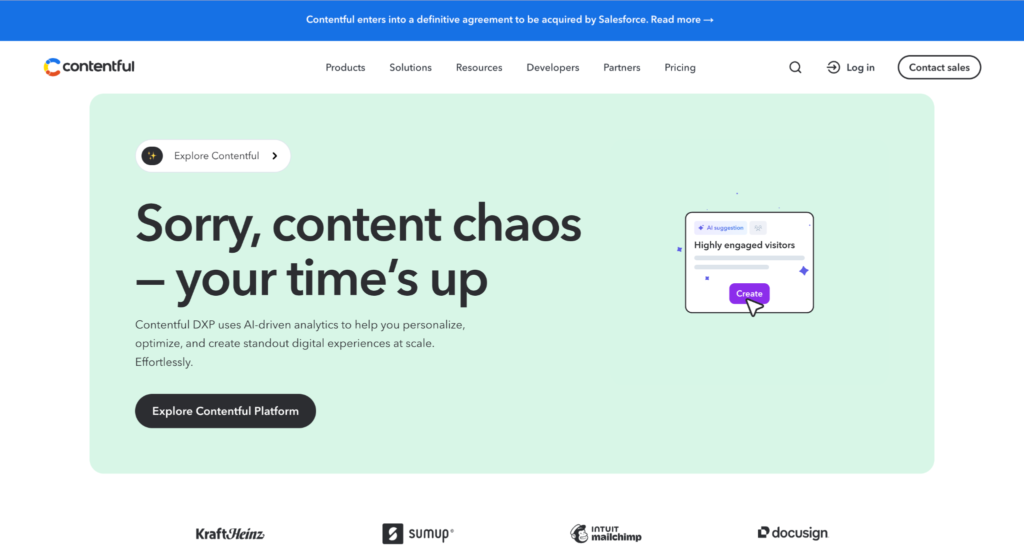
Contentful helped invent this market, and it’s still a top choice for composable stacks.
The content modeling is mature, the integrations are everywhere, and strong engineering teams move fast on it.
The catch shows up later.
As you add brands and regions, you end up juggling multiple spaces, environments, and workflows, and keeping them consistent takes real effort.
If you’re already committed to a composable stack with engineers to run it, it’s one of the safest swaps for Sitecore.
Contentstack
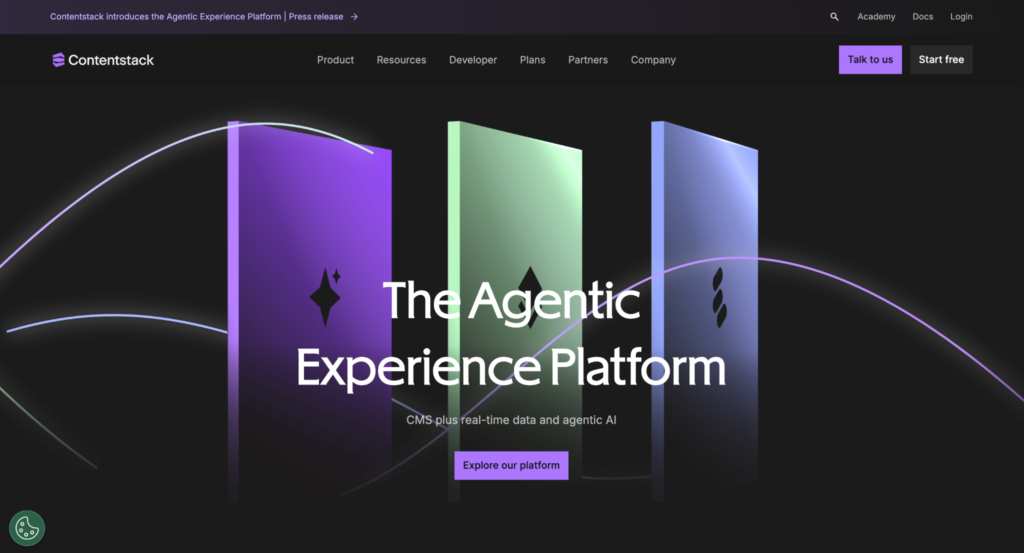
Contentstack is the governance pick. Role-based permissions, serious workflows, and strong support for complex publishing are its home turf.
Big organizations with mature operations and a dedicated platform team get the most out of it.
Keep in mind, however, that getting full value takes thoughtful setup. Contentstack rewards planners, not improvisers.
Storyblok
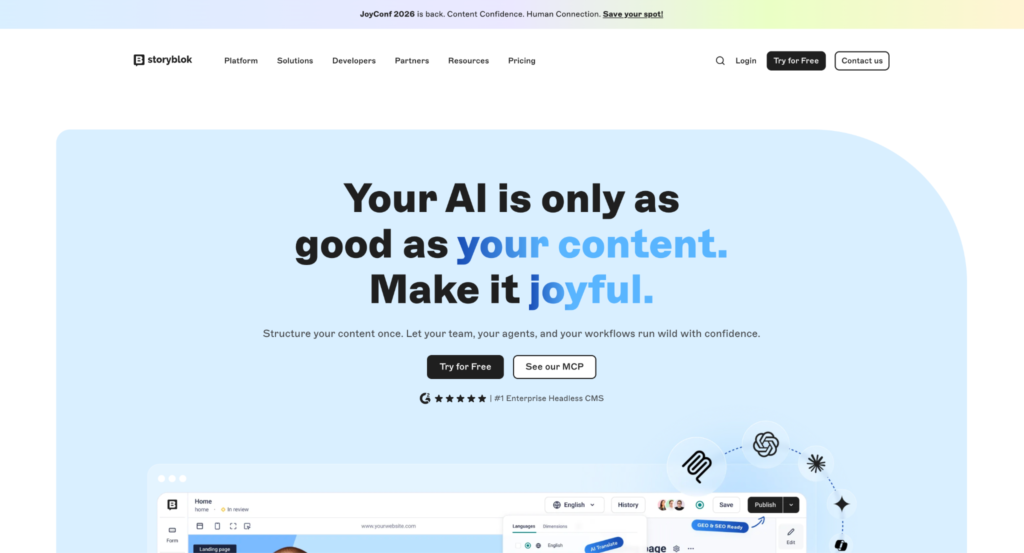
Storyblok won a lot of fans because editors actually enjoy using it. Visual editing is its standout strength, especially for marketing teams cranking out landing pages and campaigns.
It’s headless underneath, but it doesn’t make editors pay for that with a clumsy interface.
If your content people build pages all day, it cuts their dependence on developers sharply.
Its multi-brand muscle is still growing, so the most complex permission setups may need extra planning.
Sanity
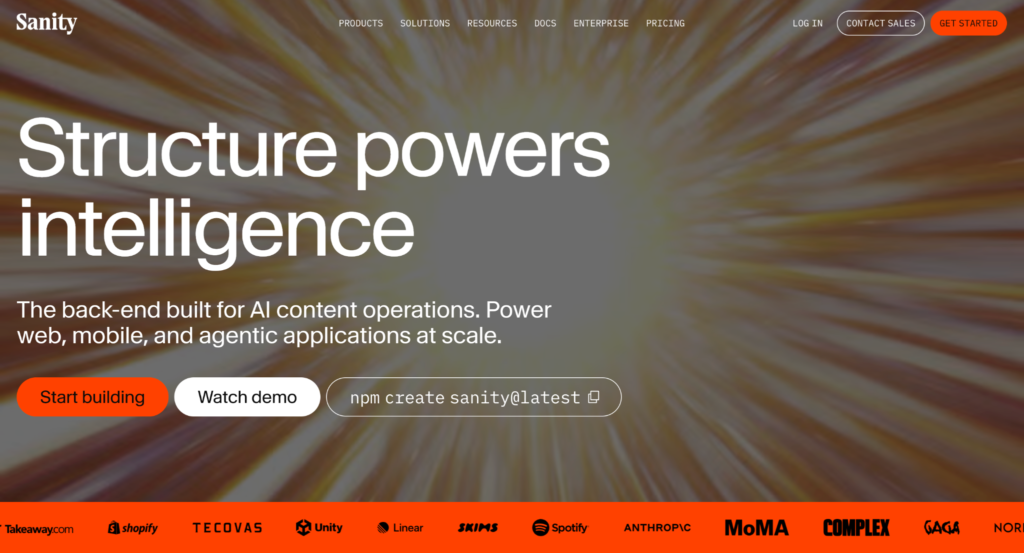
Sanity hands developers a blank canvas.
Its Studio is endlessly customizable, so teams build the editing experience they want instead of bending to a fixed one.
That’s powerful, and it’s also a trade-off. A blank canvas means you’re the one painting it.
Expect to invest engineering time building and maintaining your CMS rather than simply using one.
It’s a great fit if you treat your CMS as an app you own, not a product you buy.
Adobe Experience Manager
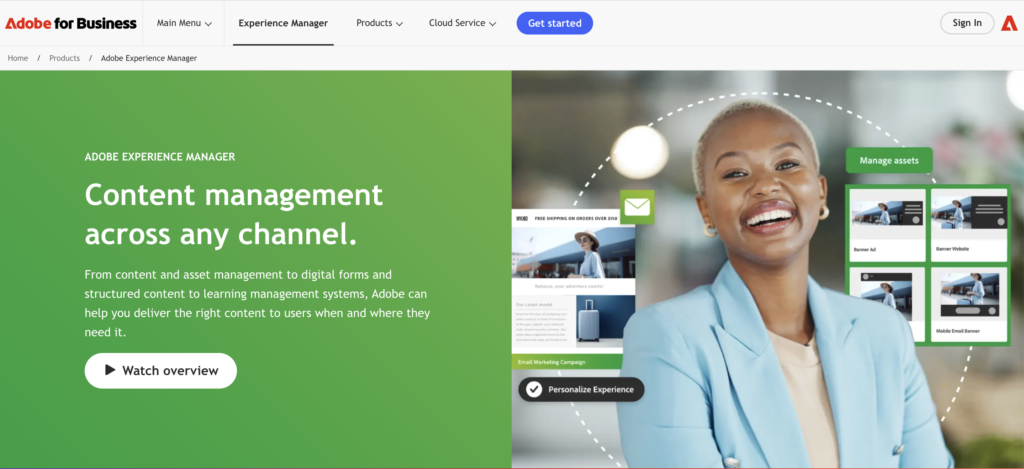
AEM is incredibly capable, but it comes with a price. Most companies won’t just buy the software. They’ll also need implementation partners, dedicated developers, and the budget to keep everything running.
If you’re already deep in Adobe, with Analytics, Target, and Creative Cloud, that trade-off can be worth it, and big enterprises running heavy personalization still choose it.
If you just need a great CMS, AEM is often more platform than you need.
Which CMS fits your team?
Skip to the part that sounds like you.
Choose Hygraph if:
- You manage multiple brands.
- You want to reuse structured content across them.
- Your frontend teams already use modern frameworks.
- You expect more acquisitions.
Choose Storyblok if:
- Marketing owns most of your pages.
- Visual editing matters more than raw API control.
Choose Contentful if:
- You’re building a composable stack and have engineers to run it.
Choose Contentstack if:
- Governance and permissions are your top priority.
Choose Sanity if:
- You want total control and have the developers to build it.
Choose AEM if:
- You’re already living inside Adobe’s tools.
One rule above all: don’t pick for today.
Pick the CMS that still makes sense after your next acquisition, your next launch, and your next channel.
Key takeaways
- Replacing Sitecore is a chance to fix how you run content across brands, not just to swap software.
- Multi-brand operations, structured content, and API-first delivery matter more long-term than any single feature.
- The best CMS depends on your team and your growth plans, not a universal ranking.
- If you run many brands, favor platforms that share infrastructure but keep editing independent.
- Migrating one brand at a time beats a risky big-bang replacement.
What’s next?
Before you book a single demo, map how content actually moves through your company.
- Which content is duplicated across brands?
- Where do editors sit waiting on engineering?
- What should exist once but show up everywhere?
Those answers tell you more about the CMS you need than any feature chart ever will. Then judge each platform on how well it fits the company you’re becoming, not just the one you run today.