
I know what you’re thinking: “Content marketing for lawyers? Sounds as exciting as reading legal briefs!”
But trust me, it can make a real difference for your practice.
Today, you can’t just rely on word of mouth. You need to be where your clients are: online.
And the numbers don’t lie: 96% of people looking for an attorney start with a search engine.
That means your next client is probably searching right now, and your content is what helps them find you.
I’m here to tell you that content marketing for law firms and lawyers doesn’t have to be complicated. It’s about sharing what you already know in a way that connects with people.
Let’s break it down so you can start seeing real results. Shall we begin?
TL;DR: Law Firm Content Marketing
Short on time? Here’s the recap:
- Content marketing helps law firms build trust, rank higher in search, and attract better clients. All without chasing leads.
- A solid strategy comes first: define your audience, pick the right topics, and publish content that answers real legal questions.
- High-performing formats include blog posts, videos, case studies, checklists, and guides.
- SEO, consistency, and regular updates matter more than volume.
- 89% of law firms already invest in content; so, don’t fall behind.
- Want results? Focus on clarity, relevance, and quality over noise.
What Is Content Marketing for Lawyers and Law Firms?
Content marketing helps law firms stay relevant in a market where legal expertise alone doesn’t guarantee visibility. It’s a way to answer client questions before they reach out and to build credibility long before any consultation happens.
It works through strategic content: blog posts, guides, videos, FAQs, and explainers that address the issues your ideal clients are already searching for.
Also, it attracts and engages prospective clients by addressing their questions and needs:

This approach is no longer optional. As reported by Law Firm Marketing Pros, 89% of law firms say content plays a critical role in their overall marketing strategy.
Content gives people a reason to trust your firm, remember your name, and ultimately choose you over another result on Google.
How Can Law Firms Benefit From Content Marketing?
Content marketing works best when it’s tied to specific business goals. For law firms and lawyers, that means more than showing up in search results:
1. Establish Authority and Build Trust
People don’t just hire law firms; they hire the lawyers they trust. And trust starts well before that first consultation.
Publishing useful, well-written content helps position your firm as a credible authority. Blog posts, guides, and articles that address specific legal questions show potential clients that you know your field and understand what they’re going through.
Consistency matters here. When your content reflects your expertise and speaks directly to client concerns, it builds confidence and keeps your name top of mind.
Take personal injury, for example. A simple article explaining what to do after a car accident, paired with practical steps and safety tips, can do more than inform.
If you close with something like “For local guidance and next steps after an accident, consult a personal injury lawyer,” you’ve created value and opened the door to a real connection.
Want to see a real-life example? Stay tuned. We’ll get into it later on.
2. Attract the Right Clients
Effective law firm content marketing helps attract clients who are actively searching for legal information online.
With the right content, your firm can target specific and relevant keywords and topics that resonate with your ideal clients, bringing them directly to your website.
This targeted approach ensures that the traffic you generate is not just random visitors. Instead, you’ll reach people who are genuinely interested in your services and are more likely to convert into paying clients.
Many firms also collaborate with a marketing agency for law firms to support these efforts. Especially when aiming to scale outreach or gain deeper insights into industry-specific marketing trends.
3. Improve Client Engagement
Content marketing for law firms also plays a key role in client engagement.
Generating high-quality content ideas that resonate with your audience is essential for maintaining their interest and addressing their needs.
Engaged clients are more likely to trust your firm and seek your services when needed.
So, provide content that answers their questions, addresses their concerns, and offers actionable advice. That way, you’ll keep potential clients engaged with your firm.
4. Support SEO Efforts
Search engine optimization (SEO) remains a key component of digital marketing, especially for law firms aiming to attract clients through organic search.
Content plays a central role here. Publishing articles, blog posts, and landing pages that target specific legal keywords helps your site rank higher in search results. That means more potential clients find you when it matters most.
And firms are seeing real returns. 79% of law firms say SEO is their most effective marketing channel, as noted by Law Firm Marketing Pros. Meanwhile, some report a 526% average ROI from SEO over three years.
In addition, publishing strong content increases your chances of earning backlinks from reputable sites. That’s another major boost for search rankings and credibility.
5. Enhance Your Online Presence
A strong online presence doesn’t happen by accident.
Content marketing helps law firms show up consistently: on search engines, social media, legal directories, and beyond.
When your content is visible across multiple platforms, your firm becomes more familiar and more credible in the eyes of potential clients. That recognition builds over time, reinforcing your reputation and expanding your reach.
It’s not just about being found. What matters is being remembered and being the first choice when legal help is needed.
Developing a Law Firm Content Marketing Strategy: Step-by-Step Guide
A lot of firms jump straight into posting content without ever defining a real direction.
That’s where confusion usually starts. Many treat a content plan and a content strategy as if they were the same thing.
Here’s the difference:
A content marketing strategy defines the why, who, and what. Why you’re creating content, who it’s for, and what messages you want to deliver.
Meanwhile, a content marketing plan handles the when and how: the formats, topics, publishing schedule, and distribution channels that bring the strategy to life.
Both matter. But strategy comes first.
With recent Google updates, it’s even more critical to produce content that reflects real expertise and answers real questions.
The algorithm now prioritizes content that demonstrates E-E-A-T (experience, expertise, authoritativeness, and trustworthiness). Especially in fields like law, where accuracy and credibility are non-negotiable.
That’s exactly what a strong content marketing strategy sets you up to create.
Here’s how to build it:
Step 1. Define Goals and Target Audience
The first step in developing a content marketing strategy for your law firm is to clearly define your goals.
So ask yourself: What do you want to achieve with your content?

Be it increasing brand awareness, generating leads, or establishing your firm as a thought leader, your goals will shape your entire strategy.
Equally important is identifying your target audience. Understanding who your ideal clients are (their needs, challenges, and behaviors) allows you to tailor your content to resonate with them.
This targeted approach ensures your content is relevant and engaging, making it more effective in attracting and converting prospective clients.
Step 2. Research Competitors and Industry Trends
Next, you’ll want to research your competitors and stay informed about industry trends.
Generating content ideas through direct engagement with prospective clients and analyzing recurring questions they ask can significantly enhance your content strategy.

Analyzing what other law firms are doing in their content marketing efforts can provide valuable insights and identify gaps in the market that your firm can capitalize on.
Also, stay up-to-date with the latest legal industry trends. That allows you to create timely content that also positions your firm as an expert in emerging areas of law.
Step 3. Outline Content Themes and Topics
Once you’ve defined your goals and target audience and have a clear understanding of your competitive environment, the next step is to outline content themes and topics.
Content themes are broad areas of focus that align with your firm’s expertise and the interests of your audience.
For example, themes could include “Family Law,” “Personal Injury,” or “Corporate Litigation.”
Under each theme, you can then develop specific topics that address common client questions, legal challenges, or recent developments in that area of law.

With this approach, you ensure that your content is cohesive, comprehensive, and consistently aligned with your strategic objectives.
A well-developed content marketing strategy is essential for guiding your law firm’s marketing efforts and ensuring that every piece of content you produce serves a specific purpose.
Step 4. Find the Right Content Topics
Choosing the right topics is what separates content that ranks from content that gets ignored. The point here is answering the questions your potential clients are already asking.
Here are four proven ways to identify content ideas that matter:
1. Client FAQs and Common Legal Queries
Your clients are already giving you content ideas; you just need to pay attention.
What questions keep coming up in consultations? What concerns do people raise before they decide to hire you?
Turning those real-life questions into blog posts, guides, or explainers helps you show up for the exact queries people are typing into Google. It also builds trust by showing that you understand what matters to them.

2. Competitors’ Content
Look at what other firms in your area or practice are publishing. What topics are they covering? What’s getting shared or linked to?
You don’t need to copy them. The goal is to spot gaps, outdated posts, or missed angles that your firm can improve on.
If your competitors have good content, create something better. If they’ve ignored key topics, fill that space.
3. Audience Personas
Knowing who you’re writing for makes every decision easier.
Audience personas help clarify your clients’ needs, pain points, and goals. These aren’t vague “user profiles”; actually, they’re detailed snapshots based on actual client data and experience.
When your topics speak to specific situations your audience cares about, your content hits harder and drives more action.

Law Firm Client Persona Example
4. Keyword Research
Keyword research connects what you want to say with what people are actually searching for.
Use tools like Google Keyword Planner, Ahrefs, or SEMrush to find the terms and questions tied to your legal services.
Also, look at volume, competition, and search intent. Don’t chase every high-volume keyword; instead, focus on those that align with your firm’s strengths and audience needs.
Integrating those terms naturally into your content improves both SEO and relevance.

Choosing content topics is a mix of listening to your clients, studying your competitors, understanding your audience, and using data to back it all up.
When those elements work together, your content becomes more strategic and more effective.
How to Create High-Quality Legal Content
Content in the legal field has a reputation for being dry, and that’s your opportunity.
The right formats make your content easier to digest, more shareable, and more likely to convert visitors into clients.
Let’s start with the building blocks:
Types of Legal Content to Consider
There’s more than one way to get your message across. These are the formats that work best for law firms:
Blog posts, videos, infographics, and guides
Blog posts are still one of the most effective formats for law firms. They help you rank for legal questions, build topical authority, and educate potential clients.
Yet surprisingly, Law Firm Marketing Pros reports that only 27% of law firms publish blog content regularly, and just 5% of lawyers write their own blogs.
That’s a missed opportunity, especially when blog content can be repurposed across multiple channels.
On the other hand, social media posts extend your reach and keep your firm visible across platforms. You can use LinkedIn to share blog excerpts, X (formerly Twitter) for legal tips, or Instagram for quick updates and visual explainers.
These posts help reinforce your expertise and keep your firm top of mind between searches.

Meanwhile, video adds a personal layer to your content, making complex concepts easier to explain and more relatable. Short explainer videos, FAQs, or quick breakdowns of legal steps can all build trust and increase engagement.
Infographics simplify heavy information. They’re perfect for timelines, processes, or comparisons, and they’re highly shareable on social media.

Lastly, guides (like legal checklists or step-by-step explainers) serve as reference material. These assets are great for lead magnets or internal linking within your site.
Pro Tip:According to the American Bar Association, only 37% of law firm websites include a blog, though that number has increased from 27% in 2020. That’s your signal to invest where others still hesitate.
Case studies and success stories
Stories build credibility faster than claims.
Case studies show how your firm has helped real people with real problems. Sharing results, strategies, and client outcomes adds credibility in a way that generic service pages can’t match.
Keep them client-focused. Instead of praising your firm, this is about helping future clients see themselves in the story.

Tips for Creating Valuable Legal Content
Want your content to land with the right audience? Follow these principles to make it clear, useful, and actionable:
- Make it simple and specific. Legal concepts are complex, but your content shouldn’t be. Break things down clearly. Instead of talking broadly about family law, write about how divorce proceedings work in your state, or what happens during a custody hearing.
- Structure for scanning. Most people won’t read word-for-word. Use headers, short paragraphs, and bullet points to help readers find exactly what they need.
- Focus on action. Include takeaways, checklists, or next steps that help readers apply what they just learned, or lead them toward contacting your firm.
- Drop the jargon. Your clients aren’t lawyers. Avoid legalese. Plain language builds trust and keeps people reading.
- Keep it current. Remove outdated procedures or laws. Update examples and advice regularly so your firm always feels relevant.
The right content, delivered in a proper format, can make a significant difference in how your audience perceives your firm and how they interact with your services.
Optimize for SEO from the Start

Getting visibility starts with the basics. Here’s how to make sure your content ranks and reaches the right audience:
- Start with smart keyword research. Tools like Google Keyword Planner, SEMrush, or Ahrefs can help you identify terms your audience actually searches. Focus on intent, not just volume.
- Use on-page SEO basics. Add keywords to your titles, headers, meta descriptions, and alt text. But keep it natural. Write for humans first, Google second.
- Improve your site’s structure. Mobile-friendly design, internal links, and optimized images all support visibility and UX.
- Build authority through backlinks. Publish content others want to reference. That’s how you earn quality inbound links that boost your rankings.
- Don’t skip local SEO. Keep your Google Business profile updated and consistent (NAP: name, address, phone). This helps you show up for searches like “immigration lawyer near me.”
High-quality content doesn’t just help your site rank. It earns trust, drives conversions, and positions your firm as the first call when someone needs legal help.
Ways to Promote and Distribute Content
Creating valuable content is only half the equation. Getting it in front of the right people is what drives results.
Use multiple channels to maximize reach and visibility:
- Social media: Share your content across platforms like LinkedIn, X, and Facebook to engage a wider audience. It’s one of the most active channels for legal marketing. In fact, 71% of law firms already use social media to connect with prospects, as reported by Law Firm Marketing Pros.
- Email newsletters: Stay top of mind by sending regular updates to subscribers who’ve already shown interest in your firm.
- Legal directories: Publishing content on platforms where people actively search for lawyers increases your odds of discovery.
- Guest posts and collaborations: Contributing to trusted sites or partnering with complementary professionals helps expand your reach and boost authority.
Also, don’t stop at distribution; repurpose your content to give it more mileage.
A single blog post can become a series of social posts, a short video, or a quick infographic. Beyond saving time, this also helps you reach different types of clients in the format they prefer.
Why It’s Important to Monitor and Update Content
Legal content doesn’t age well. Laws change, best practices evolve, and what was accurate last year might be irrelevant today.
That’s why regular content reviews are essential. They help you keep your site accurate, up-to-date, and aligned with your clients’ current needs.
Use tools like Google Analytics, SEMrush, or Ahrefs to spot content that’s losing traffic, falling in rankings, or simply outdated. Look for signs like declining visits, short time on page, or high bounce rates.

Start by prioritizing high-performing content. Refresh stats, update legal references, add relevant links, or clarify explanations to improve engagement and regain search visibility.
A content audit every few months can reveal quick wins. Even minor updates (like improving headers or fixing broken links) can send positive signals to search engines and build trust with your audience.
Keeping your content fresh positions your law firm as a reliable source that evolves with the law and with your clients.
Top 5 Content Marketing Tools for Law Firms
The right tools can save time, improve quality, and turn content into a consistent growth driver. Here are five worth using:
- Google Analytics: Track how people interact with your content. Identify what’s working, where users drop off, and what needs improvement. Use this data to shape a smarter strategy.
- SEMrush: Powerful for keyword research, content gap analysis, and SEO tracking. It helps you stay ahead of competitors and focus your efforts on what drives results.
- Canva: Clean, professional visuals are no longer optional. Canva makes it easy to create infographics, social posts, and visual explainers—even without a design background.
- BuzzSumo: Great for content research. See what’s trending in your niche, track engagement across platforms, and find influencers who can amplify your content.
- Yoast SEO: If your site runs on WordPress, Yoast simplifies on-page SEO. From keyword targeting to readability checks, it guides you through key optimization steps.
Pro Tip: If you’re using a headless CMS like any of the top alternatives to Contentful or Strapi, consider CMS-specific SEO tools or custom setups instead.
3 Real-Life Examples of Content Marketing For Lawyers and Law Firms
Seeing what works in practice is often more useful than theory.
Here are a few real examples of lawyers and legal firms using content strategically to build authority, connect with clients, and stand out online:
Example #1: Osbornes Law’s Content Marketing Success
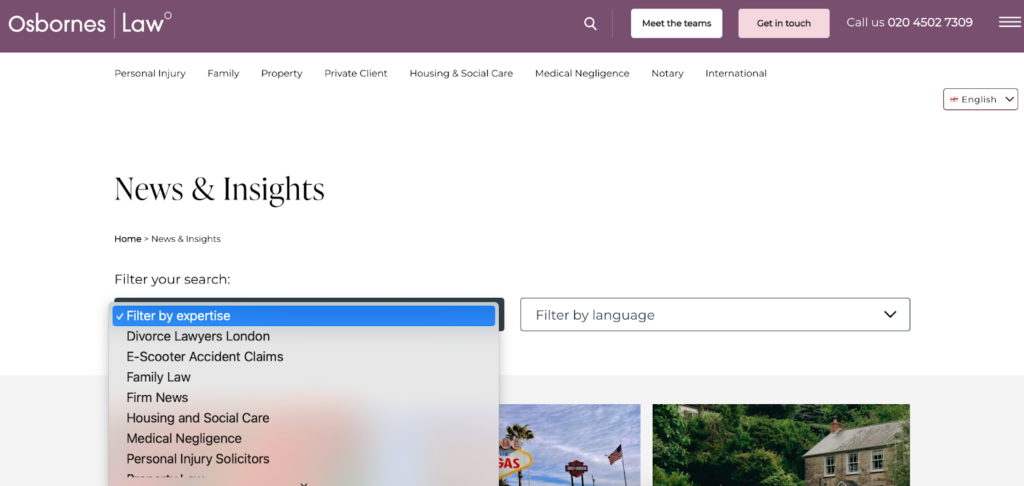
Osbornes Law, a well-established law firm based in the UK, sought to establish authority and attract more clients through a robust content strategy.
The firm specializes in various legal areas, including Personal Injury, Family Law, Property, and more.
Considering this, Osbornes Law focused on creating valuable content that addressed the specific needs of its target audience.
Strategy:
Osbornes Law implemented a comprehensive legal industry content marketing plan that included regular blog posts, legal guides, and industry insights.
They strategically identified relevant keywords and topics that possible clients were searching for.
By consistently producing content tailored to these queries, the firm aimed to improve its search engine rankings, drive organic traffic to its law firm website, and reach top positions in Google for strategic keywords.
Execution:
- Content creation: The firm created a diverse range of content, including blog posts addressing common legal questions, detailed guides on legal processes, and updates on relevant legal news. Each piece of content was optimized with targeted keywords, ensuring it aligned with the search intent of potential clients.
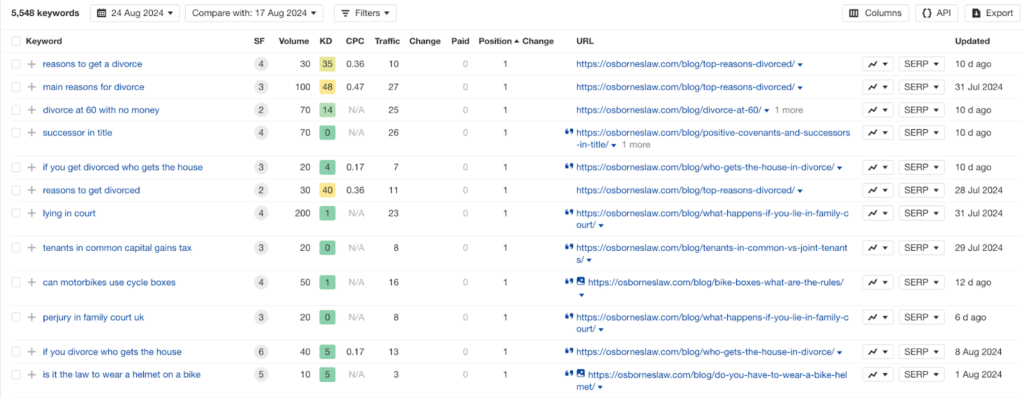
- SEO optimization: Osbornes Law identified high-traffic keywords such as “divorce at 60 with no money” and “who gets the house in a divorce.” By focusing on these keywords, they tailored their content to rank higher in search engine results, attracting users actively seeking legal advice on these topics.
- Distribution: Content was distributed across multiple marketing channels, including the firm’s website and social media platforms. The firm also leveraged legal directories and newsletters to reach a broader audience.
Results:
The law firm’s content marketing efforts proved to be highly effective.
Over a short period, Osbornes Law experienced significant growth in organic traffic.
The firm’s blog saw a sharp increase in visibility, with organic search traffic rising by 4,800 visits in just six months.
Specific blog posts, such as those addressing divorce and property rights, consistently ranked on the first page of Google, driving substantial traffic to the site.

Example #2: Daniel ShenSmith’s Channels
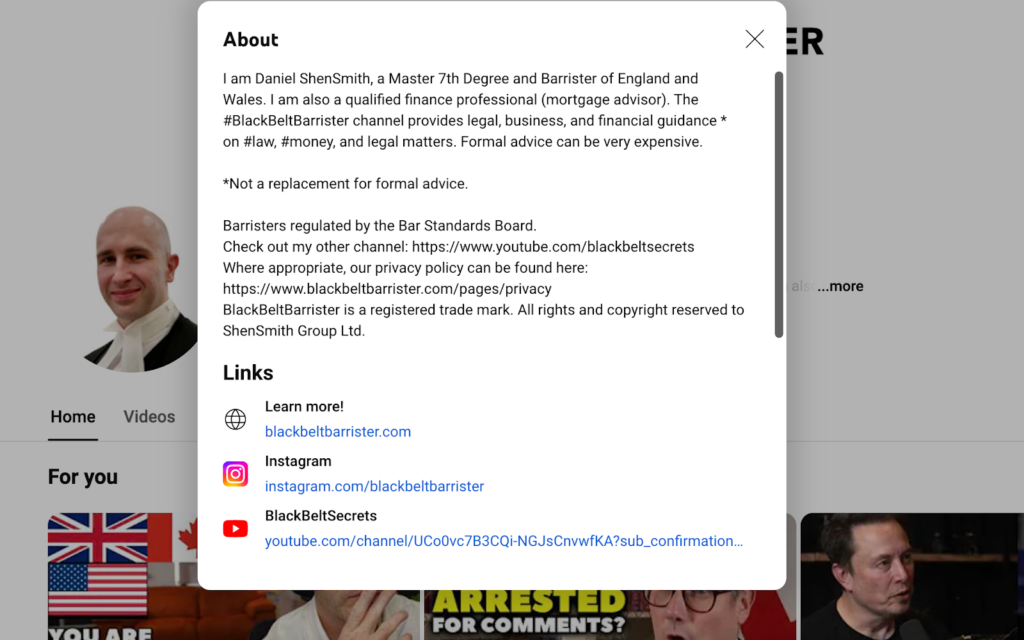
Daniel ShenSmith, a Barrister of England and Wales, has taken an innovative approach to his legal practice by leveraging social media and a personal website to reach an intended audience and improve client engagement.
Known as the BlackBeltBarrister, Daniel combines his legal expertise with a strong digital presence, offering educational content through YouTube and Instagram.
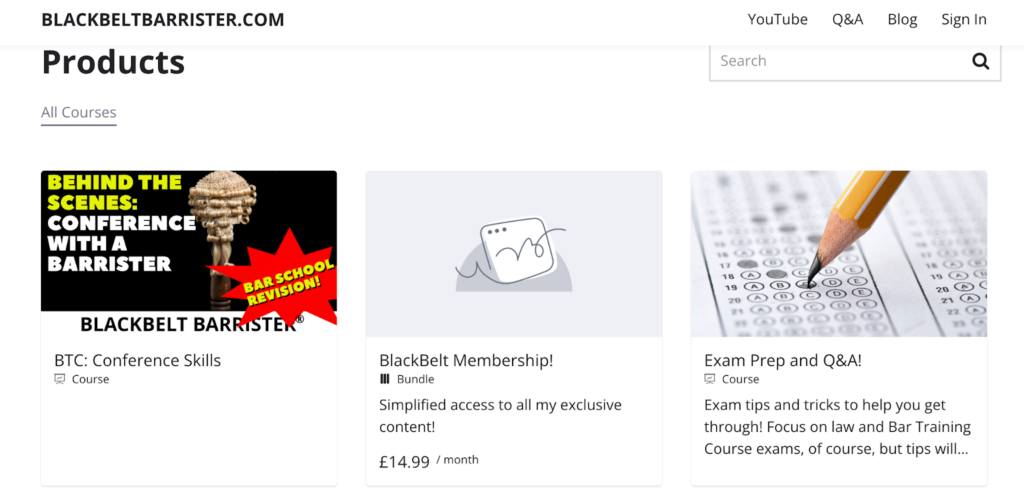
He also provides paid online courses through his website, catering to individuals seeking in-depth knowledge on legal, business, and financial matters.
Strategy:
Daniel’s strategy revolves around the effective use of law firm content marketing to build a personal brand that is both authoritative and accessible.
By creating valuable, easily digestible content, he positions himself as a trusted source of legal guidance. His approach includes:
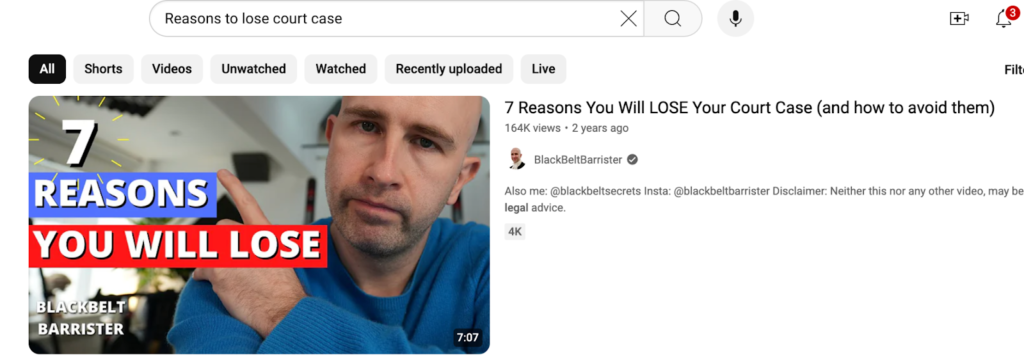
- Video content: Regularly uploading videos on YouTube that tackle common legal issues, such as “7 Reasons You Will LOSE Your Court Case,” which has garnered significant attention with over 164K views.
- Social media engagement: Actively engaging with his audience on social media platforms, where he shares insights, updates, and podcasts.
- Online courses: Offering comprehensive online courses through his website, where users can purchase and access detailed legal education at their own pace.
Execution:
- Consistent content creation: Daniel produces content consistently, ensuring his followers have a steady stream of valuable information. This consistency has helped him build a loyal audience that looks to him for reliable legal advice.
- Engagement and interaction: By responding to comments and engaging with his audience on social media, Daniel has created a community around his content. This interaction not only builds trust but also drives word-of-mouth promotion.
- Monetization through courses: Daniel capitalizes on his online presence by offering paid courses on his website. These courses cover a range of topics and are marketed through his social media channels and video content, creating a seamless funnel from free content to paid educational products.
Results:
Daniel ShenSmith’s video content ideas have led to impressive results:
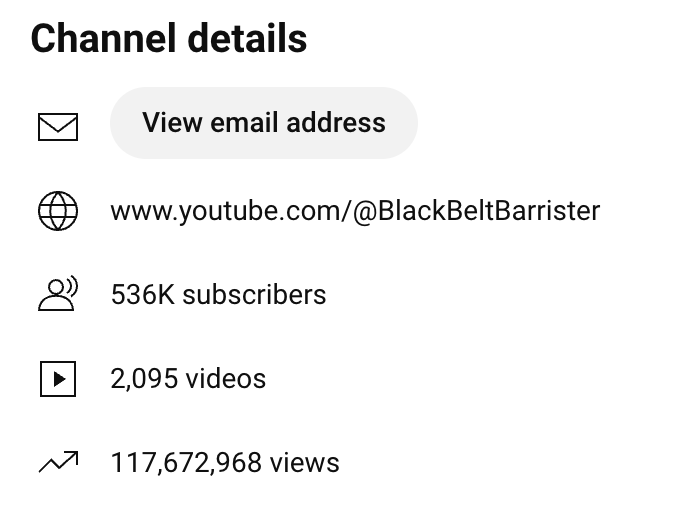
- Increased visibility: His YouTube channel has amassed thousands of views, with some videos exceeding 100K views. This visibility has helped him reach a global audience, extending his influence beyond traditional legal practice.
- Brand authority: Through consistent and informative content, Daniel has established himself as an authority in legal matters, particularly for those seeking straightforward advice without the typical jargon associated with the legal profession.
- Revenue growth: Integrating online courses has not only diversified Daniel’s income streams but also allowed him to monetize his expertise effectively. The success of these courses shows the potential for legal professionals to generate significant revenue through digital platforms.
Example #3: The National Immigrant Justice Center
The National Immigrant Justice Center (NIJC), a leading legal aid organization committed to advocating for immigrant rights, recognized the importance of content marketing to increase its visibility and impact.
NIJC aimed to ensure that its resources and legal services were easily accessible to immigrants and advocates, particularly those searching for specific legal information online.
Strategy:
NIJC developed a robust content marketing strategy focused on creating highly relevant, SEO-optimized content that would meet the needs of its diverse audience.
Their strategy included the following key components:
- Targeted content creation: NIJC focused on producing content that addressed specific legal challenges faced by immigrants, such as asylum applications, DACA renewals, and visa requirements. This content was often translated into multiple languages to cater to the needs of their audience.
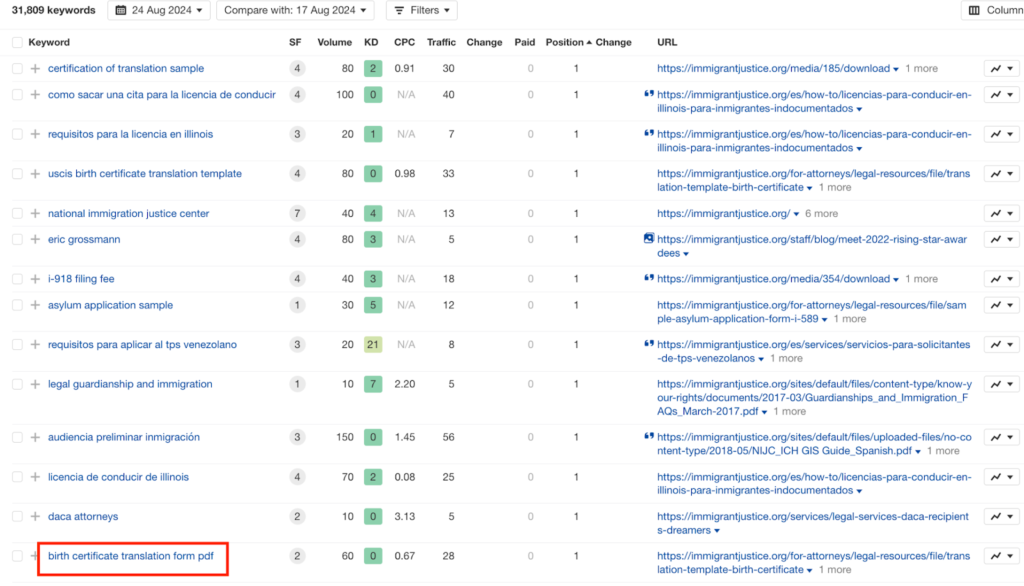
- SEO optimization: To increase its search engine visibility, NIJC utilized tools like Ahrefs to identify relevant keywords with high search volume and varying difficulty levels. By optimizing content around these keywords, NIJC ensured that its resources would rank well in search engine results.
- Multichannel Distribution: They distributed their content across multiple platforms, including their website, social media channels, and email newsletters.
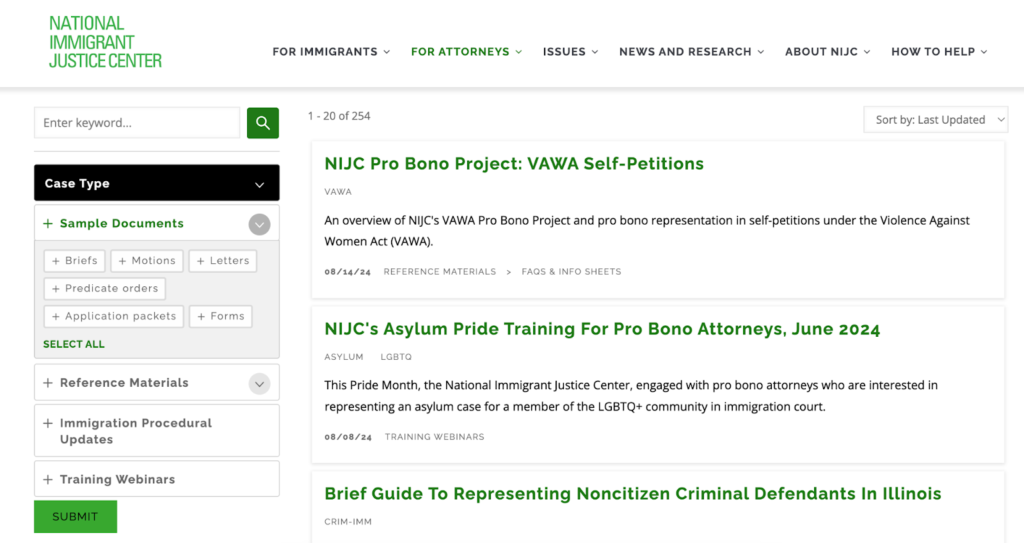
- Downloadable resources: Also, NIJC developed downloadable resources and document samples for important keywords.
Execution:
- Content creation and publication: NIJC produced a variety of content types, including blog posts, legal guides, infographics, and downloadable forms. Each piece was carefully crafted to be informative, actionable, and optimized for search engines.

- Visual and multimedia content: They created visual content, including infographics and videos, to explain complex legal processes in an accessible manner. These were shared on platforms like YouTube and Instagram, where they reached a wide audience.

Results:
The legal content marketing strategy implemented by NIJC led to significant achievements:
- Increased organic traffic: NIJC saw a substantial rise in organic traffic to its website. The keywords targeted in their content consistently ranked on the first page of search results, driving more visitors to their site. Their homepage, in particular, secured the #1 position for numerous high-difficulty keywords, enhancing their visibility and authority in the immigration law space.
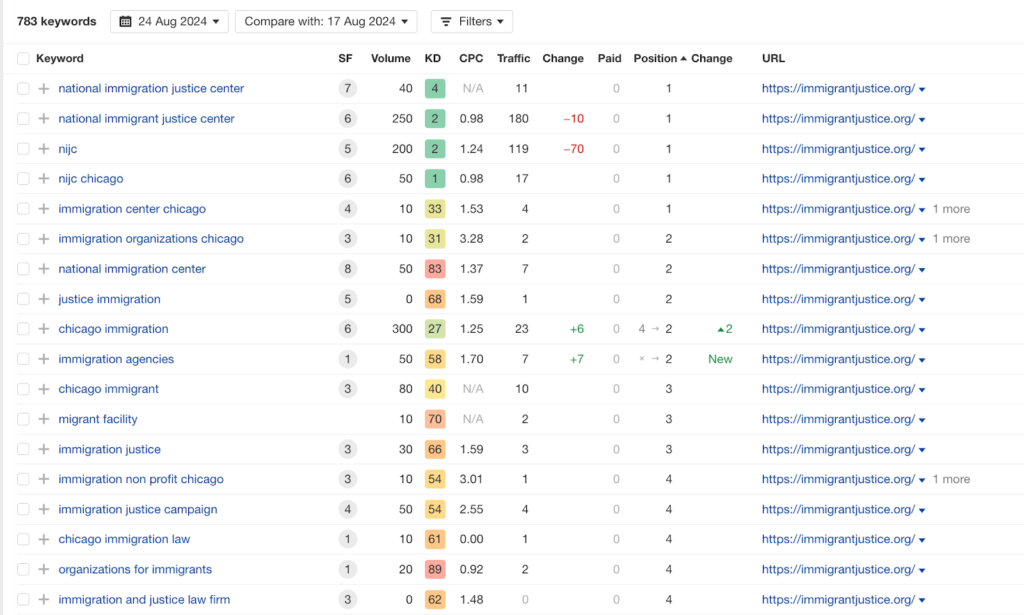
- Top keyword rankings: NIJC’s content now ranks #1 for crucial keywords, including “birth certificate translation form PDF.” This demonstrates the effectiveness of their SEO efforts in targeting the specific needs of their audience and providing valuable resources.
- Enhanced visibility and engagement: The distribution of content across various channels led to increased engagement from both the immigrant community and legal professionals. This broader reach supported NIJC’s advocacy work and reinforced its position as a leading authority in immigrant justice.
Conclusion: Turn Your Legal Expertise Into Content That Converts
Clients don’t choose a law firm based on rankings alone. They choose based on clarity, credibility, and relevance; and that’s exactly what strong content delivers.
When your content answers real questions, reflects your expertise, and stays current with legal changes, it becomes more than marketing. Actually, it becomes part of how people experience your firm before ever reaching out.
The firms that treat content marketing as a core part of how they show up online are the ones that stay top of mind and are easier to choose.
So the question is: Are you creating content that earns that trust, or just hoping to be found?
FAQs
What is content marketing for lawyers, and how does it work?
It’s how lawyers turn expertise into visibility. You can publish helpful content (articles, videos, guides) that answer legal questions and build trust. Instead of chasing clients, you make it easier for them to find you.
Why is content marketing important for law firms?
Because people research before they reach out. Great content puts your firm in front of them early, before they even compare options. It builds authority, drives traffic, and opens the door to more qualified leads.
How can lawyers develop an effective content marketing strategy?
Start by defining your goals and your audience. From there, build a content plan around what they actually search for: real questions with clear answers. Track results, refine what works, and stay consistent.
What types of content should lawyers use for marketing their services?
Blog posts, videos, case studies, checklists… whatever helps you explain legal topics clearly. Different formats reach different people. Mix it up and focus on what your audience finds helpful, not what sounds impressive.
Which platforms are best suited for lawyers to share content?
Your website is your foundation, but don’t stop there. Share on LinkedIn, legal directories, email newsletters, and industry blogs. If you create or write content that targets a specific practice area, make sure it’s published where potential clients are already searching.