Have you ever wondered why customers who ignore your emails will happily talk to Alexa, Google Assistant, or a voicebot?
Voice is the channel your competitors are quietly investing in, and the channel your customers already trust.
In this guide, I’ll discuss how AI-powered voice automation works, why marketers can no longer afford to ignore it, and how you can use it to unlock entirely new marketing channels without sounding robotic or intrusive.
What Is AI-Powered Voice Automation?
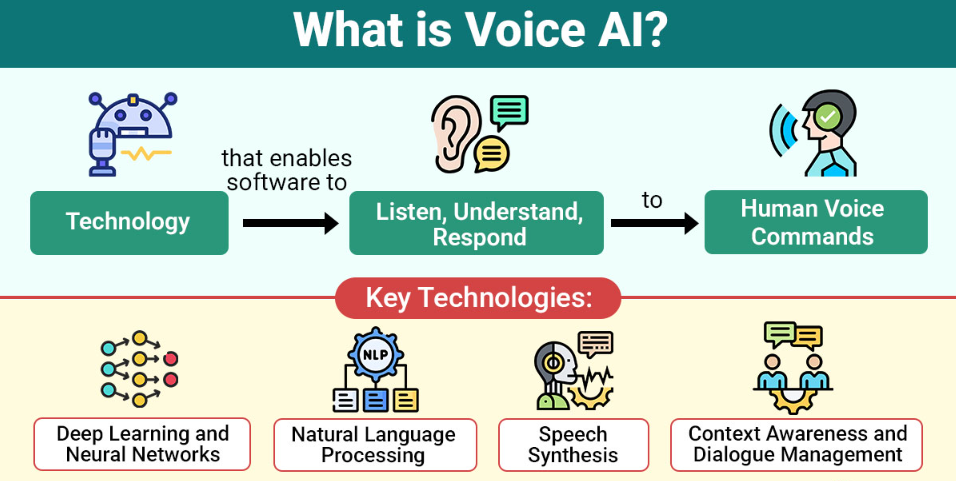
AI-powered voice automation is the technology that lets brands talk to customers (and let customers talk back) in natural and human-like conversations without needing a human on the other side.
These systems can:
- Understand speech
- Interpret intent
- Respond conversationally
- Trigger actions (like booking demos or answering questions)
- Personalize interactions based on user data
They are super smart voice assistants specially trained for your brand. Not the clunky IVR menus we used to hate (“Press 1 if you want English…”).
Modern voice automation is like having an efficient brand representative available 24/7.
And here’s the real opportunity:
While every marketer is battling for inbox space and fighting social media algorithms, voice remains massively underutilized.
Which means early adopters get an unfair advantage.
5 Ways Marketers Stand to Gain From Voice Automation
The following are five ways marketers can benefit from voice automation.
1. You Gain a New High-Trust, Low-Competition Marketing Channel
Consumers are drowning in text.
Emails go unopened. Push notifications get ignored. Social feeds scroll past in seconds.
But with voice, it’s different.
People listen. Whether on a smart speaker at home, during a commute, or while multitasking, voice cuts through the noise.
Consider a fitness brand that sets up a voice flow on Alexa:
“Hey Alexa, ask FitFlow for my 7-minute morning routine.”
That’s a new entry point into your ecosystem.
Businesses can now:
- Run educational voice campaigns
- Deliver product tips
- Share interactive quizzes
- Offer guided experiences (recipes, workouts, tutorials)
And because listeners engage hands-free, their attention spans improve.
2. You Create Massively Scalable One-to-One Conversations
AI voice automation lets you simulate personalized human conversations.
For example:
- A SaaS tool can call new users with an onboarding voice assistant
- An eCommerce brand can follow up abandoned carts with conversational voice nudges
- A bank can use AI voice to pre-qualify loan leads
These aren’t generic robocalls. They’re natural, dynamic, and human-sounding interactions.
This is why brands that rely heavily on repetitive customer communication, such as logistics, healthcare, and retail, are adopting this technology.
3. You Unlock Data Insights That Traditional Channels Can’t Provide
AI-powered voice technology understands your intent and then replies accordingly.
Every conversation becomes a gold mine of:
- Customer intent
- Hidden objections
- Purchase motivations
- Common questions
- Emotional sentiment
Imagine launching a new skincare product and discovering through thousands of voice questions that users care more about fragrance than price.
That’s a marketing superpower.
You can feed those insights back into your conversational AI systems to make them smarter over time.
4. You Automate Key Moments Across the Customer Journey
Most marketers focus on the top of the funnel. But voice lets you influence every stage from awareness to retention.
Examples:
- Awareness: Voice-activated brand experiences. E.g., “Alexa, tell me today’s photography tip from PixelPro”.
- Consideration: Interactive FAQ calls that answer product questions in real-time.
- Purchase: Voice-based guided shopping. E.g., “Find me the best shoe for long-distance running”.
- Retention: Post-purchase onboarding, reminders, tips, and check-ins.
People follow instructions in the funnel because voice is convenient and low-friction.
5. Voice Strengthens Brand Identity in a Way Text Never Can
Every brand sounds identical. But voice gives personality.
You can design:
- Tone
- Rhythm
- Warmth
- Humor
- Emotion
A coffee brand can have a cozy-toned morning assistant. A cybersecurity brand like a 2FA Auhenticator can use a calm and authoritative voice. A fitness app can sound energetic and motivating.
When customers hear your brand, they bond with it.
Real-World Use Cases
Domino’s Pizza: Voice Ordering Made Natural and Frictionless
Domino’s Pizza uses voice automation inside its phone ordering system and mobile app. The brand introduced its AI voice agent to handle orders conversationally, which allows customers to place pizza orders without waiting for a human employee.
They use voice automation because it reduces call wait times, speeds up ordering during peak hours, and delivers a smoother experience for customers who want quick and hands-free ordering.
Domino’s publicly stated that the AI now handles the majority of their phone orders, and it’s proving its efficiency.
Capital One: Transforming Banking Support With Voice Assistants
Capital One uses voice technology across smart speakers (like Alexa) and their customer service channels to help people manage day-to-day banking tasks.
Customers can ask for their account balance, review transactions, pay bills, or get answers to simple questions.
The reason Capital One adopted voice automation is to offer 24/7 accessibility, reduce high call volumes, and give customers a faster way to complete routine tasks without navigating menus or waiting on hold.
Starbucks: Simplifying Ordering via Voice For a Better Customer Experience
Starbucks uses voice automation in its mobile app and supports voice-enabled devices to help customers place and customize drink orders hands-free.
A customer can simply speak their order like “Tall cappuccino with almond milk,” and the system processes it instantly.
Starbucks uses voice technology because mornings are rushed for most customers, and hands-free ordering reduces friction, increases mobile orders, and improves convenience for people who are multitasking.
How to Implement Conversational Voice Automation
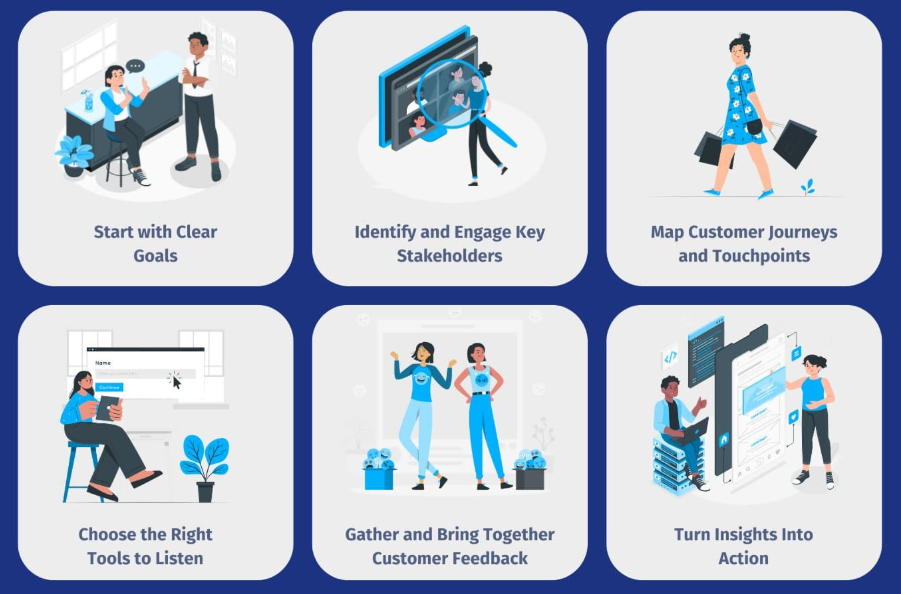
The following steps will help you implement conversational voice automation in your system:
1. Identify High Value Use Cases First
Before investing in any voice automation tools, find out where voice interactions will help your customers the most. Look for tasks that are repetitive, high volume, or time sensitive. These are the areas where a voice assistant can provide instant convenience.
You can consider these areas:
- Customer support queries that agents answer repeatedly
- Order placements or bookings that require the same steps each time
- Follow-up reminders, status updates, or delivery notifications
- FAQ style information that customers expect instantly
This step ensures your solution is aligned with business needs.
2. Choose the Right Voice Platform for Your Goals
Voice automation tools provide different features. Therefore, choose a platform that aligns with your strategy.
If your primary goal is customer support, look for AI systems that are great at understanding natural language. If you’re building an ordering or scheduling flow, you’ll need workflow automation features.
Look for:
- Natural, human-like text-to-speech quality
- Support for multiple languages and accents
- Easy integration with your CRM, support desk, or order system
- Real-time analytics dashboards
- Scalability to handle growing call volumes
When you choose the right platform, it sets the foundation for a successful rollout and reduces rework later.
3. Map Out a Natural Conversational Flow
Your voice assistant should feel intuitive. Users should feel like speaking to a helpful employee, not interacting with a rigid IVR menu. Map the conversation in advance to remove friction and anticipate what users may say.
Best practices:
- Write dialogs in natural language, not robotic scripts
- Include fallback responses (“Let me try that again…”)
- Anticipate multiple variations of the same intent
- Keep instructions short, so users don’t feel overwhelmed
- Test the flow with real customers to identify sticking points
The more human a conversation feels, the higher the completion rates.
4. Integrate the Voice System With Your Backend Tools
Voice automation becomes powerful when it’s connected to your backend systems. This ensures that AI can place orders, fetch data, update accounts, and trigger workflows.
Key integrations may include:
- CRM platforms (HubSpot, Salesforce, Zendesk)
- Order management or booking systems
- Payment gateways for voice-based transactions
- Customer support tools
- Analytics and reporting tools
With the right integrations, voice interactions become end-to-end automated customer journeys.
5. Train and Refine the Voice Assistant Continuously
You’ll need to train and refine your voice assistants regularly by using real interactions.
Improve performance using:
- Logs of misunderstood phrases
- Conversation drop-off analysis
- Regional accent tuning
- Updates to product or service data
- Feedback from customers and support teams
Continuous optimization is what takes a voice assistant from merely “functional” to genuinely “ helpful.”
6. Test in Real Conditions Before Complete Rollout
Voice automation should perform well in noisy places, while users speak quickly, casually, or with different accents.
During testing, check for:
- Background noise handling
- Speed and accuracy of responses
- Voice recognition across age groups and accents
- Phone line clarity vs. smart speaker clarity
- Smooth transitions between steps
Real-world testing prevents friction and ensures users trust your voice experience from day one.
7. Monitor Performance and Optimize Over Time
Once your voice automation is live, start tracking performance to gain insight into what’s working and where customers get stuck. This is also where you measure the ROI and long-term impact.
Metrics to monitor:
- Call completion rate
- Average handling time
- Drop-off points in a conversation
- User satisfaction scores
- Cost-savings from automation
- Increase in orders, bookings, or resolved tickets
These insights will help you improve both customer experience and business outcomes.
Challenges and How to Overcome Them
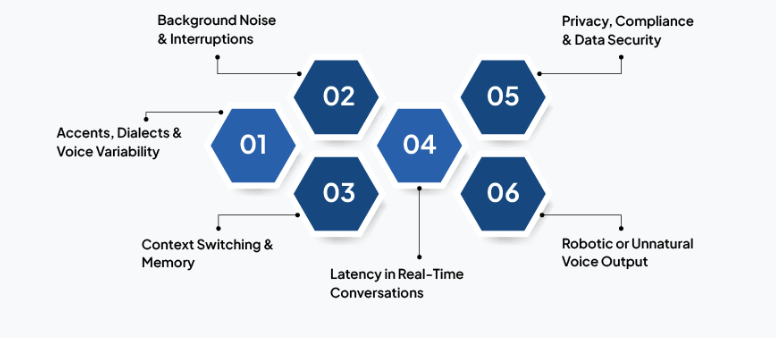
The following are some of the challenges of voice automation and how to fix them.
1. Data Quality and Integration Issues
Many businesses struggle because their customer data is scattered across tools. Poor data inputs lead to inaccurate voice responses.
The solution is simple: clean your databases and integrate your CRM, contact center, and analytics tools before deploying automation.
2. Maintaining Natural Conversations
If your voice bot sounds robotic, users will drop off quickly.
Modern NLP engines improve this, but teams still need to design contextual scripts and continuously train the system based on user behavior.
3. Security and Compliance Concerns
Voice automation often handles sensitive customer information.
Ensure end-to-end encryption and strict authentication protocols to prevent data leaks and maintain trust.
4. High Initial Setup Expectations
Many teams expect instant results, but voice automation has a learning curve.
Start with one or two high-impact use cases, optimize, and scale gradually to avoid being overwhelmed.
5. Measuring the Right KPIs
Marketers sometimes track vanity metrics rather than true business outcomes.
Define clear KPIs for response accuracy, call deflection rates, and conversion lift, and align them with overall marketing goals.
The Future of AI-Powered Voice Automation
The future of AI-powered voice automation will be an era of intelligent, emotionally aware, and deeply integrated communication. It is where machines will not only understand us but also anticipate what we need next.
Here’s what lies ahead:
1. Hyper Personalized Customer Journeys
Voice systems will soon adapt to each user’s tone, pace, intent, and past interactions. This means brands will offer experiences that feel tailored, intuitive, and almost human, thereby boosting satisfaction and conversions.
2. Deeper Integration Across the Marketing Stack
Voice automation will seamlessly connect with CRM, analytics, email platforms, and ad tools. Marketers will trigger campaigns, segment audiences, and qualify leads using nothing but natural conversations.
3. Voice-Assisted Commerce
As consumers grow comfortable with voice shopping, brands will increasingly use automation to help customers discover products, compare options, and complete purchases all hands-free and friction-free.
4. Emotion and Sentiment-Aware Voice Engines
Next-gen systems will detect emotions like frustration, excitement, or confusion. This will enable brands to respond empathetically in real-time and drastically reduce drop-offs during key customer moments.
5. Autonomous Agents for Full Campaign Execution
AI agents won’t just answer queries, they’ll run tasks. Imagine launching ads, building segments, pulling reports, or testing messaging through a single voice command. Marketing teams will become faster and more agile.
Take the Next Step Into a Voice-Powered Future
AI-powered voice automation is becoming a core part of how modern brands engage, convert, and support their customers.
From unlocking new marketing channels to building faster and more natural interactions, voice technology helps teams work smarter, personalize at scale, and deliver the kind of experiences people remember.
If you’re ready to stay ahead of the curve and build smarter, more human marketing systems, now is the moment to take the next step.
Looking to level up your marketing journey? Connect with Growth Folks, a hub where every marketer, beginner or professional, finds their place and grows.