A competitor’s campaigns seem sharper and better-targeted, yet their team is no bigger. Increasingly, the differentiator is not headcount or budget. It is AI embedded deliberately into the marketing workflow.
Artificial intelligence is already used by many organizations in one form or another. It may be used to create ad copy, accelerate content production, or automate routine tasks. However, sporadic implementation does not lead to any significant improvements. Only when AI technology becomes an integral element of the marketing process can its true power be unleashed.
Real conversion lift comes from embedding AI across the entire digital marketing funnel. Here are ten ways to do exactly that.
Why AI Is Becoming Essential in Modern Marketing
Digital marketing has become more complex than most teams can manage manually. Brands now compete across search engines, social platforms, email campaigns, marketplaces, and AI-generated search experiences simultaneously.
In addition, customer expectations have evolved, demanding quick responses, personalized solutions, and targeted recommendations.
Here are some of the ways AI in digital marketing is shaping the industry:
Marketing Decisions Now Depend on Data Speed
Conventional marketing placed heavy emphasis on delayed reporting and manual analyses. Marketers would conduct a campaign, wait for results, and make changes after a few weeks.
AI shortens that cycle dramatically. It processes user behavior in real time and helps marketers respond while campaigns are still active.
Why does this matter? Consumer behavior changes rapidly. An effective message today may become irrelevant tomorrow.
AI Helps Teams Understand Intent Better
One of the greatest strengths of using AI in digital marketing is its ability to recognize trends that people might otherwise overlook. This is because AI can analyze several things at once.
Instead of broad demographic targeting, marketers can understand intent with far greater accuracy. This allows campaigns to become more personalized without increasing manual workload.
AI-powered marketing tools also help teams predict what users are likely to do next. That insight improves targeting, timing, and overall campaign efficiency.
Automation Creates Faster Execution
The process of marketing involves considerable amounts of time spent on such routine activities as customer segmentation, reporting, A/B testing, creating various content, and optimizing campaigns.
AI automates much of this operational work. Teams can generate multiple ad variations, optimize bids, schedule campaigns, and personalize messaging faster than traditional workflows allow.
This is especially valuable for lean marketing departments. Smaller teams can now execute campaigns at a scale that previously required much larger resources.
AI Improves the Entire Customer Journey
AI technology does not end there. It enhances the entire process, from increasing awareness and generating leads to retaining customers and upselling products.
For instance, AI chatbots in marketing can quickly qualify leads, respond to consumer queries, and direct consumers to make a purchase.
In addition, AI-powered analytics tools continuously optimize the performance of landing pages, emails, and recommended products based on user engagement.
Ultimately, the end product is an intelligent marketing system that becomes smarter over time through interactions throughout the process.
AI Makes Marketing More Predictable
One of the major hurdles faced in marketing is unpredictability. Marketers often spend a lot of money on campaigns without knowing which demographic segment, medium, or even message will ultimately drive sales.
On the other hand, AI’s predictive capabilities make things easier for marketers. AI helps marketers predict consumer behavior, calculate customer lifetime value, and even detect poorly performing marketing campaigns before they fail.
This aspect of AI saves marketers a lot of time by helping them take preemptive action before anything goes wrong.
Top 10 Applications of AI in Digital Marketing for Boosting Conversions
AI is no longer limited to automating small marketing tasks. It now influences how brands attract audiences, qualify leads, personalize campaigns, and optimize conversions across the entire customer journey.
The major benefit AI offers in digital marketing is its ability to process large amounts of behavioral data in real time and make decisions based on that data. This enables companies to enhance their targeting and avoid spending money on advertising that yields no results.
Here are the top 10 applications of AI that are helping marketing teams increase engagement, improve efficiency, and drive higher conversion rates.
1. Hyper-Personalization at Scale
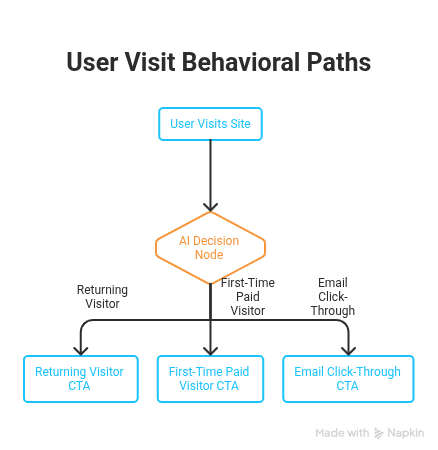
Where traditional marketing segments are based on demographics, what sets AI apart from that is the creation of behavior groups – customers who are most prone to churning, customers who are ready for an upgrade, and customers clicking on ads from competing brands. The platform adapts to varying behavior, recognizes its purpose and conflicts, and delivers relevant content in real time.
Highly successful companies see a 15 to 20 percent boost in conversion rates and 40 percent more revenue thanks to AI personalization. In addition, 74 percent of marketing teams implementing AI segmentation experience improved conversions.
The AI on your website will customize hero images, call-to-action, and product suggestions depending on intent signals. The AI in your emails will personalize its communication style and offers based on engagement metrics. Lastly, for your paid media campaigns, the AI will customize your ad creatives based on prior exposures and responses.
Here is what it can look like in practice:
2. Predictive Lead Scoring
AI changes lead prioritization from gut feel to data-driven certainty. It goes through hundreds of signals, from firmographic data and content consumption to time on page, then assigns each prospect a conversion probability score so your team acts on the right leads at the right moment.
There are platforms that feature built-in predictive scoring capabilities. The models constantly evolve as the CRM receives new information, improving their accuracy with each new sale and every missed prospect.
Create three tiers (hot, warm, cold) and assign distinct follow-up sequences to each, calibrated to the expressed level of intent.
3. AI Chatbots for Marketing
Marketing Chatbots in AI Are Much More Than FAQ Robots. Today’s Conversational AI technology evaluates website visitors on the fly, serves them relevant offers based on their actual browsing activity, and redirects highly interested prospects to the sales team without human intervention until conversion is imminent.
AI chatbots increase engagement rates by up to 85%
Examples of successful use cases include exit-intent chatbots on pricing pages, post-content chatbots that provide consultations after blog reading, and guided selling experiences that showcase the best fit through a brief product preference conversation.
Brands that integrate chatbots into a broader approach to digital marketing services see the biggest gains because chatbot engagement data feeds directly into retargeting and personalization systems.
4. AI-Powered Content Creation and Optimization
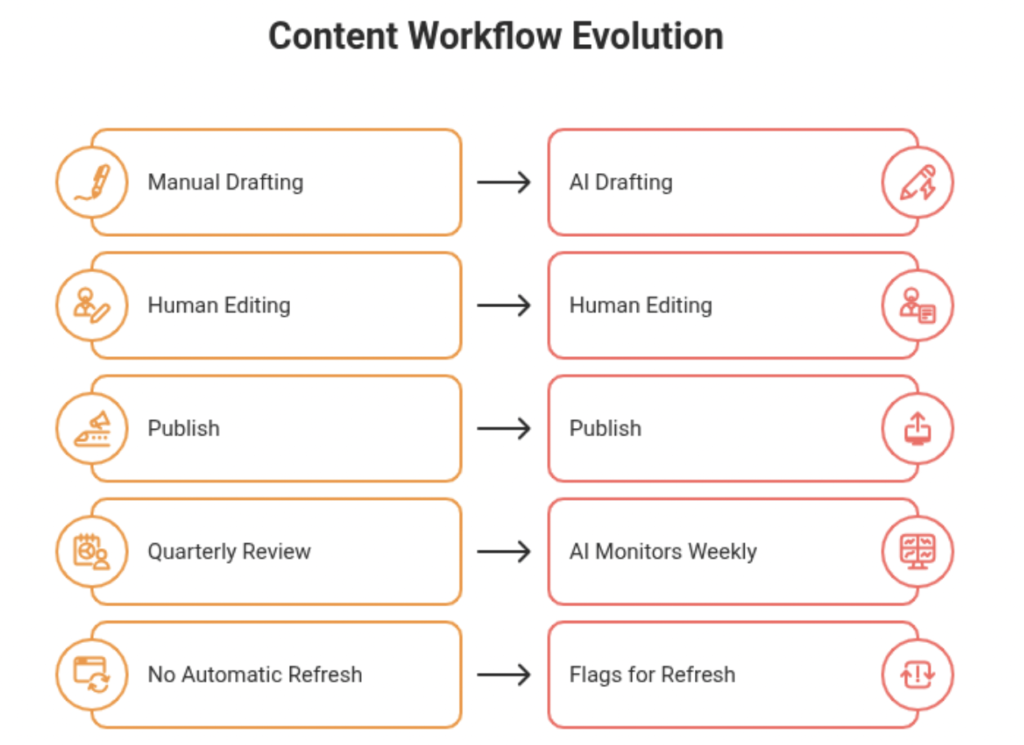
AI-powered copywriting software produces content twice to thrice as fast as any human writer can on their own. What’s even more important is that AI-based solutions test headlines, meta-descriptions, and call-to-action (CTA) buttons based on performance metrics and do so within days, unlike traditional practices, which can take months or even a quarter
Rule number one is that AI manages structure, variations, and volume. The marketer handles storytelling, brand persona, and E-E-A-T signals. Knowing the scope of AI marketing tools will help you focus your human efforts where they really matter.
5. Intelligent SEO With AI
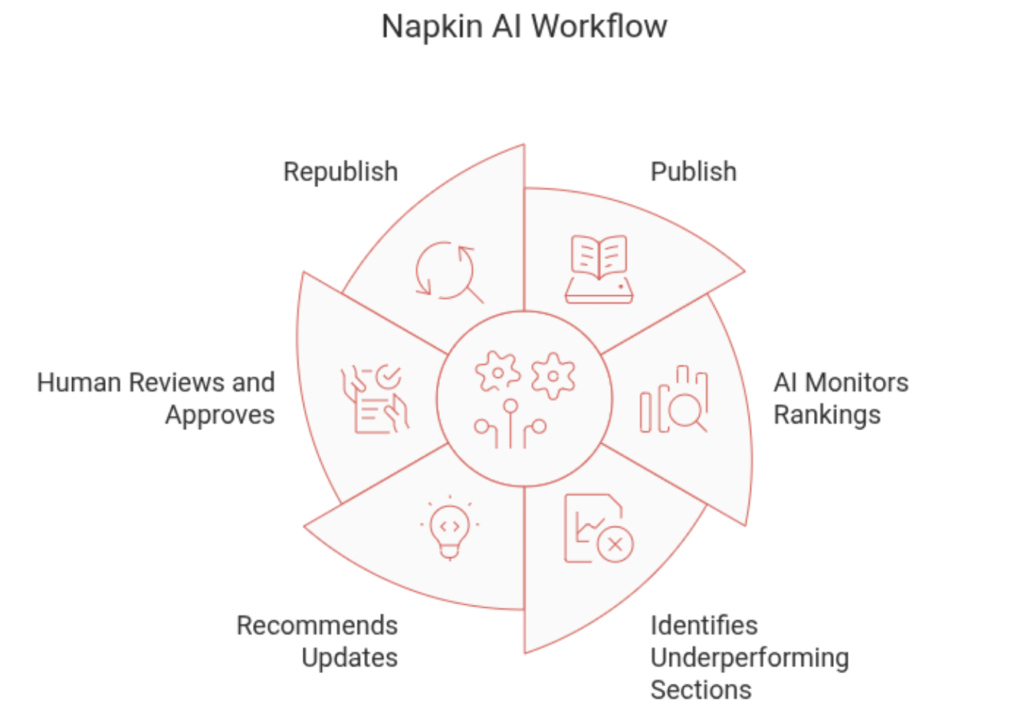
AI has revolutionized SEO through two approaches. The first approach involves the algorithm that favors semantic depth and proven expertise by the search engine.
For practitioners, AI tools facilitate faster gap analysis, entity mapping, and competitor analysis than traditional techniques.
More than half of organizations have reported that AI-assisted content boosts their SEO performance, even with consistent human edits. AI-powered SEO services and tools provide an ROI of 200 to 275 percent, making them the most profitable marketing technology.
Generative Engine Optimization (GEO) will add another layer in 2026. With AI overviews and answer engines providing information, it is critical for brands to have a model that receives citations for entities, statistical density, and other relevant metrics.
The same trends, however, also reinforce traditional hierarchies simultaneously. Working in collaboration with dedicated SEO agencies, more and more teams now rely on AI at every stage of the process.
6. AI-Driven Paid Advertising
Paid advertising is one of the fastest-payoff areas for AI. AI processes real-time bidding signals, audience data, and creative performance simultaneously in a way no human media buyer can match at scale.
AI-driven ads report 41% higher conversion rates. 47% of marketers use AI for bid optimization and creative testing.
Google’s Performance Max campaigns have shown 17% higher ROAS than manually managed campaigns in documented case studies. Meta Advantage+ automatically tests headline, image, and description combinations, identifying winning variants faster than any sequential A/B cycle.
Enable Smart Bidding across all Google Ads campaigns, feed first-party CRM data as custom audience seeds, and let AI control creative testing for at least four weeks before drawing conclusions.
7. Smart Email Marketing
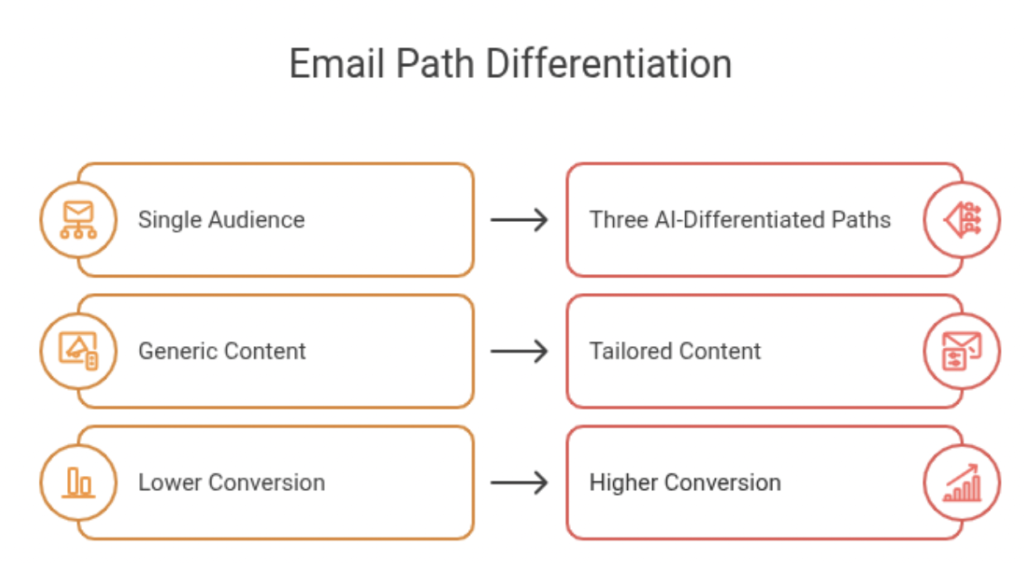
Email remains the highest-ROI digital channel. AI raises the ceiling by making every send more timely, more relevant, and more behaviorally responsive.
41% of marketers report higher conversions through AI-optimized subject lines and segmentation.
Send-time optimization alone, which learns each subscriber’s individual open window, can lift open rates 20 to 30% without changing a word of copy.
Start with behavioral trigger flows: abandoned cart at one hour, 24 hours, and 72 hours; post-purchase upsell at day three and day 14; win-back at 90 days of inactivity.
Add AI dynamic content blocks that swap product recommendations at the moment of open, not at send time, to ensure recommendations reflect the most current context.
8. AI in Social Media Marketing
The tasks of scheduling, caption creation, real-time social media monitoring, and sentiment analysis fall to AI. The use of AI sentiment detection tools informs the team of potential problems and opens opportunities for meaningful interactions.
Brands that connect AI social tools into their broader social media marketing services strategy gain an important advantage: social engagement data loops back into conversion tracking and retargeting audiences rather than sitting in a silo.
9. Customer Journey Mapping and CRM Intelligence
AI-driven CRMs can detect trends that humans cannot. These trends might include the fact that people who read three blog posts and attend a single webinar have a conversion rate four times higher than those who just read the blogs. The CRM can notify you whenever an opportunity is reached by all prospects who meet this criterion.
Using AI multi-touch attribution will reveal which marketing channels are responsible for driving conversions, rather than just relying on last-click attribution, which often underestimates the value of higher-funnel marketing efforts. Create nurture tracks based on engagement signals, not predetermined time periods.
10. Conversion Rate Optimization via AI Analytics
AI-driven CRO software such as Optimizely and VWO runs multivariate tests across multiple variables simultaneously, including copywriting, page layout, images, and the positioning of testimonials. The best combinations are found much more quickly than in A/B testing. In addition, AI reduces bounce rates on landing pages by up to 25% through real-time customization, tailoring content to the origin of the traffic, device, and user intent.
Behavioral analytics software, such as Hotjar AI, Heap, and FullStory, automatically identifies the specific pain points suppressing your conversion rate and provides actionable solutions without requiring someone to manually analyze thousands of sessions.
Tools such as Hotjar AI, Heap, and FullStory provide automated insights into the exact points of friction causing underperforming conversions, detect irregularities, and offer recommendations to fix the problem without manually analyzing hours of recorded sessions.
The AI Digital Marketing Stack
Together, these ten tactics form an even more potent package. The AI’s ability to personalize generates valuable data for scoring algorithms. Improved scoring allows better email segmentation. More refined email segments create superior CRM data. Superior CRM data leads to more effective personalization.
| Funnel Stage | AI Application | Primary Conversion Impact |
| Awareness | AI SEO + AI Paid Ads | Higher-intent traffic, lower cost per acquisition |
| Consideration | Personalization + AI Chatbots | Deeper engagement, faster lead qualification |
| Decision | Predictive Scoring + Smart Email | Better timing, higher offer relevance |
| Retention | CRM Intelligence + Journey Mapping | Churn prevention, upsell identification |
| Optimization | AI CRO + Behavioral Analytics | Continuous conversion improvement |
Final Thoughts
Artificial Intelligence in digital marketing is already here, not something you can only predict for the future. What makes the difference is not choosing the right tool; it is transitioning from a campaign-by-campaign process to a continuous learning mechanism in which each experience informs the next. Identify the top two or three strategies that most closely address the current conversion roadblock and measure them against a known baseline. The compound results will show after two to three quarters.