Disclaimer: this article is provided for informational and educational purposes only and does not constitute financial, legal, or investment advice. Merchant cash advances are high-cost financing products and may not be suitable for all businesses. Financing terms, costs, and risks vary by provider and business profile. Readers should consult a qualified financial or legal professional before entering into any financing agreement.
Small business owners in the United States often face challenges when trying to access financing on short notice. Traditional banks typically require lengthy application reviews, extensive documentation, and strong credit profiles, which can slow down access to capital. These constraints became more pronounced in 2024–2025, as higher interest rates and increased risk controls led many regional banks to tighten lending standards.
As a result, merchant cash advances (MCAs) have become a frequently discussed form of alternative financing. Businesses such as restaurants, retail shops, and service providers often cite the ability to receive funding within days rather than weeks as a reason MCAs attract attention. At the same time, the MCA market varies widely in structure and cost, and terms can differ significantly between providers.
This article explains how merchant cash advances work, outlines common features of MCA agreements, and describes how providers in this market differ. It also highlights factors businesses commonly review when evaluating MCA products, with the goal of helping readers better understand the mechanics, costs, and risks associated with this type of financing.
How Merchant Cash Advances Work in Practice
A merchant cash advance is not structured as a traditional loan. Instead, the provider purchases a portion of a business’s future sales at a discount, with repayment tied to ongoing revenue rather than fixed monthly payments. This structure is often discussed in the context of businesses with limited credit history or inconsistent bank approval outcomes, but eligibility is primarily based on sales flow rather than credit scores alone.
That sounds abstract, so here’s a concrete example, and it also explains why MCA is often used by businesses searching for merchant cash advance bad credit solutions.
Consider a hypothetical coffee shop that processes approximately $80,000 per month in card-based sales and needs $30,000 for equipment upgrades. An MCA provider advances $30,000 in exchange for the right to receive $42,000 from future sales, reflecting a factor rate of 1.4 ($42,000 ÷ $30,000).
Repayment occurs as a fixed percentage of daily card transactions rather than through set monthly installments. In this example, 18% of each card sale is remitted to the provider until the full $42,000 has been collected. Because remittances fluctuate with revenue, repayment speed, and effective annualized cost can vary significantly.
MCAs are priced using factor rates rather than interest rates. While factor rates commonly range from about 1.15 to 1.50, the effective APR-equivalent can be substantially higher than traditional bank financing, depending on how quickly repayment occurs.
Examples of Merchant Cash Advance Companies in the U.S. Market
The companies listed below are frequently referenced in discussions about merchant cash advances and alternative small-business financing.
They are included to illustrate how MCA providers can differ in business model, eligibility focus, and repayment structure.
Inclusion in this list does not imply endorsement, ranking, or suitability for any specific business.
1. Fundshop

Fundshop operates as a business financing marketplace rather than a direct merchant cash advance provider. Businesses commonly use platforms like Fundshop to submit a single application and view potential offers across multiple financing types.
Their platform evaluates your business profile and matches you with suitable financing solutions, whether that’s a merchant cash advance, term loans, or a line of credit for business for companies that need flexible, revolving access to capital.
Because Fundshop connects businesses with third-party funding partners, terms, pricing, and repayment structures depend on the specific lender making the offer. As a result, costs and eligibility criteria can vary significantly between applicants, and not all businesses receive MCA offers.
2. Rapid Finance

Rapid Finance is a direct lender that has operated in the small-business financing space for many years and is often associated with merchant cash advance products. The company provides funding across a range of industries and publishes general information about funding amounts and factor rate ranges.
As with most MCAs, repayment is typically structured as a fixed remittance tied to revenue, and the total repayment amount is determined upfront. Depending on repayment speed, the effective annualized cost can be substantially higher than traditional financing.
3. Fundbox

Fundbox provides short-term working capital solutions and is frequently discussed in connection with both merchant cash advances and revolving credit products. The platform uses automated data analysis, often reviewing bank transactions or accounting software integrations to assess eligibility.
While this data-driven approach can streamline application review, available products and pricing depend heavily on revenue consistency and transaction history. Some businesses may receive credit-based offers instead of MCA products, while others may not qualify at all.
4. OnDeck Capital

OnDeck Capital is an established online lender that offers a mix of financing products, including merchant cash advances and term loans. The company provides detailed disclosures around repayment structure and total payback amounts, which is often cited as a distinguishing feature in the MCA market.
However, eligibility requirements may be more stringent than those of newer or less established providers, and costs can vary depending on business revenue, credit profile, and repayment timeline.
5. Bluevine
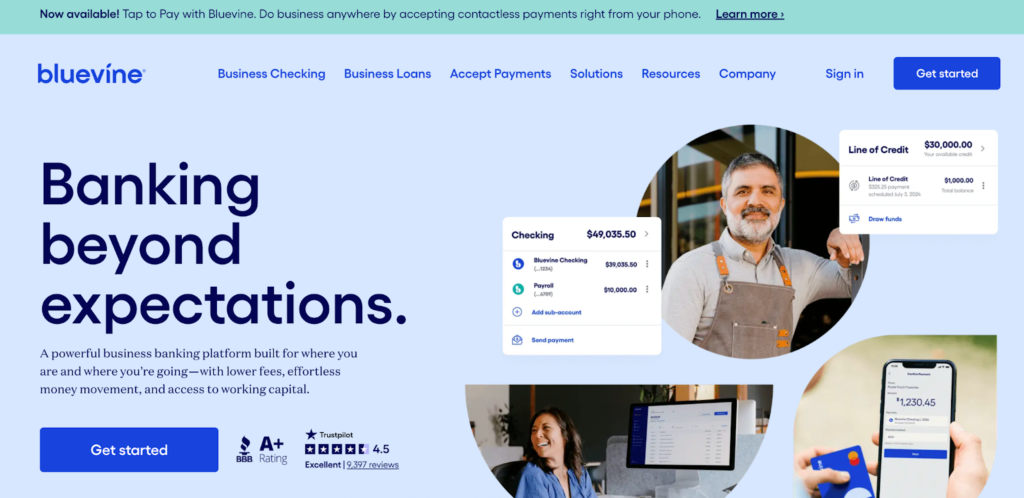
Bluevine is primarily known for business banking and invoice-based financing but is also referenced in discussions around alternative funding options, including MCA-style products. Its platform integrates with common accounting software to streamline data sharing during the application process.
Not all businesses using Bluevine are offered merchant cash advances, and available products may differ based on revenue structure and financial history. In some cases, non-MCA financing may be presented instead.
6. Credibly

Credibly is a direct lender that provides merchant cash advances and other financing products to small businesses across various industries. The company is often noted for offering renewals or additional funding to businesses with sufficient ongoing revenue.
At the same time, carrying multiple advances can increase cash-flow strain, and eligibility for renewals depends on sustained sales performance. Repayment obligations may compound if revenue declines unexpectedly.
7. National Funding

National Funding is one of the longer-operating companies in the alternative small-business financing space and offers merchant cash advances alongside other funding products. The company serves businesses across a wide range of funding sizes and industries.
While longer operating history may provide familiarity for some businesses, MCA pricing and repayment structures remain dependent on revenue flow, and total repayment amounts are set in advance regardless of how quickly the obligation is satisfied.
8. Lendio

Lendio functions as a lending marketplace that connects small businesses with numerous financing partners, including providers that offer merchant cash advances. Businesses typically use marketplaces like Lendio to compare different funding structures rather than evaluating a single offer in isolation.
Because Lendio does not directly fund advances, the availability, cost, and structure of MCA offers depend on third-party lenders. Some applicants may receive offers for alternative products instead of MCAs.
9. Square Capital

Square Capital provides financing to businesses that process payments through the Square ecosystem. Funding decisions are typically based on historical transaction data, and repayment is structured as a fixed percentage of daily Square sales.
While this integration can simplify repayment tracking, access is limited to Square sellers, and funding amounts depend entirely on processing volume. Businesses using other payment processors are not eligible.
10. PayPal Working Capital
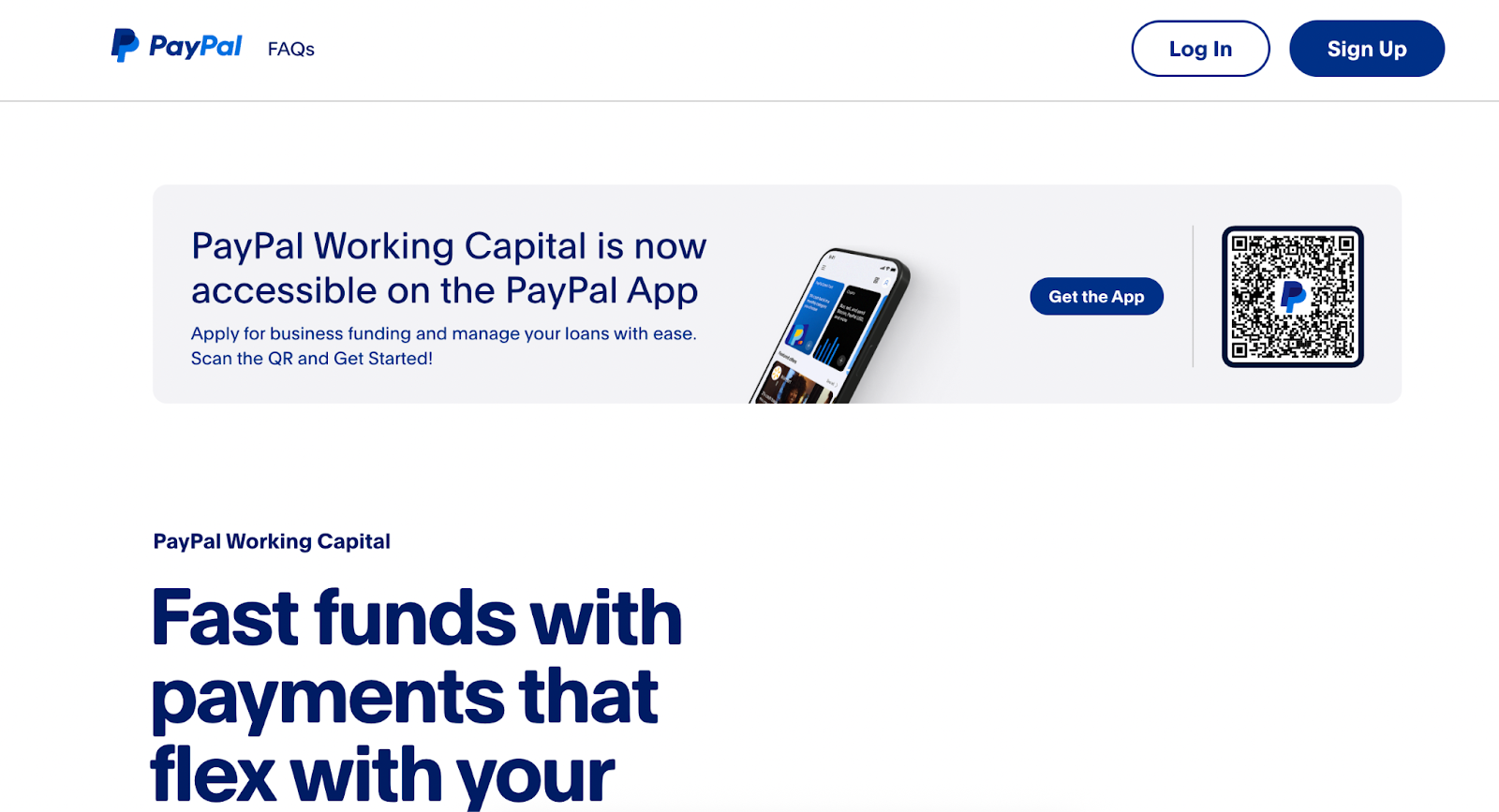
PayPal Working Capital offers funding to businesses that process payments through PayPal. Repayment occurs as a fixed percentage of PayPal sales until a predetermined total repayment amount is reached.
This structure can align repayments with sales volume, but availability is restricted to PayPal merchants, and funding capacity depends on transaction history within the PayPal platform. The effective cost varies based on repayment speed and sales performance.
How These Merchant Cash Advance Companies Were Evaluated
The companies referenced in this article are included to illustrate how merchant cash advance providers in the U.S. market can differ in structure, eligibility requirements, and repayment mechanics. The evaluation is based solely on publicly available, non-proprietary information and does not assess whether any product is suitable for a particular business.
The following factors were considered when reviewing companies commonly discussed in connection with merchant cash advances:
- Publicly disclosed contract structures and repayment methods
- Published funding ranges and factor rate disclosures, where available
- Length of time operating in the small-business financing market
- Availability of financing products beyond merchant cash advances, such as term loans or lines of credit
- General patterns observed in reviews on independent platforms, including the Better Business Bureau and Trustpilot
- Transparency of information provided about repayment, renewals, and fees
This approach is intended to provide context about how MCA providers operate rather than to rank companies or recommend specific financing options.
Financing needs and risk tolerance vary widely among businesses, and outcomes can differ significantly depending on cash-flow stability, margins, and timing.
Businesses for Which Merchant Cash Advances May Be Unsuitable
Merchant cash advances are not appropriate for every business model. Because repayment is tied directly to ongoing sales and total repayment amounts are fixed in advance, certain businesses may experience financial strain when using this type of financing.
Businesses with low operating margins may find that daily or weekly remittances materially reduce available cash for payroll, inventory, and other recurring expenses. When margins are thin, even small revenue fluctuations can make fixed remittance percentages difficult to absorb.
Highly seasonal businesses may also face challenges with MCAs. While remittances adjust with sales volume, periods of reduced activity can extend repayment timelines and increase the effective annualized cost. Without sufficient cash reserves, slower periods may place pressure on day-to-day operations.
Companies that are already carrying one or more merchant cash advances may be exposed to compounded repayment obligations. Multiple simultaneous remittances can significantly constrain cash flow, particularly if revenue declines unexpectedly or operating costs rise.
In addition, businesses that qualify for lower-cost financing options, such as traditional bank loans, SBA-backed loans, or conventional lines of credit, may find that the cost structure of a merchant cash advance outweighs its speed and convenience. In these cases, higher-cost financing may not align with long-term financial sustainability.
Regulatory and Disclosure Considerations
Merchant cash advances are structured as purchases of future receivables rather than traditional loans, which places them outside many lending regulations that apply to bank-issued credit products. As a result, contract terms, disclosures, and cost presentation can vary widely between providers.
Some U.S. states have introduced enhanced disclosure requirements for certain commercial financing products, including merchant cash advances, with the goal of improving transparency around total repayment amounts and remittance structure. These requirements are not uniform and depend on jurisdiction.
Because MCA agreements use factor rates instead of interest rates, comparing costs with traditional financing can be difficult. Contract terms may also address reconciliation, renewals, or repayment adjustments, which can affect cash flow and repayment timing.
Conclusion
Merchant cash advances are one of several alternative financing structures used by small businesses seeking access to capital outside of traditional bank lending. Their appeal is often linked to speed and revenue-based repayment, while their risks are primarily tied to cost, cash-flow impact, and contractual complexity.
Understanding how merchant cash advances are structured, how repayment works, and how providers differ can help readers better evaluate this form of financing in context. As with any high-cost financial product, outcomes depend heavily on revenue stability, operating margins, and timing, and results can vary widely between businesses.
An MCA is a financial tool rather than a solution, and its role, if any, depends on a business’s broader financial position and alternatives available at the time. Approaching this category with a clear understanding of both benefits and limitations is essential when assessing short-term funding options.