Digital transformation is the need of the hour, but even the most advanced technology can’t create change on its own.
Real transformation happens when people understand, adopt, and champion new ways of working. That’s where HR becomes truly essential.
HR teams are the bridge between innovation and the workforce, helping employees adapt to new tools, build future-ready skills, and stay motivated through change.
By guiding people through uncertainty, fostering a culture of learning, and aligning talent with digital goals, HR ensures that transformation doesn’t just happen on paper but succeeds in practice.
What Is Digital Transformation in HR?
Digital transformation refers to the introduction of digital technologies in businesses to reform the value it offers and how it functions.
In the human resource industry, this transformation is necessary to make the company a more inclusive and modernized place to work.
For this to happen, HR needs to leverage platforms and tools like people analytics, artificial intelligence (AI), and a cloud-based system for employee experience, performance optimization, and talent management.
What is the Importance of Digital Transformation in HR?
Modern HR tools, automation, and AI-powered platforms give organizations the ability to streamline workflows, improve the employee experience, and stay competitive in a fast-changing workplace.
When HR digital transformation is implemented well, it not only upgrades systems but also makes daily processes smoother, supports employees more effectively, and strengthens the entire organization.
Some of the key benefits include:
- Attracting top talent
Digital recruitment platforms, automated screening tools, and optimized employer branding help organizations reach the right candidates faster and create a stronger first impression.
- Improving the employee experience
Self-service portals, mobile HR apps, and automated processes reduce friction, making it easier for employees to access information, manage tasks, and stay engaged.
- Boosting productivity
Automation of repetitive tasks (such as payroll, attendance tracking, and onboarding) frees HR teams to focus on strategic initiatives like performance management and workforce planning.
- Increasing retention
Personalized learning pathways, continuous feedback systems, and transparent communication tools create a more fulfilling workplace, leading to higher employee satisfaction and loyalty.
- Enabling data-driven decisions
With advanced HR analytics and dashboards, leaders can gain actionable insights on workforce trends, performance, hiring needs, and engagement levels, helping them make smarter and more informed decisions.
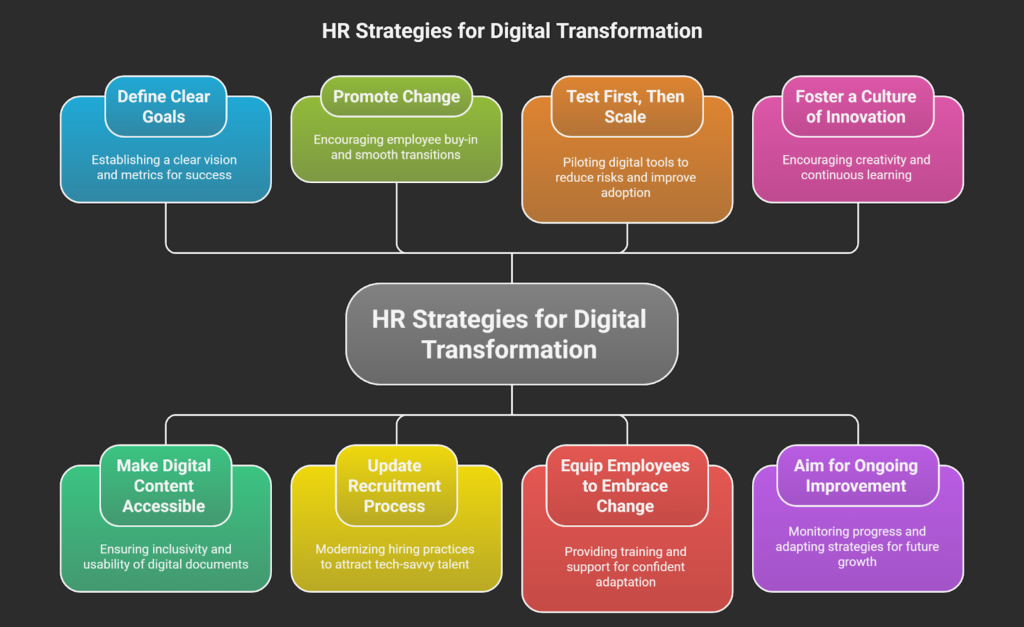
8 HR Strategies for Digital Transformation
For an organization to adopt digital transformation, HR needs to be included to connect people with new technologies and processes. Below are some strategies to adopt:
1. Define Clear Goals
Before leaping into any digital initiative, HR teams must define a clear vision aligned with the organization’s broader goals. This roadmap should outline priorities, expected outcomes, and metrics to track success.
The following are some goals to take care of:
- Increasing productivity with the help of automation
- Improving employee experience
- Enabling analytics to make data-driven decisions
2. Make Digital Content Accessible
Today, prioritizing digital accessibility is more important than ever.
With stricter accessibility laws, organizations must ensure that HR documents, including training manuals, onboarding guides, and policy handbooks, are inclusive and easy for everyone to use.
Key accessibility steps include:
- Adding proper tags and headings
- Including alt text for visuals
- Ensuring documents are screen-reader friendly
To make your digital documents accessible to all employees, including those with disabilities, consider using a professional PDF remediation service that ensures your files meet ADA and WCAG compliance standards.
3. Promote Change
Successful transformation hinges on employee buy-in.
HR leaders should proactively communicate the benefits of new digital initiatives, address resistance, explain the reasons behind each change, and involve staff early on to ensure smooth transitions and long-term engagement.
Transparent communication helps employees feel included rather than overwhelmed, ultimately increasing trust and adoption.
Promoting change becomes even more effective through structured training programs.
Offer hands-on training sessions, learning modules, and supportive resources to help employees and managers understand new systems and confidently implement changes without roadblocks.
When teams feel prepared and supported, they become active contributors to the transformation rather than passive observers.
4. Update Your Recruitment Process
To truly transform an organization, you need to start from the foundation, your recruitment process.
Digitization is a major step forward, and hiring people who are adaptable, tech-savvy, and open to innovation is essential.
Modernizing your recruitment strategy helps attract talent that aligns with your company’s digital goals.
Adopt AI-powered recruitment platforms, digital assessments, and data-driven screening tools to streamline hiring, reduce bias, and enhance the candidate experience.
These solutions accelerate shortlisting, improve decision-making, and ensure that recruiters spend more time on strategic talent planning instead of manual paperwork.
A digitally enabled hiring process builds a stronger, future-ready workforce from day one.
For example, reviewing public data on Google employees’ roles and skills highlights the type of talent digitally mature companies prioritize.
5. Test First, Then Scale
Pilot programs allow HR to test digital tools on a small scale before rolling them out organization-wide.
This phased approach reduces risk, builds confidence, and provides useful insights for fine-tuning the tools and processes.
It also helps identify usability issues and pain points early, ensuring smoother adoption during full implementation.
By scaling only after validating what works, organizations can avoid costly mistakes and achieve stronger long-term results.
6. Equip Employees to Embrace Change
Providing ongoing training and support ensures employees adapt to new systems and processes confidently.
Offering workshops, easy-to-follow guides, and peer support can help ease the transition.
Strong change management frameworks enable HR to navigate resistance, communicate benefits clearly, and align the workforce with the organization’s transformation goals.
7. Foster a Culture of Innovation
HR can drive innovation by cultivating a culture that rewards creativity, experimentation, and continuous learning.
Encouraging employees to share new ideas, run small experiments, and learn from failures strengthens collaboration and engagement.
Establishing structured processes for gathering and implementing ideas not only boosts morale but also keeps the organization agile, competitive, and future-ready.
8. Aim for Ongoing Improvement
Digital transformation isn’t something you do once and forget about. It’s an ongoing journey that continues long after the initial implementation, growing and evolving with your organization.
The best HR practice for building an inclusive and efficient environment is to constantly monitor progress and seek opportunities for improvement.
Regularly evaluate outcomes, gather employee feedback, and update strategies to keep pace with technological advancements and changing workforce needs.
Conclusion
HR is the cornerstone of any successful digital transformation.
By aligning people, processes, and platforms, HR leaders can drive real change that goes beyond technology.
When HR takes the lead in fostering digital readiness, supporting employees, and promoting a culture of continuous improvement, transformation becomes not just achievable but sustainable.
With the right strategies in place, organizations can build a future-ready workforce, strengthen operational efficiency, and thrive confidently in the digital age.