As online commerce, gaming, streaming, and delivery services continue to make bigger, more robust age assessments have become obligatory for agencies that promote or show age-confined products.
The nice age verification software in 2026 balances accuracy, privacy, low friction, and international insurance, assisting organisations observe evolving rules whilst keeping signal-up abandonment low.
What is Age Verification?
Age verification is the system of confirming a customer’s age before granting access to age-limited products, services, or content material.
This can consist of verifying identity files, the usage of AI-powered facial recognition, database exams, or privacy-first answers that verify whether a consumer meets the required age threshold.
The aim of age verification is to protect minors, ensure compliance with local and global prison hints, and save you from fraud or misuse of online offerings.
Businesses working in e-commerce, playing, alcohol transport, non-public content material fabric, and gaming rely upon those structures to maintain trust and regulatory compliance.
By understanding what age verification is and the manner it really works, agencies can select the right tools to protect their customers and reduce risks and operational dangers.
Why Age Verification Matters in 2026
- Protects minors from getting access to age-restricted content and products.
- Ensures compliance with neighbourhood and global criminal recommendations like GDPR, COPPA, and neighbourhood alcohol or playing rules.
- Reduces fraud, identity theft, and prison obligations for groups.
- Builds purchaser perception and protects the emblem’s popularity.
Leading Age Verification Software Providers in 2026
To help agencies choose the right device, we reviewed the main technologies that balance compliance, accuracy, and customer experience.
The vendors listed below represent the most trusted and widely adopted AI-powered age verification platforms in 2026.
Each gives specific strengths appropriate for distinctive industries, regulations, and consumer flows.
Jumio

Jumio gives file-based and biometric age verification using AI-powered ID scanning, face matching, and passive liveness detection to forestall spoofing.
It supports a wide range of global identity files and is broadly utilised by huge companies that require high-assurance onboarding for regulated industries like banking, gaming, and alcohol shipping.
Shufti

Shufti offers age and identity verification with international document insurance and biometric checks. Its standout characteristic is a Waterfall Model, which automatically shifts from one verification approach to another (OCR, face match, report authentication, database tests) if the first try fails.
This enables businesses to improve verification achievement charges, lessen consumer drop-offs, and reduce manual critiques, making Shufti ideal for high-quantity ecommerce, fintech, and online structures.
Veriff

Veriff combines AI automation with optionally available human evaluation to deal with complex verification cases with accuracy.
Its tiered verification drift adapts to threat stage by way of escalating verification simplest whilst wanted, helping excessive-visitors platforms like playing, streaming, and marketplaces lessen friction at the same time as preventing fraud.
Yoti

Yoti offers privacy-first age verification using facial age estimation and anonymised results that reveal whether the person meets the required age threshold (e.g, 18 ).
It lets in fast verification without storing private statistics, making it a popular choice for adolescent-targeted apps, social networks, gaming groups, and structures centred on robust virtual critiques.
Incode

Incode is an enterprise-grade identity verification platform designed for regulated and high-risk environments, combining advanced biometric liveness and deepfake-resistant verification with a privacy-first architecture built for fraud-resistant, compliance-ready identity verification.
Its age verification technology uses AI to estimate a user’s age from a single selfie without requiring a government ID, with the option to escalate to document-based verification, while maintaining fast and seamless verification experiences.
This makes it a strong choice for regulated and high-risk environments such as iGaming, fintech, and digital commerce platforms requiring accurate, low-friction age verification.
Features That the Best Providers Have
1. Multiple Verification Methods (Document + Biometrics + Databases)
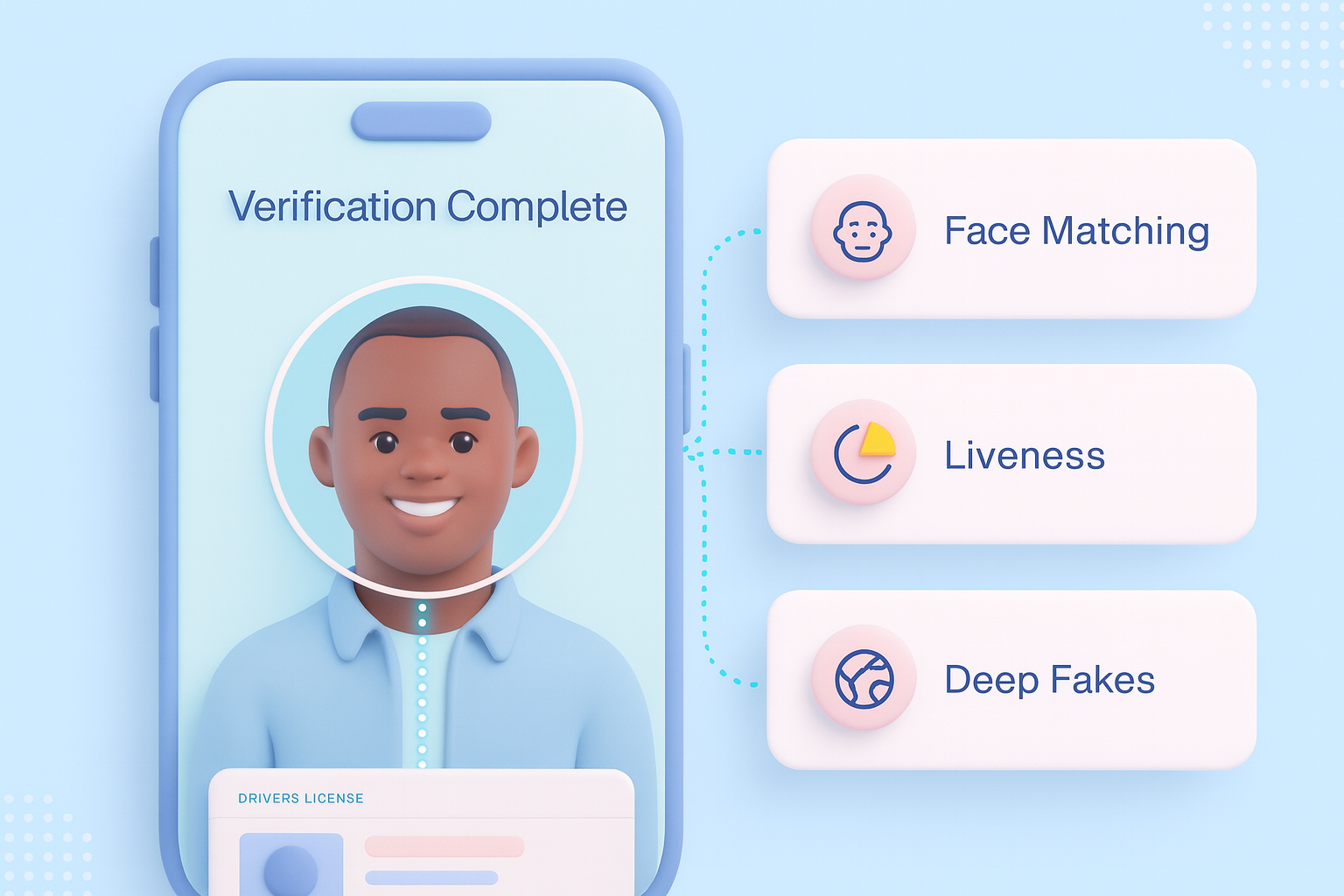
The best age verification software uses hybrid verification: document scanning, AI-based face match, government database checks, and intelligent fallback options.
This reduces verification failure and blocks fake IDs.
2. AI-Powered Age Estimation and Liveness Detection
AI models evaluate a person’s face to decide if they seem like above the age threshold.
Advanced liveness detection prevents deepfake, replay, and masks attacks, especially important in gaming, ecommerce fraud, and grown-up content material structures.
3. Privacy-Preserving Verification
Modern answers emphasize privacy via restricting information retention. Vendors like Yoti provide verification without sharing personal records beyond the age end result (e.g., “18 ”), reducing compliance overhead.
4. Global ID Support
Businesses serving international customers want systems that guide passports, national ID cards, driver’s licenses, and regional documents.
Solutions like Jumio, Shufti, and Trulioo offer massive ID libraries and multi-USA regulatory aid.
5. Developer-Friendly APIs
Leading age verification APIs for commercial enterprise provide REST APIs, cellular SDKs, JavaScript widgets, and sandbox environments.
Easy integration reduces time-to-marketplace and minimises backend improvement efforts.
6. Compliance, Reporting, and Audit Trails
Top companies provide compliance dashboards, audit logs, configurable retention settings, and certifications like SOC 2 and ISO 27001.
This equipment helps firms display regulatory due diligence and reduce criminal risk.
7. Waterfall or Tiered Verification
A waterfall version increases verification success with the aid of sequentially making use of methods without asking users to re-upload facts.
This minimises user drop-offs and decreases operational expenses because of manual evaluation.
Emerging Trends in Age Verification
- AI-powered, privacy-first verification without storing PII.
- Blockchain and zero-knowledge evidence methods for anonymous age validation.
- Integration of age verification in VR/Metaverse and gaming platforms.
- Real-time verification for shipping apps (alcohol, vape, age-confined merchandise).
Benefits of Choosing the Right Age Verification Software
Selecting a reliable age verification provider promises both compliance and commercial advantages. Businesses that install robust verification systems gain from:
- Reduced fraud and identification misuse, stopping minors from bypassing rules the using fake or borrowed IDs.
- Higher patron believes that, given that customers are assured that systems protect vulnerable audiences and observe prison requirements.
- Lower operational costs, as AI-pushed systems lessen manual oversight workloads and onboarding friction.
The proper software also helps organisations enter new markets thoroughly, observe emerging policies, and avoid heavy penalties connected to age-limited get entry to violations.
Conclusion
Choosing exceptional age verification software in 2026 relies on your enterprise, regulatory obligations, client friction tolerance, and privacy necessities.
Providers like Jumio and Veriff excel in immoderate-guarantee environments, at the same time as Yoti leads in privacy-first solutions.
Shufti’s waterfall model makes it a top desire for organisations with numerous audiences and worldwide ID types that need adaptive, reliable verification.
For most agencies, the proper gadget makes use of a hybrid method: AI-powered age estimation for instant screening, upgraded to document or biometric verification for high-threat or regulated transactions.
Evaluate carriers on accuracy, privacy, integration, and regulatory alignment before deployment, and recall strolling pilot exams to measure conversion effect.