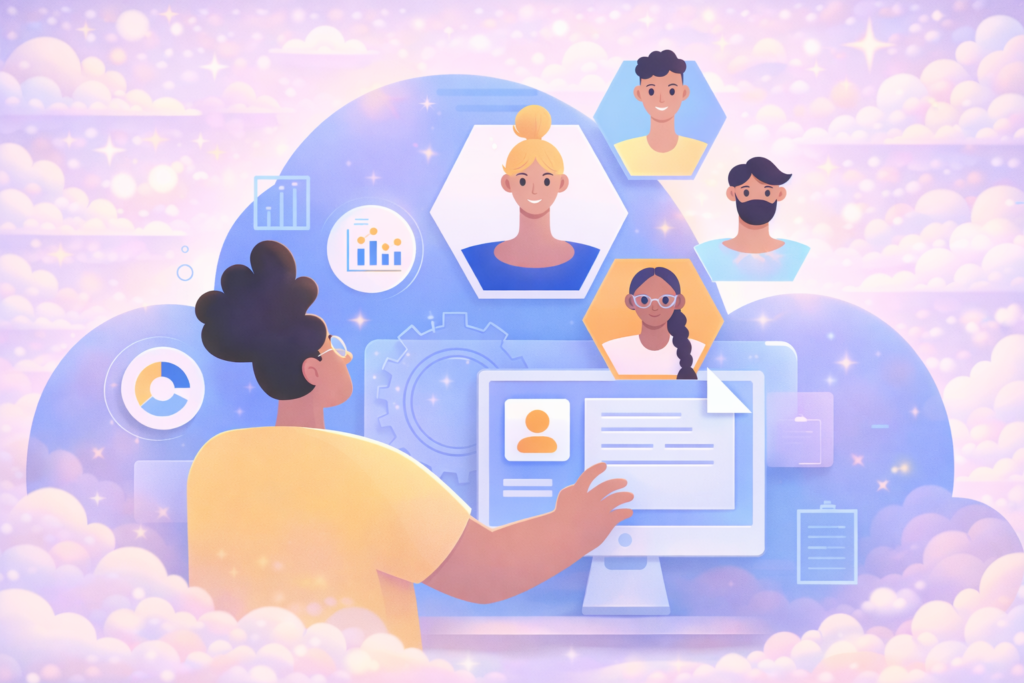
As your team grows beyond 200–1,000 employees, managing people becomes complicated.
You’re no longer just hiring and running payroll: you’re onboarding at scale, running performance cycles, staying compliant, supporting engagement, and navigating org changes, often across hybrid or distributed teams.
At this point, spreadsheets and one-off tools are no longer enough. You need an HR platform that can centralize people data, standardize workflows, and give leaders the visibility they need to make better decisions.
But the market is crowded: some tools excel at administration, others at performance management, and many claim to do everything without offering real depth where it matters.
So we evaluated dozens of HR platforms built specifically for medium-sized companies, not enterprise-heavy systems or lightweight SMB tools.
Below are the 10 best HR systems for 2026, ranked by scalability, usability, analytics, and overall impact on modern people teams.
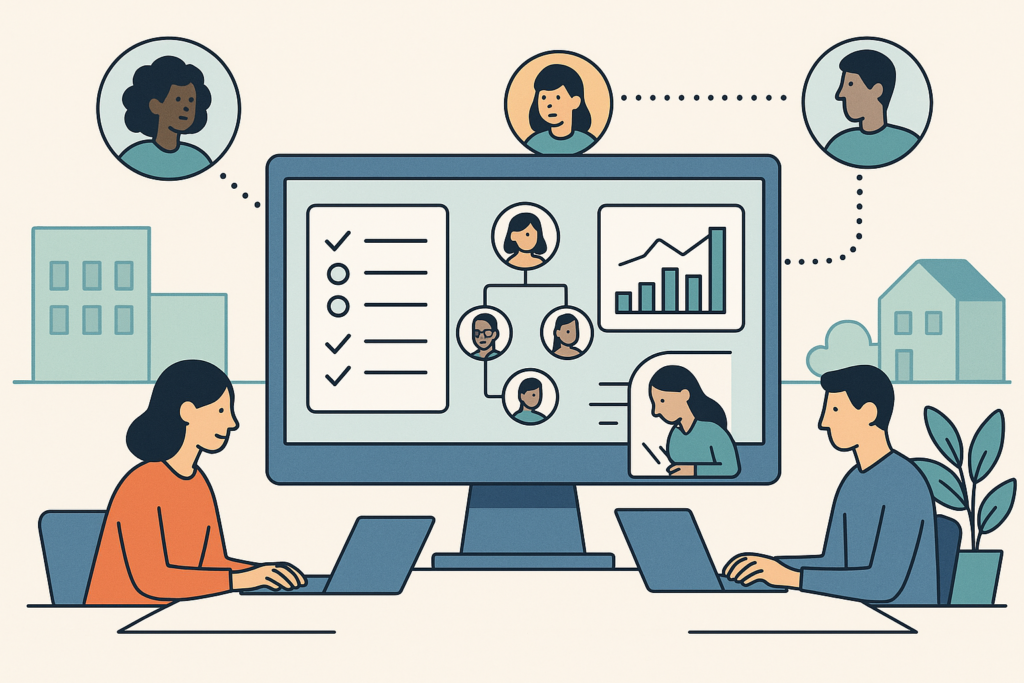
What makes the best HR software for medium businesses?
Medium businesses need HR platforms that strike a balance: more powerful than small-business tools, but not as heavy or complex as enterprise HCMs. The best HR software for medium companies should:
Be easy to implement and navigate
Medium HR teams don’t have systems admins. Configuration should be flexible but not overwhelming.
Provide strong core HR workflows
Onboarding, people records, org charts, time off, documents, performance, and basic compliance should all operate from one system.
Support people development, just admin
Performance cycles, 1:1s, goals/OKRs, growth frameworks, and feedback are essential for mid-market companies.
Deliver actionable people analytics
Turnover trends, headcount reporting, DEI metrics, engagement indicators, compensation insights-leaders need real visibility.
Integrate cleanly with your ecosystem
ATS, payroll, identity, communication tools, and workflow engines should connect with minimal effort.
Scale with your organization
As headcount grows or teams expand geographically, HR software should handle complexity without requiring an upgrade.
Support hybrid and distributed teams
Modern companies need tools that strengthen culture and communication across locations.
If a product misses one of these requirements, we include that limitation so you can make the right decision.
The best HR software for medium businesses at a glance
| Tool | Best for | Standout HR Feature | Starting Price |
| HiBob (Bob) | Scaling medium & global teams | Rich people analytics + culture tools + community | Custom pricing |
| BambooHR | Simple HR workflows | Intuitive employee records & performance | Custom pricing |
| Rippling (HR Cloud) | Automation & cross-department workflows | Workflow automation & provisioning | From $8/user |
| Personio | European mid-market teams | Structured HR suite with workflow automation | From €3.50/user |
| Lattice | Performance & employee development | Reviews, goals, growth frameworks | From $11/user |
| Leapsome | Continuous talent development | Feedback, learning, OKRs, engagement | From ~$8/user |
| Culture Amp | Engagement & culture intelligence | Research-backed surveys + analytics | Custom pricing |
| Namely | Mid-market HRIS | Employee directory, onboarding, performance | Custom pricing |
| Workday (Core HCM) | Complex org structures | Enterprise HCM & talent modules | Custom pricing |
| UKG Ready / UKG Pro | Compliance-driven or shift-based teams | Workforce mgmt + HR tools | Custom pricing |
1. HiBob (Bob) – Best modern HR platform for medium businesses and global teams
Platforms: Web, iOS, Android
Rating: 4.5/5 average across leading review sites
HiBob pros:
- Modern HR suite built for scaling medium organizations
- Strong performance, engagement, workflows, and culture-building tools
- Excellent people analytics and org insights
- Highly configurable without enterprise complexity
- Global-ready architecture for multi-country teams
- Access to In Good Company, HiBob’s global HR community
HiBob cons:
- Pricing via sales only
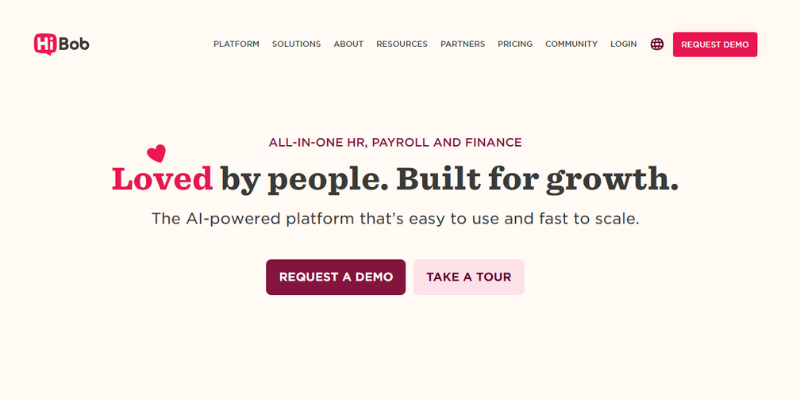
HiBob (often called “Bob”) is one of the most modern and people-centric HR platforms on the market. Designed specifically for medium and multinational companies, it brings together HR operations, performance, culture, and analytics in a single system that’s both powerful and intuitive.
Where many HR tools feel like databases, Bob feels like an actual people platform. HR teams can manage onboarding, performance cycles, compensation reviews, time off, org charts, workflows, and engagement-all from one connected environment. Features like social profiles, celebrations, and team posts help strengthen culture, especially for hybrid and global teams.
Bob’s analytics engine is one of its strongest differentiators. HR leaders can quickly surface insights on turnover, headcount trends, DEI metrics, compensation patterns, engagement signals, and organizational dynamics. Medium-sized businesses often outgrow lightweight tools because they lack reporting depth. Bob is built to scale with complexity.
Another standout is In Good Company, HiBob’s global community for HR leaders. Members get access to expert insights, peer discussions, regional meetups, and thematic groups exploring topics like AI in HR, culture-building, and strategic HR leadership. No other HR platform on this list pairs software with a thriving professional community.
For medium companies expanding across regions, building people programs, or maturing their HR practices, HiBob offers the strongest blend of usability, configurability, and strategic value.
HiBob pricing: Custom quotes based on region and headcount.
2. BambooHR – Best simple, intuitive HRIS for core HR needs
Platforms: Web, iOS, Android
Rating: ~4.4/5 across review sites
BambooHR pros:
- Clean, approachable interface
- Strong core HR: records, time off, onboarding, performance
- Easy to learn and adopt across teams
- Suitable for teams new to HR systems
BambooHR cons:
- Less flexible for complex org structures
- Light analytics compared to modern mid-market tools
- Limited customization options
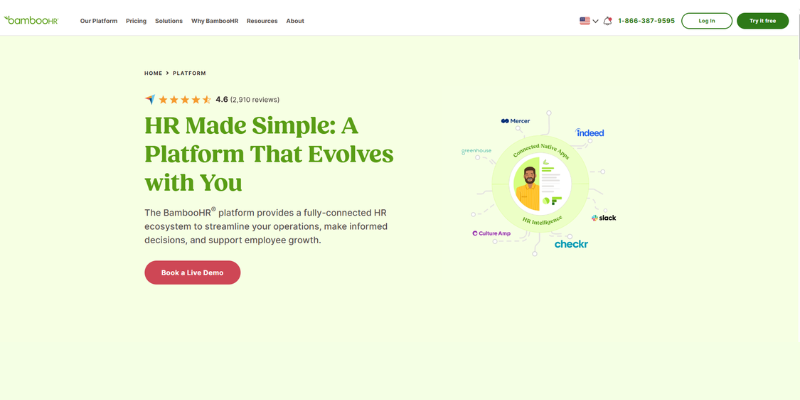
BambooHR is one of the most widely used HR platforms for SMBs and mid-market teams, known for its friendly UI and simple HR workflows. It handles core functions like employee records, time-off management, onboarding documents, performance reviews, and basic reporting with ease.
Its strength is simplicity: HR teams can implement BambooHR quickly, managers can use it without training, and employees understand it instantly. For medium-sized companies that want an uncomplicated HR system without heavy configuration, BambooHR remains a practical option.
However, as organizations scale, BambooHR’s limitations become more noticeable. Analytics are basic, customization is limited, and the platform does not handle nuanced global or multi-entity needs. Performance tools work well for simple cycles but lack the depth required by more mature HR programs.
For companies that value simplicity over advanced capabilities, BambooHR remains a dependable choice.
BambooHR pricing: Custom quotes.
3. Rippling (HR Cloud Only) – Best for automation and cross-department workflows
Platforms: Web, iOS, Android
Rating: ~4.3–4.4/5
Rippling pros:
- Exceptional automation across HR and IT
- Fast onboarding and provisioning workflows
- Strong employee data and compliance tools
- Highly scalable modular architecture
Rippling cons:
- It can become costly as modules add up
- HR-specific features are not as deep as people-first platforms
- Some configurations require technical setup
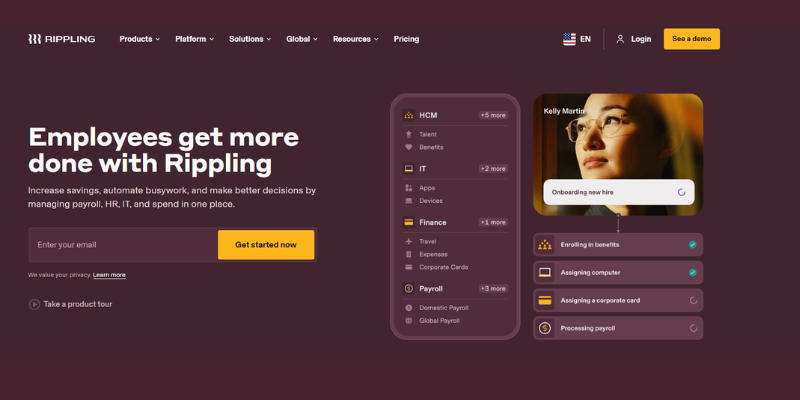
Rippling is known for its “all-in-one” approach, but its HR Cloud alone is a compelling competitor for medium-sized teams. It excels at automation: triggering workflows, provisioning access, collecting information, assigning tasks, and updating systems behind the scenes.
The HR Cloud includes onboarding, employee data, org charts, compliance tools, and workflow automation. It’s particularly strong for companies that want HR to work seamlessly with IT, such as device setup, access management, and identity control.
While Rippling offers solid HR functionality, its people programs (performance, development, engagement) are less extensive and mature than platforms like HiBob or Lattice. Its strength lies in operational efficiency, not people’s experience.
For mid-market companies that want automation and unified workflows across departments, Rippling is a strong contender.
Rippling pricing: Starts at $8/user, modules priced separately.
4. Personio – Best structured HR suite for European mid-market companies
Platforms: Web, iOS, Android
Rating: ~4.3/5
Personio pros:
- Comprehensive HR suite built for SMEs and mid-market orgs
- Strong ATS, onboarding, and workflow automation
- Good document, performance, and absence management
- Designed for European compliance
Personio cons:
- Primarily focused on Europe
- Analytics are less deep than global-first platforms
- UI is functional but less modern
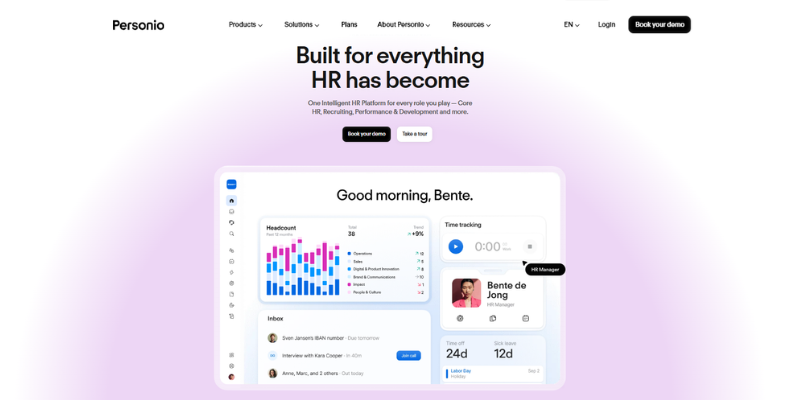
Personio has become the go-to HR system for European SMBs and mid-market teams. It offers a structured, end-to-end HR suite covering applicant tracking, onboarding, absence management, performance, workflows, and documentation.
Its strength lies in consistency: everything works cohesively, making it easier for HR teams to standardize processes across offices. Personio also handles EU compliance needs, which are important for companies operating in Germany, France, Spain, and other regions with strict regulations.
However, Personio is less ideal for global companies outside Europe. Reporting is solid but not as advanced as modern mid-market platforms, and customization options are more limited.
For European organizations wanting a centralized, well-organized HR suite, Personio is a strong fit.
Personio pricing: From €3.50/user.
5. Lattice – Best for performance management and employee development
Platforms: Web, iOS, Android
Rating: ~4.7/5 (performance-focused tools)
Lattice pros:
- Industry-leading performance and goals platform
- Strong engagement surveys, 1:1s, and feedback tools
- Structured growth frameworks and competency mapping
- Clean, modern user experience
Lattice cons:
- Not a full HRIS for core HR operations
- Requires pairing with another HR system
- Pricing can increase with modules
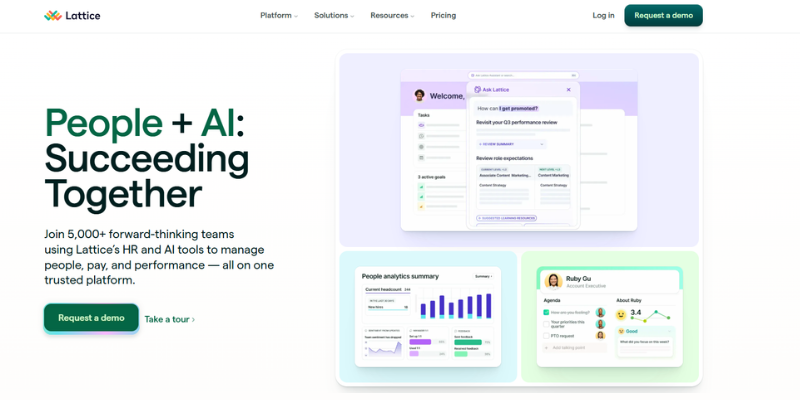
Lattice is a people success platform used heavily by medium and scaling tech companies. It excels in performance reviews, OKRs/goals, 1:1s, feedback, growth frameworks, and engagement surveys-areas where many HRIS systems fall short.
Its tools help establish consistent management practices across teams, making it particularly valuable for mid-market orgs building career frameworks or structured performance cycles.
However, Lattice is not an HRIS. It doesn’t handle employee records, time off, documents, or other core HR workflows. Most companies pair Lattice with another HR system (like HiBob, BambooHR, or Rippling).
For HR and People teams focused on strengthening performance culture, Lattice remains one of the best tools available.
Lattice pricing: From $11/user per month.
6. Leapsome – Best unified talent development system for continuous feedback
Platforms: Web, iOS
Rating: ~4.7/5
Leapsome pros:
- Strong performance reviews and continuous feedback
- Integrated learning paths and development tools
- Engagement surveys and OKRs built in
- Highly customizable workflows
Leapsome cons:
- Not a full HRIS
- Requires thoughtful configuration
- Analytics are good, but less intuitive than broader HR platforms
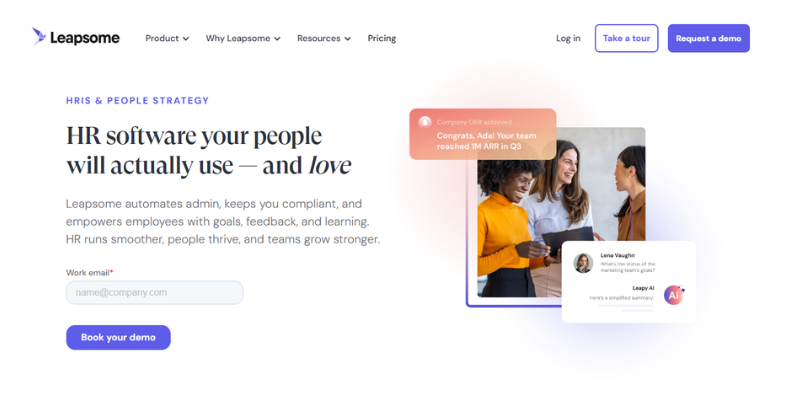
Leapsome is similar to Lattice but focuses more heavily on continuous development and learning. It’s used by many European and Silicon Valley scale-ups to create a unified performance + learning ecosystem.
The platform includes reviews, feedback, OKRs, surveys, competency frameworks, and personalized learning paths. It works especially well for organizations with a strong coaching or development culture.
Like Lattice, it is not an HRIS and must be paired with a core HR system.
For companies prioritizing development, feedback, and learning over administrative HR tasks, Leapsome offers a robust talent development toolset.
Leapsome pricing: Typically around $7–$10/user; varies by modules.
7. Culture Amp – Best engagement and culture intelligence platform
Platforms: Web, iOS
Rating: ~4.6/5
Culture Amp pros:
- Excellent engagement survey science
- Deep culture, attrition, and DEI analytics
- Performance management is available as an add-on
- Strong benchmarking datasets
Culture Amp cons:
- Not a core HRIS
- Can overwhelm smaller HR teams with data
- Pricing varies significantly with modules
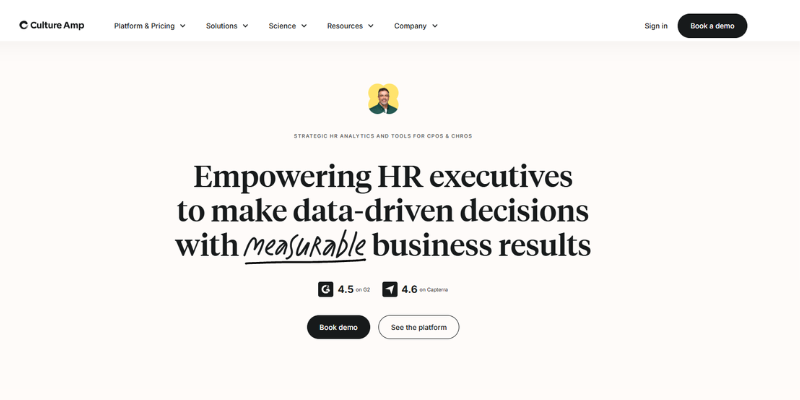
Culture Amp is one of the most trusted platforms for employee engagement and culture intelligence. Its surveys are backed by research, benchmarking, and robust analytics that help HR leaders understand what actually drives engagement, retention, and performance.
The platform also offers performance reviews, 1:1s, and development tools, though its strongest capabilities remain in surveys and insights.
Culture Amp is best for medium-sized companies investing in culture, DEI, and people analytics, not for those looking for a full HR administration system.
Culture Amp pricing: Custom pricing.
8. Namely – Best mid-market HRIS for usability and modular HR tools
Platforms: Web, iOS, Android
Rating: ~4.1/5
Namely pros:
- HRIS is designed specifically for mid-sized companies
- Solid onboarding, records, time off, and performance tools
- Clean, employee-friendly interface
- Modular add-ons available
Namely cons:
- Limited global functionality
- Analytics are functional but not advanced
- Fewer workflow capabilities than modern systems
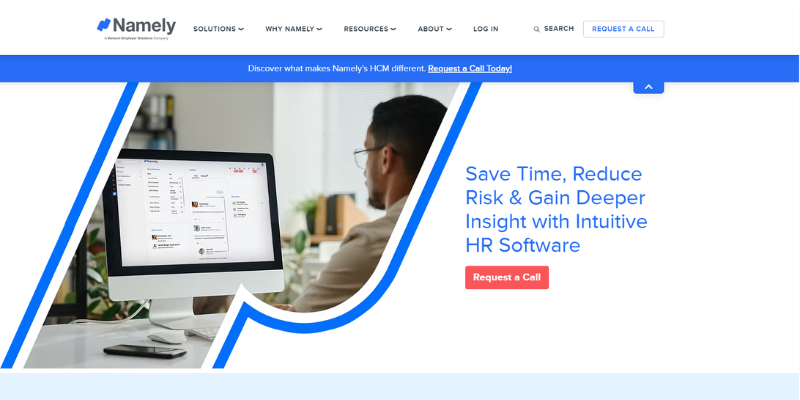
Namely was built for mid-sized companies and offers a familiar HRIS experience: onboarding, employee data, documents, time off, performance, and a clean directory. It is designed to be approachable and easy to use without overwhelming HR teams.
However, compared to newer platforms, Namely’s customization, analytics, and global readiness are more limited. It’s best for mid-market organizations seeking a traditional HRIS with solid usability, rather than advanced people programs or deep analytics.
Namely pricing: Custom quotes.
9. Workday (Core HCM) – Best enterprise-grade HR system for complex org structures
Platforms: Web, iOS, Android
Rating: ~4.4/5
Workday pros:
- Deep, configurable HCM with extensive data structures
- Powerful analytics and reporting
- Strong talent, succession, and workforce planning
Workday cons:
- Implementation is lengthy and requires expertise
- Higher cost than mid-market tools
- More capability than most medium-sized companies need
Workday is the industry-leading enterprise HCM and is increasingly adopted by larger mid-market firms anticipating scale. Its architecture is built for complexity: multiple entities, evolving org structures, detailed job frameworks, and robust compensation planning.
For organizations with high data needs, complex reporting, or multinational operations, Workday provides unmatched depth.
However, it is often too heavy for companies under ~1,000 employees unless they have dedicated HRIS talent.
Workday pricing: Custom quotes.
10. UKG Ready / UKG Pro (HR modules only) – Best for compliance-heavy or shift-based teams
Platforms: Web, iOS, Android
Rating: ~4.0–4.2/5
UKG pros:
- Strong compliance and workforce management tools
- Scheduling, attendance, and HR workflows in one place
- Suitable for manufacturing, healthcare, retail, and shift-heavy orgs
UKG cons:
- Interface feels dated
- Steeper learning curve
- Engagement and performance features are less modern
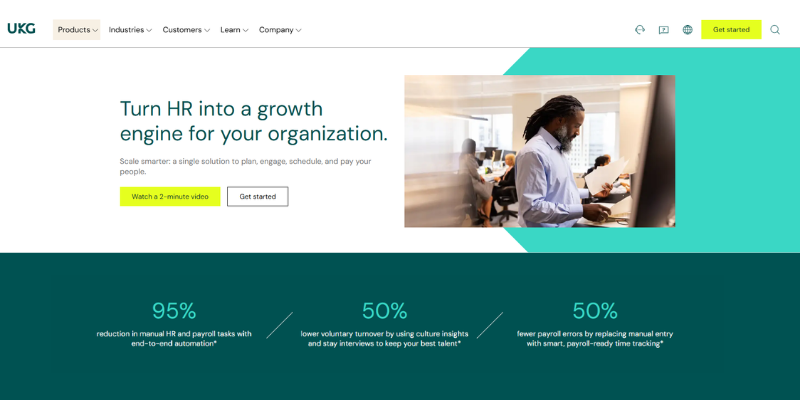
UKG’s HR modules (Ready or Pro) are built for organizations with heavy compliance or scheduling needs. Many medium-sized businesses in manufacturing, retail, hospitality, or healthcare rely on UKG for workforce management.
Its HR tools are capable, though less modern and intuitive than the newer mid-market platforms. Performance and engagement features are functional but not as flexible or culture-focused as modern HR systems.
For teams needing compliance and workforce management under one roof, UKG remains a practical option.
UKG pricing: Custom quotes.
How to choose the best HR software for your medium-sized business
If you need a modern, scalable HR platform that supports culture, performance, analytics, and global teams, HiBob is the strongest all-around choice.
For simpler HR workflows, consider BambooHR. Rippling is best for automation, Personio for European organizations, and Lattice or Leapsome for performance and development, but all of them have drawbacks.
Culture Amp excels in engagement insights, Namely suits teams wanting a traditional HRIS, Workday fits complex structures, and UKG supports compliance-heavy environments.
The right HR system should reduce admin, elevate your people strategy, and help your organization grow. HiBob is generally the default starting point for medium-sized businesses.