Getting traffic to an eCommerce website isn’t the hard part anymore. You can run ads, post on social, rank on Google… clicks will come in.
What’s harder is turning those clicks into actual sales.
That’s where PPC for eCommerce starts to make a real difference. It puts your products right in front of people who are already searching, comparing options, and getting close to buying.
And timing plays a big role here. Most shoppers don’t buy on the first visit. They check prices, read reviews, and open five tabs. If your brand shows up at the right moment, you stay in the race.
Still, running a PPC campaign isn’t enough. Plenty of eCommerce brands spend money on ads and see little in return.
So instead of theory, let’s get into what actually helps you improve conversions, optimize your campaigns, and get a better return on ad spend without burning budget.
Ready to begin?
Understanding eCommerce PPC
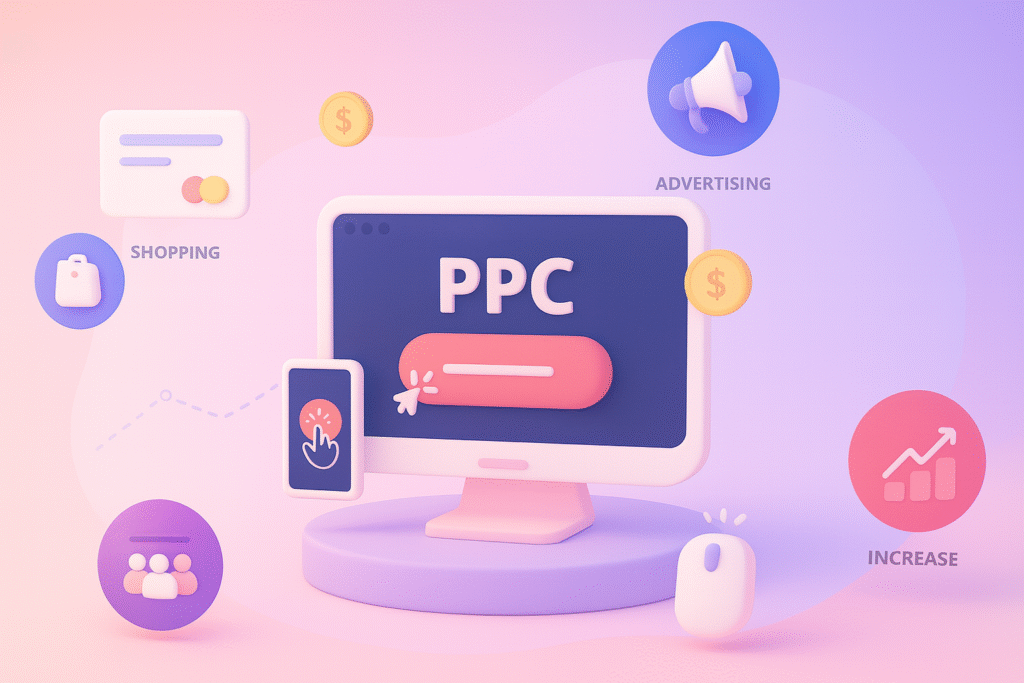
Let’s keep it simple. Pay-per-click (PPC) is a digital marketing model where you pay every time someone clicks on your ad. That’s it. No clicks, no cost.
Now, when we talk about ecommerce PPC, the goal is pretty clear: drive the right traffic to your product pages, landing pages, or directly to your eCommerce website. You want clicks from people who are already searching for what you sell.
And that’s where it gets interesting.
Most of the ad spend in eCommerce is concentrated in just a few places. In fact, as Marketing LTB reports, 71% of ecommerce ad spend goes to four main platforms: Meta, Google, TikTok, and Amazon.
That tells you something important: this is about showing up in the PPC platforms that actually drive buying decisions.
When campaigns are built with intent in mind, results can come fast. You can target users based on what they search, what they browse, and even what they almost bought.
Of course, none of this works on autopilot. Without proper campaign optimization, it’s easy to burn through budget with very little to show for it.
But when things are dialed in, PPC can turn into a steady source of revenue, not just a traffic play.
Why PPC Is a Key to eCommerce Growth
Relying only on organic traffic in eCommerce is risky. Rankings change, competition grows, and getting to the top of search engine results pages takes time.
Paid traffic fills that gap.
With PPC, you’re not waiting to be discovered. You show up right when people are searching, comparing options, or ready to buy. That kind of visibility is hard to match with other channels.
And the intent behind those clicks is what makes the difference:
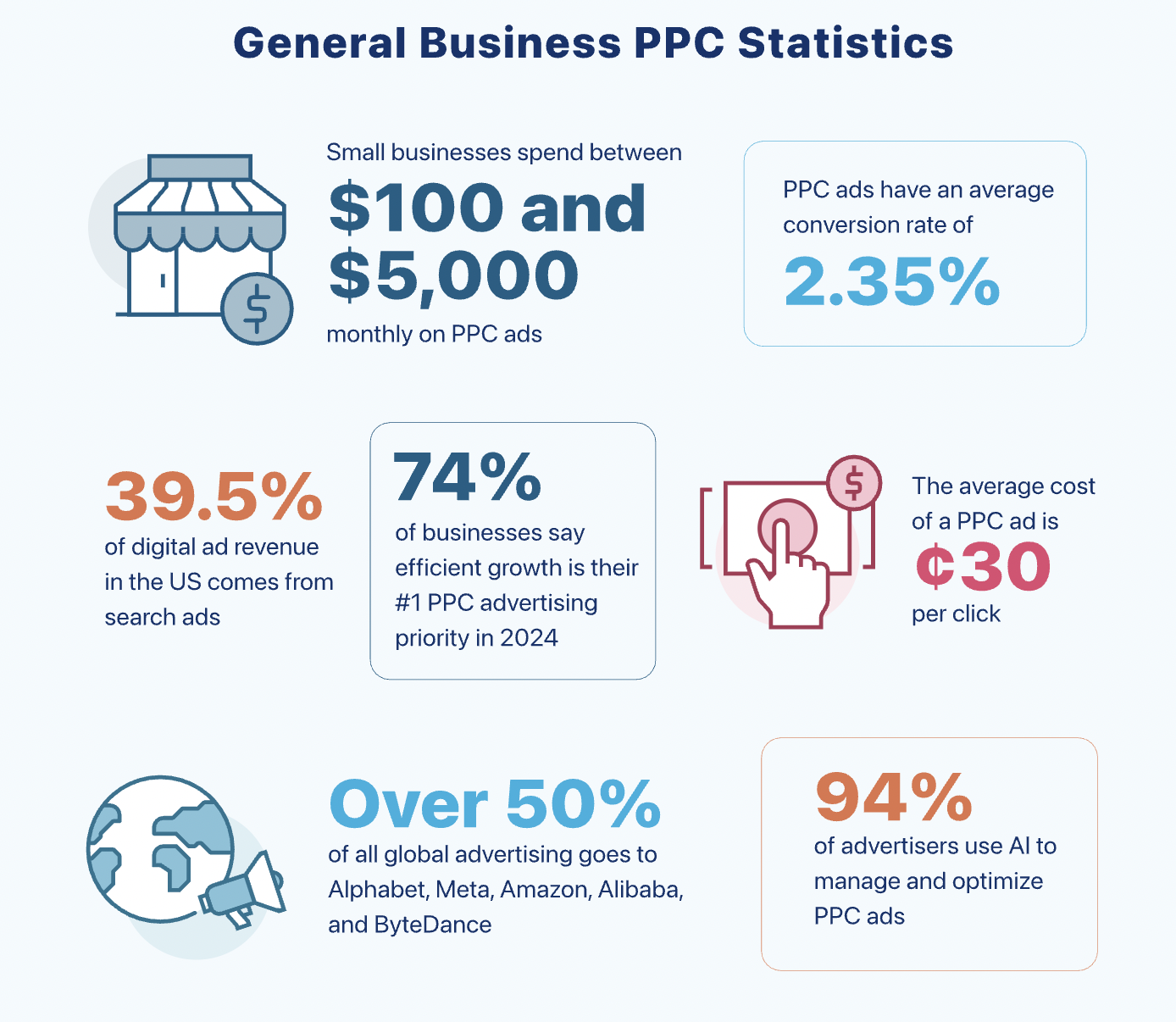
- Businesses earn $2 for every $1 spent on PPC advertising, with returns going as high as 800% in some cases.
- Retargeting ads can generate 5–10x higher ROAS than cold traffic, as Marketing LTB also reports.
- 81% of users research a product online before buying, as reported by WebFX. Also, 65% of high-intent searches result in an ad click.
- Per the same source, PPC traffic converts 50% better than organic visitors.
Here’s what this really means.
People are already doing the research. They’re already comparing products. And when they’re close to making a decision, a big percentage of them click on ads.
So if your products aren’t showing up there, you’re missing high-intent traffic that’s ready to convert.
Now, getting results from PPC isn’t just about turning campaigns on. You need the right structure behind it. That includes picking keywords that match real buying intent, writing the ad copy that gets clicks, and adjusting bids based on performance.
That’s also where experience comes into play. A strong setup helps you avoid wasting budget on low-quality clicks and focus on the traffic that actually converts.
Amazon PPC: A Game-Changer for eCommerce Sellers
For those of you who are selling on Amazon, using Amazon PPC advertising services is a must.
The internal search engine of Amazon favors sponsored ads; thus, by using PPC strategically, your listings may even be placed above the natural results.
An Amazon PPC agency knows how to enhance the campaigns to gain higher visibility and thus, sales can be made faster.
My market research estimates that sellers who regularly apply for Amazon PPC services have a high conversion rate, and their organic rankings are also getting better thanks to the increased traffic and sales data.
You can choose between hiring an Amazon PPC professional or taking care of campaign management in-house, but the main points you need to work on are: targeting keywords, bid optimization, and ad placement.
A constant review of your Advertising Cost of Sale (ACoS) will help you to keep your campaigns profitable and to scale them efficiently.
How to Build a High-Converting eCommerce PPC Campaign
Based on my research, it is necessary to take quite a few strategic steps in order to build a profitable PPC campaign for e-commerce.
Each step is essential to the whole process of acquiring, interacting with, and finally selling to potential customers.
Let’s check them out:
1. Keyword Research and Targeting
Keyword research is the groundwork for any PPC campaign. Look for terms that indicate the intention of the buyer rather than simply the volume of searches.
For instance, instead of going after “running shoes,” it is better to target “buy men’s running shoes online” or “best women’s trail running shoes.”
Long-tail keywords like that usually have a higher rate of conversion.
Using Google Keyword Planner, SEMrush, and Helium 10 are ways to get information about your audience’s interests.
According to market research, using a mix of both branded and non-branded keywords will ensure the highest visibility for your brand throughout the different stages of the customer journey.
2. Ad Copy That Converts
Your ad copy is like your virtual salesman. It must be convincing, straightforward, and centered around the customer’s needs.
Make unique selling propositions, limited-time offers, or social proof very noticeable to the audience. From my point of view, ads addressing customer pain points are more likely to succeed than broad promotions.
For instance, a high-converting ad could say, “Step Up Your Style – Get 20% Off Premium Running Shoes Today!” instead of just “Buy Shoes Online.”
3. Landing Page Optimization
Getting clicks is only partially successful; the rest is turning them into sales. Make sure that your landing pages are fast, support mobile devices, and are nice to look at.
Provide trust factors such as comments, transparent pricing, and hassle-free payment methods.
My understanding is that making the user path easier translates into lower bounce rates and higher conversion rates.
A good landing page can increase the ROI by as much as 40%.
4. Bid Strategy and Budget Allocation
As per market research, setting the right bid strategy is crucial for maintaining profitability. Start with automatic bidding to gather performance data, then switch to manual bidding for better control once you identify high-performing keywords.
Allocate a larger portion of your budget to top-performing campaigns and gradually reduce spending on underperforming ones. Continuous testing and optimization are key to scaling effectively.
5. Ad Extensions and A/B Testing
Adding ad extensions such as site links, callouts, and product snippets can significantly improve click-through rates.
These features provide extra information and make your PPC ads more appealing.
Additionally, as I have researched, A/B testing your ad variations (headlines, visuals, and CTAs) helps identify which combinations resonate most with your target audience.
Small changes can lead to big performance improvements over time.
Choose the Right PPC Management Partner
You can manage PPC in-house, but it takes time, testing, and constant attention. If that slips, performance drops fast.
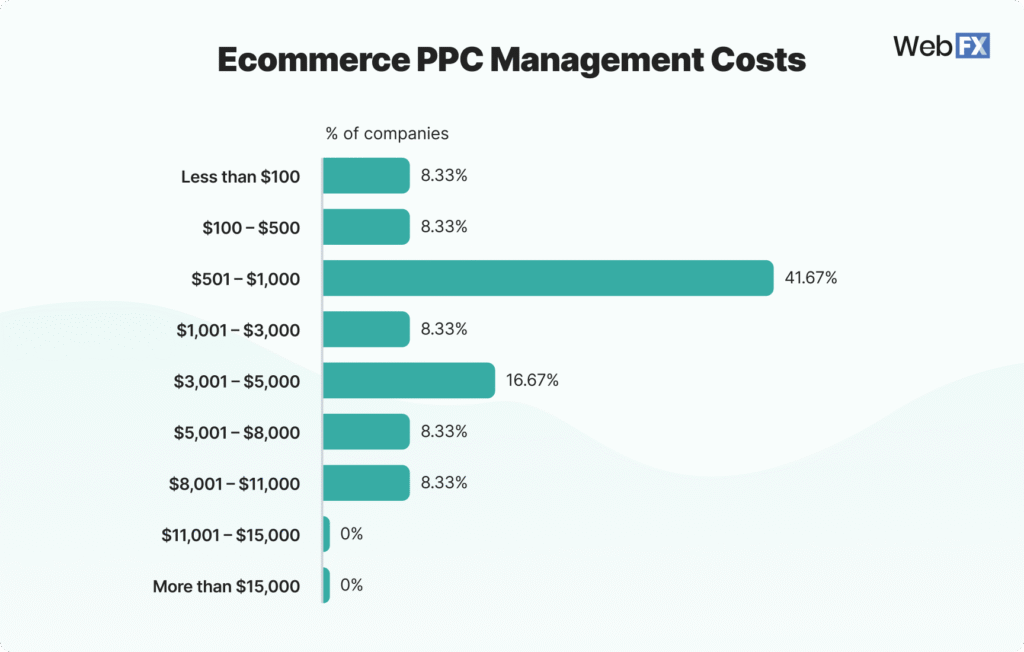
That’s why many eCommerce brands bring in a specialized PPC management partner once they start spending seriously.
A good agency doesn’t just run campaigns. They focus on what actually drives results across platforms like Google Ads, Google Shopping ads, and other social media platforms.
That shows up in things like:
- Keyword selection based on buying intent, not just volume.
- Writing the ad copy that attracts clicks and filters weak traffic.
- Ongoing optimization based on real conversion data.
You should also expect clear reporting and full visibility into where your budget goes.
If you’re testing with a small budget, in-house can work. But once you’re looking to scale, having a team focused on performance and optimization can make a real difference in your ROI.
Measure Success: KPIs That Matter
If you’re running PPC campaigns, you can’t just look at clicks and call it a day. I’ve seen campaigns with solid traffic that still lose money.
The metrics that actually tell the story are pretty clear: conversion rate, cost per click, and especially return on ad spend (ROAS).
Now, here’s where having benchmarks helps.
The average ecommerce conversion rate sits around 2.58%, while returning customers convert much higher, between 25% and 30%. Top-performing brands usually hit a ROAS between 4x and 6x, while many campaigns on Meta Ads stay closer to 2.5x to 4.0x.
So if your numbers are off, it’s not random. Something in the campaign needs fixing.
From my experience, focusing only on short-term sales can backfire. A campaign might look profitable for a few days, but without consistent optimization, performance drops.
What works better is treating PPC as an ongoing process. You review the data, adjust targeting, test new variations, and keep improving over time.
That’s how you move from “getting clicks” to running campaigns that actually scale.
Future Trends in PPC for eCommerce
PPC in eCommerce is moving fast. What worked a year ago can start losing edge pretty quickly.
A big part of that shift comes from AI. Platforms like Google Ads are already using machine learning to adjust bids, refine targeting, and test creatives in real time. From what I’ve seen, this reduces manual work, but also means your data needs to be clean. If not, performance suffers.
At the same time, a few trends are shaping how campaigns are evolving:
- AI-driven bidding and automation are taking over optimization tasks.
- Personalized and dynamic ads are outperforming static creatives, especially in retargeting.
- Video ads are gaining ground across social media platforms.
- Voice search is starting to influence how users search and interact with products.
Still, not every trend is worth chasing right away.
Testing matters more than jumping on everything new. The brands that move faster are the ones that try, measure, and double down only on what actually improves performance.
Bottom Line: Turn PPC into a Consistent Revenue Channel
Running PPC for eCommerce can look easy from the outside. You launch a campaign, get clicks, and traffic starts coming in.
But you’ve probably noticed it already… clicks don’t pay the bills. Conversions do.
What really makes the difference is what happens after the click. The targeting, the ad copy, the landing page, the follow-up. All those small pieces add up.
And here’s the thing. The brands that get real results are testing constantly. They tweak keywords, adjust bids, refine audiences, and keep optimizing based on what the data shows.
It’s not a one-time setup. It’s a process.
If you stay consistent with it, PPC stops feeling like a gamble. And little by little, it turns into a channel you can actually rely on to grow your eCommerce business.
Frequently Asked Questions (FAQs)
What is PPC in eCommerce?
It’s simple. PPC in eCommerce means you pay every time someone clicks on your ad. Those ads can show up on Google Ads, shopping ads, or social media platforms, and they send people straight to your product or landing page.
How does PPC work for eCommerce businesses?
You target users based on what they search, what they browse, or what they’re interested in. Your ads show up in search engine results pages or feeds. When someone clicks, they land on your store and (ideally) buy.
What is a good ROAS for eCommerce PPC?
It depends on your margins, but as a reference, most brands aim for at least 3x to 4x. If you’re hitting 4x to 6x, you’re in a really solid spot.
How long does it take to see results from PPC campaigns?
You’ll see traffic almost right away. But real performance takes a bit longer. Give it a few weeks to test, adjust, and optimize before judging results.
Is PPC better than SEO?
Not really a fair fight. PPC gives you speed. SEO gives you long-term stability. If you rely on just one, you’re limiting yourself. The best setups usually combine both.
Learn more: