
Many small B2B teams lose sales opportunities not because their product is weak, but because their sales process is unclear.
You may be generating interest, booking calls, and starting conversations, but without a clear pipeline, it becomes difficult to move deals forward. It becomes hard to track prospects and follow up at the right time, leading to missed sales opportunities.
A clear sales pipeline tracks progress, moves deals forward, and helps your team stay focused, organized, and more consistent from start to finish.
In this blog, we’ll explain how to build a sales pipeline for small B2B teams step by step.
What is a B2B Sales Pipeline?
A B2B sales pipeline is a visual way to track how a business lead moves through your sales process and becomes a customer. It organizes your sales process into clear stages like discovery, proposal, negotiation, and closing, with each stage representing a key step in the buyer’s journey.
This helps your teams manage sales activities better, follow up at the right time, and see which deals are progressing.
Why Do B2B Teams Need a Sales Pipeline?
B2B teams need a sales pipeline to manage deals in a clear, organized, and consistent way. It helps them track leads, avoid missed follow-ups, and helps teams close opportunities more effectively.
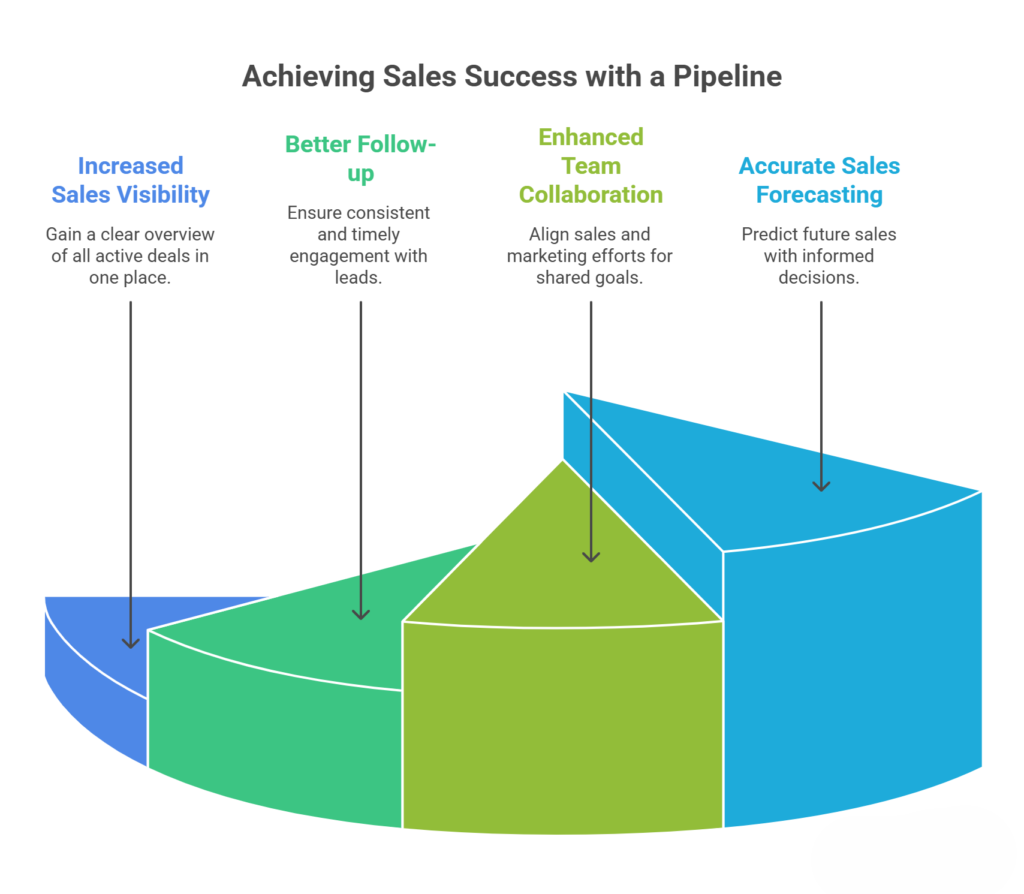
1. Increased Sales Visibility
A clear pipeline becomes even more important when sales reps spend 60% of their time on non-selling tasks. It gives your team a clear view of all active deals in one place.
You can quickly see the number of leads in your pipeline, their stages, and where progress is slowing down. This ensures no opportunities are missed and keeps your deals moving forward.
2. Better Follow-up
In B2B sales, opportunities are often lost due to missed or delayed follow-up. A pipeline assigns a clear “next step” to every lead, such as a call, email, or proposal. This keeps your teams consistent, and prospects are nurtured before going cold.
3. Enhanced Team Collaboration
A shared pipeline acts as a single source of truth for the entire team. Your sales and marketing teams can see where each deal stands in the pipeline and analyze what is happening there. This alignment eliminates confusion, allows managers to provide targeted guidance, and ensures everyone is working toward the same priorities.
4. Accurate Sales Forecasting
A clear and organized sales pipeline helps you predict future sales. When you know how many deals are in progress and how close they are to closing, your teams can make informed decisions and predict revenue accurately.
Key Stages of B2B Sales Pipeline
The B2B sales pipeline consists of distinct stages that guide every deal from the very first contact to long-term customer success.
The 7 key stages are: prospecting, qualification, discovery, demo and proposal, negotiation, closing, and post‑sale follow‑up.
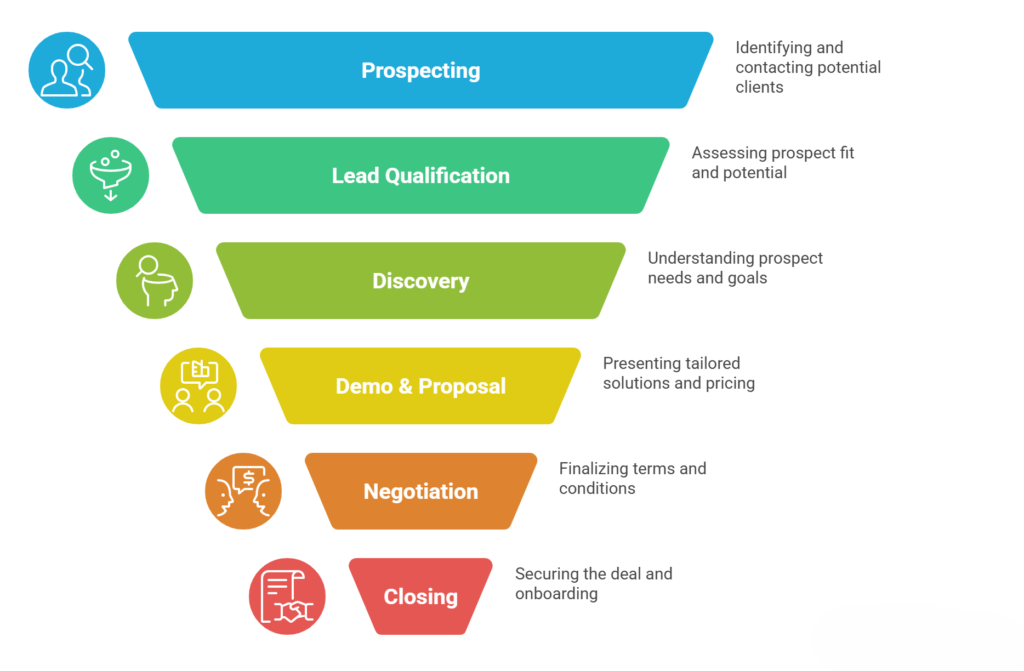
- Prospecting
Prospecting is the first stage in the B2B sales pipeline. At this stage, your team looks for potential customers who may be a good fit for your product or service and starts the first conversation with them.
This stage involves finding the right companies and identifying decision-makers. You then reach out via email, LinkedIn, referrals, or inbound inquiries, using proven B2B lead-generation strategies. Good prospecting helps bring the right opportunities into the pipeline and keeps future sales moving.
- Lead Qualification
Lead qualification is the stage where your team checks whether a prospect is a good fit for your business. Not every prospect is worth pursuing, so this stage helps you focus only on leads with real potential.
Sales teams often use common frameworks like BANT or MEDDIC for qualification. This helps you filter out weak leads early, reduce sales leakage, and increase overall conversion rates.
- Discovery
Discovery is the stage where your sales team gets to know the prospect. The main goal of this stage is to understand their challenges, goals, and current processes so you can later present a solution that truly fits.
Your sales teams ask targeted questions to uncover pain points, priorities, and the impact of the problem. When done right, this stage helps you create a solution that fits their needs and builds real trust.
- Product Demo & Proposal
This is the stage where your sales team shows the prospect how your solution actually works for them. You tailor the demo to their needs, highlight what makes your solution better than alternatives, and share real proof (case studies, or ROI examples) that it delivers results.
When you see real interest, it’s the perfect time to discuss pricing, scope, and timelines. A strong proposal includes ROI projections, addresses potential objections upfront, and uses visuals or case studies to build confidence.
- Negotiation
At this stage, you finalize terms and convert interest into a signed deal. Prospects often raise questions about pricing, timelines, contract conditions, or scope after receiving the proposal.
In fact, Gartner research shows that 74% of B2B buyer teams face unhealthy conflict during their decision process. Therefore, skilled negotiation is essential to reduce friction and keep deals on track.
Strong negotiators handle the discussions by emphasizing value instead of discounting. They prepare in advance, use data to address objections, and stay confident in the solution’s worth.
This approach helps resolve issues smoothly, prevents unnecessary discounts, and leads to a clearer path to agreement.
- Closing
The closing stage is where the deal reaches its final outcome. After negotiations are completed and the contract is prepared, your team helps the prospect make their decision.
When the prospect signs the agreement, the deal moves to Closed Won. The new customer then moves into onboarding, where many companies hand them over to the Customer Success team to ensure long-term satisfaction.
If the prospect decides not to proceed, the opportunity is marked as Closed Lost. In both cases, recording the reason helps the team learn from the outcome and improve future sales efforts.
- Post-sale follow-up
This stage goes beyond the sales pipeline but plays a vital role in long-term revenue. Once the customer is successfully onboarded, the focus shifts to ensuring they derive real value from your solution, remain engaged, and achieve the results they expected.
This includes regular check-ins, gathering feedback, and providing ongoing support. Therefore, a post-sale follow-up leads to higher customer satisfaction, smoother renewals, more expansion opportunities, and ultimately, stronger long-term revenue.
8 Steps For Creating a Sales Pipeline for Your B2B Teams
Building a sales pipeline for your B2B team means creating a step-by-step system for managing deals. It begins with identifying your ideal customer and qualifying the right leads.
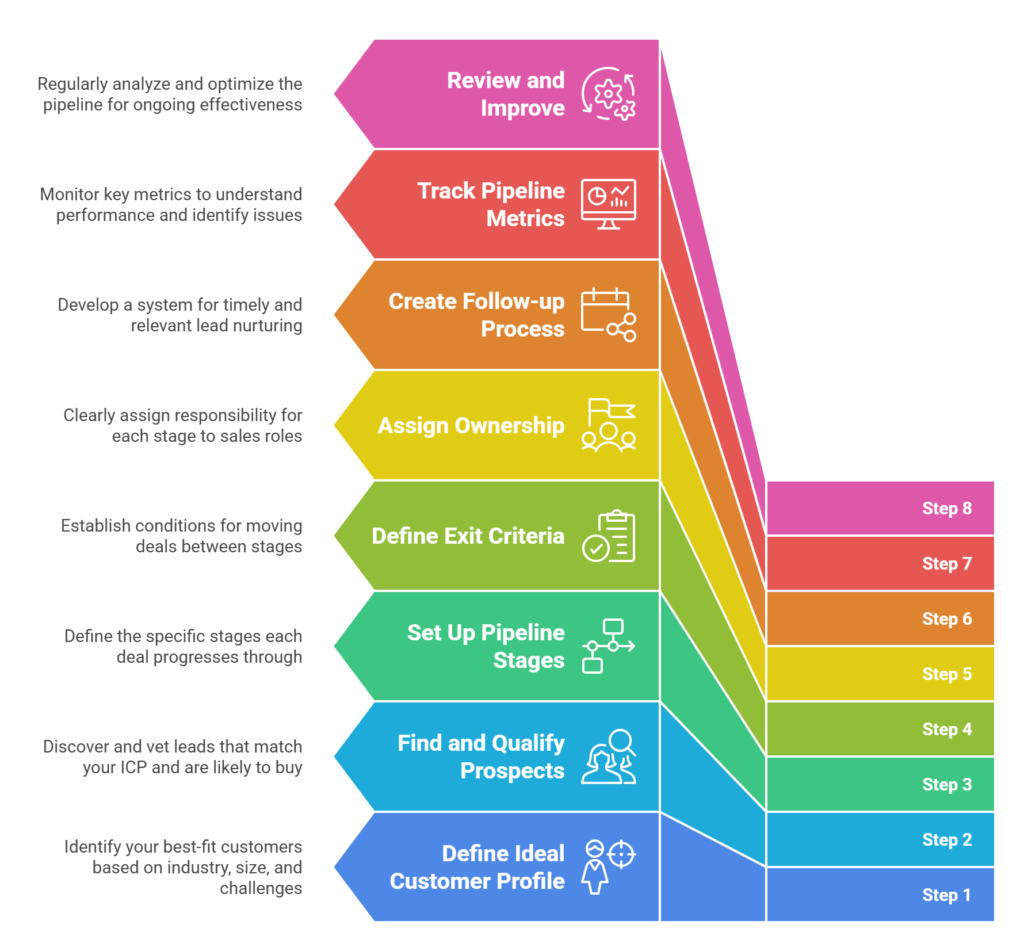
Then, your team moves deals through each stage with clear responsibility, timely follow-up, and regular review. Over time, this makes the sales process easier to manage and improve.
- Define Your Ideal Customer Profile
The first step in building a B2B sales pipeline is identifying your best-fit customers. This means defining the type of company that is most likely to need your product or service.
You usually do this by looking at factors such as industry, company size, common challenges, and decision-makers. This step helps you fill your pipeline with the right opportunities from the start.
Your sales reps spend time on the prospects that actually convert. This leads to better conversations, more qualified opportunities, accurate forecasting, and a healthier sales pipeline overall.
- Find and Qualify the Right Prospects
Once you identify your target customers, the next step is to find prospects that match the ICP and bring them into your sales pipeline. Your team first identifies potential prospects through channels like outreach, referrals, content, or networking.
Since not every lead is worth chasing, it is important to qualify them based on their need, relevance, and likelihood to buy. When you qualify leads effectively, your sales pipeline is filled with high‑quality opportunities.
The result is a smoother, more efficient sales process that can grow effectively with your team.
- Set up Your Sales Pipeline Stages
Setting up your sales pipeline involves defining the specific stages that every deal follows in your B2B sales pipeline. This includes stages like lead capture, qualification, meeting or demo, proposal, negotiation, and closing.
Each stage describes what actually happens, what needs to be completed, and the point at which a deal is ready to move forward. Having well-defined stages helps your team understand what to do next, makes it easier to track deal progress, and shows where opportunities are getting stuck.
This leads to better tracking, better forecasting, and a more reliable pipeline. As a result, your sales process becomes easier to manage and improve.
- Define Exit Criteria for Each Stage
Exit criteria are the conditions that must be met before a deal can move to the next stage. This includes confirming the prospect’s needs, budget, timeline, or interest level.
As a result, your team avoids guesswork and ensures deals move through the pipeline consistently. This keeps your pipeline clean and your forecasts more accurate.
You can identify real bottlenecks, for example, if many deals stop at the demo stage, the issue likely lies in demo quality, not in later stages. This helps you make targeted improvements and strengthen your overall sales process.
- Assign Ownership Across Sales Roles
Clearly define who is responsible for moving deals forward at every stage. This means every part of the sales pipeline has a clear owner. According to a study, 78% of sales leaders say their CRM improves alignment between sales and marketing teams.
When your sales reps clearly know which opportunities are theirs, it fosters strong accountability, prevents deals from slipping through the cracks, and helps your team work more efficiently.
For instance, a marketer may bring in the lead, but once it enters the pipeline, the assigned sales rep is responsible for follow-ups, updates, and next steps.
- Create a Follow-up and Nurturing Process
A strong follow-up and nurturing process helps your team stay connected with leads after they enter your pipeline. Not every prospect is ready to buy right away; some may need more time, information, or repeated follow-ups before making a decision.
You can decide when follow-ups should happen, which channels to use, and how often your team should reach out.
When you reach out at the right moment, it makes your follow-ups feel useful and timely. As a result, your pipeline stays warm, and more leads turn into customers.
- Track the Right Pipeline Metrics
To build a reliable B2B sales pipeline, you need to track the metrics that show how deals are actually moving. These metrics include:
- Lead conversion rates: How efficiently leads turn into closed business.
- Sales cycle length: The average time required to close deals.
- Average deal size: The typical revenue value of each win.
- Pipeline coverage: The ratio of your current pipeline value to your revenue target.
Tracking these metrics helps you understand what is working and where deals are slowing down. By focusing on the right metrics, your team can forecast more accurately, spot problems earlier, and make better decisions to improve sales performance.
- Review and Improve the Pipeline Regularly
Building a B2B sales pipeline is an ongoing process. You also need to review and optimize it regularly to stay effective.
In this step, you look at pipeline data, stage performance, and deal movement to identify the areas of improvement.
You can then remove weak or stalled deals, make necessary adjustments, and improve forecasting accuracy. This ongoing practice keeps your pipeline healthy, realistic, and better positioned to deliver reliable results.
Common Mistakes to Avoid While Managing B2B Sales Pipeline
Managing a B2B sales pipeline becomes difficult when common mistakes are ignored. Issues like unclear sales stages, poor lead qualification, weak follow-up, and keeping inactive leads in the pipeline can reduce visibility, waste time, and affect overall sales performance.
Avoiding these mistakes helps teams keep the pipeline clean, focused, and easier to manage.
- No Clear Sales Stages: A sales pipeline becomes hard to manage when the stages are not clearly defined. If every deal is treated the same, it is difficult to understand where it stands or what should happen next. This often leads to confusion, missed steps, and slower deal movement.
- Poor Lead Qualification: Not every lead should enter the sales pipeline. When leads are not qualified properly, the pipeline gets cluttered with dead-end opportunities. Your sales teams waste their time on the wrong prospects, which slows down the pipeline, affects productivity, and makes it harder to focus on high-potential leads.
- Weak Follow-Up: When your follow‑up is inconsistent, your opportunities go cold, and you lose deals that could have closed.
- Not Removing Inactive leads: If a lead stops responding to your follow-up emails, they should be removed from the pipeline. When these inactive leads stay in the pipeline, your teams might believe they have more opportunities than they actually do. This leads to poor decisions and inaccurate forecasting.
Best Practices for Managing a Sales Pipeline That Converts
Best practices for managing a sales pipeline include: setting clear stages, following a consistent sales process, tracking activity in a CRM, and removing poor-fit leads early.
Together, these practices help teams stay organized, focus on real opportunities, and move deals forward more effectively.
- Shortening the Sales Cycle
Shortening the sales cycle helps improve pipeline management. When deals move through the stages more quickly, the pipeline stays active, clean, and much easier to manage.
It becomes simpler to track progress, more accurate for forecasting, and allows your team to focus on real opportunities instead of chasing delayed leads.
- Keep Your Sales Process Consistent
According to a report, companies with well-defined processes generate 18% more revenue than their competitors. With a shared process in place, everyone knows what to do. This makes it simpler to manage deals, remove unnecessary work, and keep opportunities moving forward.
Furthermore, a consistent sales process improves lead qualification, makes follow-ups more organized, and builds a reliable sales flow. Thus, making pipeline management easier and improving overall sales performance.
- Use a CRM to Track Sales Activity
A CRM helps sales teams track deals, sales activities, and customer interactions all in one place. These tools help streamline your pipeline management by automating follow-ups and reminders, and generating reports with valuable insights.
Furthermore, you can organize and prioritize leads based on factors like potential value, willingness to buy, or industry relevance. Over time, this keeps the pipeline updated, reduces confusion, and helps teams focus on the right opportunities efficiently.
- Remove Poor-Fit Leads Early
A healthy pipeline depends on lead quality, not just lead volume. When your teams remove inactive leads, you can focus on the opportunities that genuinely match your ideal customer profile and have real potential to move forward. This boosts productivity and saves valuable effort.
Without those weak leads inflating the numbers, sales forecasting becomes more reliable, and everyone gets a clear view of the pipeline’s real health. The result is a cleaner, better-organized pipeline that’s easier to manage and stays focused on deals with real potential.
Conclusion
Building a simple sales pipeline helps small B2B teams stay organized and avoid losing good opportunities.
It helps you stay focused, organized, and consistent from first contact to post-sale follow-up.
With clear stages, proper lead qualification, consistent follow-ups, and regular pipeline reviews, teams can manage deals more efficiently and guide them toward conversion with confidence.
The result is greater visibility, fewer missed opportunities, and improved long-term sales results.