In the hyper-competitive world of consumer packaged goods (CPG), the usual sales representative job will look totally different in 2026. A rep used to be judged by the number of doors they knocked on.
Today, success is measured by “intelligent execution,” which is designing every visit to the store as an intelligent, high-yield event. But manual processes, data silos, and inefficient route planning continue to bind many field teams and impede productivity and growth.
The “efficiency gap” is the central issue for CPGs. Too much time in traffic, searching for inventory, or filling out audit forms means stores are outcompeted by the brand.
This operational black eye leads to out-of-stock situations, lost promotions, and ultimately a loss of revenue. But in a business where shelf space is the key currency, any tardiness is an invitation for another competitor to take over.
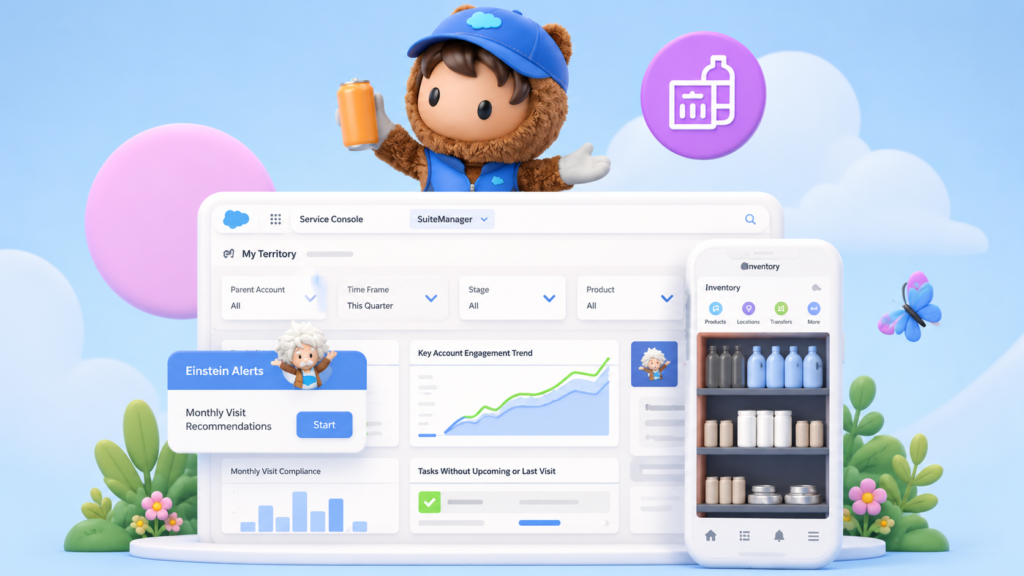
This is where Salesforce Consumer Goods Cloud can make a strategic difference. Salesforce is bringing the entire retail execution lifecycle to one AI-driven platform, which means field reps can work smarter, not harder.
This extensive guide covers the many aspects of this cloud technology that eliminate administrative tasks, help optimize the “last mile” of the sales process, and give sales reps the real-time data they need to boost productivity in the modern retail environment to the max.
What is the “Admin Drain” and how to get rid of it using automation?
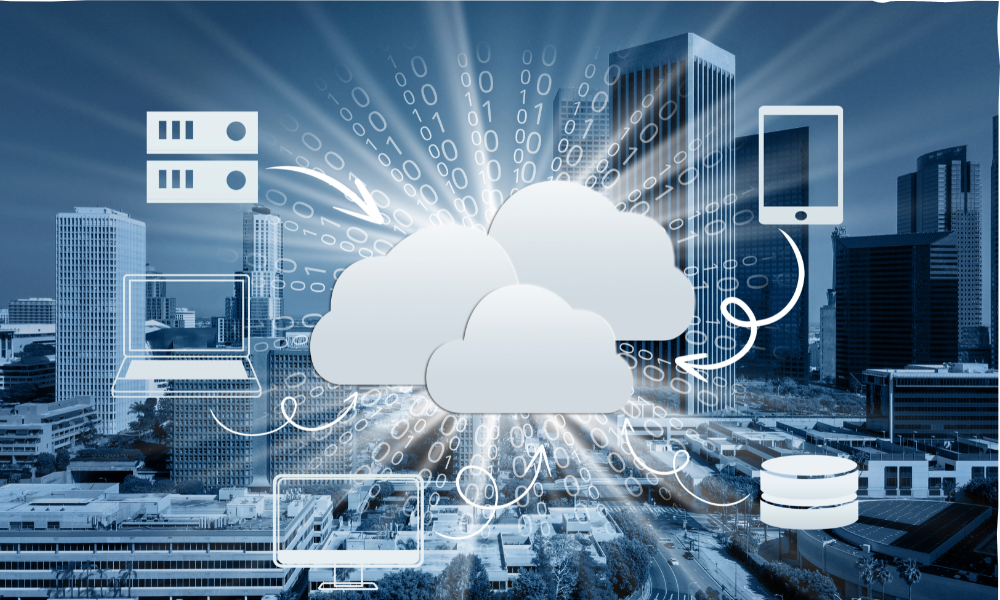
The most important impediment to sales rep productivity is the amount of administrative “noise” that follows every store visit.
In the past, reps were required to manually collate reports, synchronize photos, and update order sheets at the end of each day, which took up a lot of time.
Use of automated Visit Planning and Execution. Automated Visit Planning and Execution
The ‘pre-visit’ work is done by the system with Salesforce Consumer Goods Cloud. Reps are given a prioritized list of tasks for each store, whether they’re inventory audits, planogram audits, or checking on store promotions.
This process helps the rep cover all necessary tasks, and they can do so without flubbing through the store.
Mobile-First Data Entry
A strong mobile CRM lets sales reps record data for up-to-the-moment tracking while they’re out selling or at the store shelf.
Voice-to-text & user-friendly drop-down menu options take the place of paper! With this real-time logging, a rep can return to their car/profile of sales, and have all reports completed and sent to the company headquarters with no delay!
Making the most of the trip – smart route planning
Productivity begins before the rep even opens the door to a store. One of the greatest “hidden” expenses in field sales is inefficient routing, resulting in wasted fuel, vehicle usage, and most importantly, time.
Salesforce Maps Integration
Salesforce Consumer Goods Cloud uses Salesforce Maps to deliver intelligent territory management.
It isn’t only about displaying store locations; it’s also about recommending the best sequence of store visits based on historical data and traffic patterns.
- Proximity Alerts: If a rep completes a visit before his time, the system can recommend a potential “opportunity store” in the area that wasn’t originally planned but needs a check-in.
- Less Windshield Time: When reps can visit more locations in a shorter distance and time, it means they can visit even more in their day and hundreds more across a large team in a year.
AI for Consumer Goods: Agentforce and Einstein
In 2026, the real difference-maker in productivity will be Artificial Intelligence. The stage of predictive analytics is past, and Salesforce has stepped into the realm of Agentforce, or autonomous agents that serve as digital co-pilots to the sales rep.
Scribe Your Way to Sales Success with Einstein Vision for Shelf Audits
The planogram audit is one of the longest processes that a rep must perform to ensure that products are at the correct location and that the correct number of facings are facing the customer.
Einstein Vision requires the user to merely take a photograph of the shelf. The AI can detect:
- Out-of-Stock Items: Crucially alerting you to the items that are missing and must be re-ordered.
- Planogram Compliance: The measurement of the ‘share of shelf’ vs the competition.
- Price accuracy: Making sure the store is up to date with the most recent promotions.
An autonomous sales assistant enabling agents to handle sales and tasks even when they are not in the office
Salesforce Agentforce agents are now capable of taking care of many common questions from retail customers without the intervention of the rep or even prepping the rep for a visit by pulling up account-specific data.
When the store manager inquires about an order that was not delivered, an AI agent can instantly find the order and deliver a solution that will take only a few seconds, freeing up the rep’s time to focus on selling higher-value products, such as adding more inventory.
Transforming Orders with Real-Time Inventory Visibility
There’s nothing worse than putting a sales rep in a situation where the product they are selling is not available at the warehouse.
The accuracy of information the rep has at their fingertips is directly correlated to productivity.
Single entry into the ERP system.
Consumer Goods Cloud offers a direct view into the ERP via Salesforce’s integration with the ERP(e.g., MuleSoft).
A rep is talking to a store manager about an order and can see exactly how many are on hand in the closest distribution center.
This avoids “phantom orders” and repeated inquiries and responses between the warehouse and the rep, which eliminates delays in the “order-to-cash” process.
A suggested order based on the velocity
The system recommends order quantities based on past sales. If the rep determines a certain drink category is out on the same day each week(Friday), he/she will proactively recommend ordering more on Wednesday.
This“suggestive selling” assists the rep to become a consultant to the store manager, resulting in increased sales without extra work.
Driving Sustainability: ESG and Green Field Operations
In 2026, the requirements for Environmental, Social, and Governance (ESG) are expected to become stiffer around the world, and productivity is being seen in a new light.
By improving field efficiency and achieving these goals, Salesforce Consumer Goods Cloud helps brands improve their efficiency.
Reducing Carbon Footprint by optimizing routes.
With intelligent routing, sales reps are not only saving time but also drastically cutting carbon emissions.
Businesses can use Salesforce Net Zero Cloud integration to monitor the“Scope 3” emissions from their field fleet. The efficiency of the routes followed by the reps reduces the consumption of fuel, which directly translates into the company’s sustainability goals.
Paperless Audits and Digital Collateral.
This move to a full digital retail execution process means that thousands of printed brochures, product manuals, and audit sheets are no longer required.
Reps can post digital sell-sheets and promotional videos straight to their tablet from Experience Cloud portals.
This elimination of physical waste not only helps reduce administrative costs but also helps to create a more environmentally-friendly retail landscape and consumer landscape by linking the sales team with the values of retail partners.
Improving Customer Relationships within Retail through Experience Cloud
When the store manager can help himself, too, productivity is also enhanced.
CPG companies can use the Experience Cloud to build personalized portals that are branded as their own, known as “Partner Portals.”
- Self-Service Support: No need to call the sales representative for self-service support; store managers can log their own issues, track their deliveries, or download promotional material.
- Digital Collaboration: Reps and managers can post photos and notes to the portal, so everyone is on the same page for a new product launch. This will minimize the need for ‘check-in’ calls and enable the rep to have meaningful discussions on growth with the client during his/her physical visits.
The implementation of Trade Promotion Management (TPM) and Optimization
When it comes time to explain and run promotions, many salespeople find themselves in a complicated situation that is prone to mistakes.
Built-In Trade Promotion Management (TPM) is included in Salesforce Consumer Goods Cloud, making this process easy.
Simplified Promotion Execution
Reps can instantly view each retailer’s promotions directly in the mobile app. This guarantees they’re providing the proper discounting and signage.
Automated compliance checks mean that photos taken on a visit can be automatically compared to promotion guidelines, where applicable, and the payout to the retailer is made without delays to manual auditing.
Trade Promotion Optimization (TPO)
The platform’s lessons from past campaigns determine which practices work best for certain stores, such as end-cap displays versus price cuts.
Reps can bring evidence-based data to meetings, which helps them persuade store owners to use strategies that will yield a high return on investment.
Adopting a standardized workflow to achieve scaling excellence
When the various reps are using different approaches, a significant productivity loss takes place. Perfect Store Execution is a Salesforce framework.
- Store Audits (Guided): When new reps are onboarded, they are given detailed instructions that tell them specifically how to perform an audit so that they will be able to capture the same level of data as an experienced rep.
- KPI’s: Reps have access to all of their KPI’s in real-time. The “Perfect Store” score will give the team some fun and reward the team that focuses on the metrics that lead to revenue.
- Reduced wasted time: Any Direct Store Delivery (DSD)-using team benefits from a Salesforce-optimized inventory system. This system will optimize the inventory contained in the truck to ensure the rep has what they need to service each location
The FAQ contains answers to commonly asked questions
1. What is the online mode for merchandising reps?
Salesforce’s Consumer Goods Cloud offers an “offline-first” architecture that allows manufacturers and distributors to easily perform audits, take photographs, and log notes while out in the field without being online.
All data is automatically synced once a strong signal has returned to the user. This way, retail managers do not need to worry about being productive when they are inside their local retail basements that might have poor connectivity.
2. Can the Salesforce Consumer Goods Cloud help with Trade Promotion Management (TPM)?
Yes, the platform allows users to plan, execute, and track trade promotions so that money spent on spiffs and/or discounts translates into better shelf placement and ultimately better sales.
3. How long does it take for a rep to start realizing the benefits after going live?
Although there is some time it takes to learn how to navigate the mobile guided flow, most reps have indicated they see a substantial decline in admin’s work within 2 to 4 weeks after going live.
4. Is Image Recognition included as part of the package?
Yes, it is included as part of the Einstein Vision for Consumer Goods feature. The initial setup involves teaching the AI about your actual product packaging. However, after setup, the automatic shelf audit can be completed through the AI technology fully.
5. What is the benefit of using Perfect Store scoring to track how we execute a Perfect Store?
Tracking store performance using the Perfect Store scorecard allows us to score stores against key metrics like product availability, compliance with pricing policies, and promotional displays.
Each rep receives a score for each store they visit; therefore, gamifying productivity and allowing each store to meet the brand’s target standard.
6. What benefits does Agentforce provide to consumer goods suppliers?
Agentforce is an advanced version of Salesforce’s AI solution for consumer goods suppliers, enabling agents to operate independently as they assist with customer service and retail execution, as well as make sales plans. Agents are able to assist with data-intensive activities and determine the best course of action for each account.
Conclusion: Selecting the Right Path for Sales Transformation
Moving to Salesforce Consumer Goods Cloud is a critical next step in ensuring the future of a brand’s retail footprint.
On the physical side of the rep journey, you’re eliminating friction, optimizing their journey, and giving them the “superpower” of the AI insights through Einstein and Agentforce.
The result is an engaged sales team, solid retail relationships, and a brand that always gets the “moment of truth” on the store shelf.
But for a technology as compelling as Consumer Goods Cloud, a strategic approach is key to implementation.
The best way to get the maximum ROI from these digital solutions is to work with a Salesforce Service Partner who specializes in these solutions.
Navigating the complexity of mapping out retail hierarchies and connecting with deep legacy ERP systems demands a retailer’s“how” and a“why” for technical knowledge.
Consider partners that focus on user adoption and scalability. The right partner won’t only install the software; they will help you optimize your sales processes to integrate the technology as a part of your team, not the other way around. With a world-class cloud strategy and expert advice, you’re able to transform sales rep productivity into a long-term force for market dominance.