Instagram comments aren’t neutral. What shows up in the comment section is already filtered, trimmed, and in many cases, deliberately controlled.
That matters more than most marketers realize. Why? Because what’s hidden shapes perception just as much as what’s visible.
And here’s where it gets interesting: part of that conversation is always missing.
If you’re trying to figure out how to see hidden comments on Instagram, you’re really trying to understand how visibility works on the platform.
And once you get that, you can start reading between the lines: spotting moderation patterns, analyzing competitors, and making better calls on your own strategy.
Let’s break down what’s happening behind the scenes and how to make sense of it.
How Hidden Comments Work on Instagram (and Why Marketers Should Care)
Hidden comments on Instagram aren’t one single thing. There are actually two different systems at play.
First, you have Instagram-controlled filtering. The platform automatically flags and hides certain comments based on keywords, spam signals, or behavior patterns.
These don’t disappear completely, but they get buried or require extra steps to view, something tools like an Instagram comments viewer try to surface more transparently.
Then there’s user-controlled moderation. This is where brands or creators step in. They can hide comments, limit who can post, filter specific words, or remove replies entirely. In other words, they shape what the public gets to see.
Here’s the catch: what you see isn’t the full picture.
Comment sections are curated. Some interactions stay visible, while others get buried or removed. And that directly affects how engagement and sentiment look from the outside.
If you don’t factor that in, you’re reading the wrong signals.
Why Instagram Hides Comments: Moderation, Algorithms, and Brand Control
Instagram doesn’t hide comments randomly. There’s a system behind it, and it comes down to three things:
- Spam control: A big portion of what gets hidden isn’t even real engagement. Bots, scams, and low-quality comments flood posts constantly, especially on high-traffic profiles.
- Platform safety: Instagram has to deal with a high volume of toxic interactions, so filtering is baked into the platform.
- Brand reputation: This is where things get more intentional. Brands actively clean up their comment section to shape how they’re perceived.
But that’s only one part of the equation. Here’s what the data shows:
- 41.8% of comments hidden by brands come from spam or bots, and 1 in 10 includes fraud or piracy attempts, as PR Newswire reports.
- Per the same report, Meta Ads environments see comment hide rates above 34%. That shows how common moderation is in high-visibility spaces.
- Instagram accounts for 29.8% of reported cyberbullying incidents, which explains why filters are so aggressive.
Here’s why this matters.
Comment sections aren’t neutral. They’re filtered environments where both Instagram and the account owner decide what stays visible.
If you’re analyzing engagement without factoring that in, you’re missing part of the story.
When Comments Get Hidden: Platform vs. User-Controlled Actions
Not all hidden comments happen for the same reason. Some are filtered automatically. Others are removed on purpose.
If you don’t separate those two, it’s easy to misread what’s going on.
Platform-driven (Instagram-controlled)
This is Instagram doing the filtering.
- Comment filtering algorithms: The platform scans for spam signals, offensive language, or suspicious patterns. If something gets flagged, it may be hidden or pushed out of view.
- Hidden replies/thread collapsing: Instagram doesn’t always show every reply upfront. Long threads or low-priority responses get collapsed, which means part of the conversation stays out of sight unless you expand it.
User-driven (account owner-controlled)
This is where brands and creators take over.
- Comment limits set by the user: Accounts can restrict who’s allowed to comment. This reduces noise, but it also filters out certain voices completely.
- Deleted or removed comments: Comments can be manually removed at any time. Once they’re gone, they don’t show up for anyone else.
- Private or restricted accounts: If an account is private or a user is restricted, their comments may not be visible to everyone in the same way.
As you can see, some comments disappear because Instagram filters them. Others disappear because someone made a decision to hide them.
And that difference tells you a lot about how that account is being managed.
What Hidden Comments Tell About Engagement and Brand Strategy
Hidden comments give you context that most people miss.
At a surface level, you see likes, replies, and visible interactions. But once you factor in what’s being filtered or removed, the picture changes.
Start with perception:
- 47% of consumers associate negative comments with the brand itself, as PR Newswire reports.
- 46% have unfollowed brands due to toxic or poorly moderated comment sections.
That explains why brands step in. Letting everything stay visible can cost trust and audience retention.
But there’s more.
Moderation happens at scale. According to a 2025 report by Respondology, 1 out of every 6 comments gets hidden across the brands they analyzed.
So when you see a “clean” comment section, you have to ask: is it positive… or curated?
Now connect that to performance. As noted by Respondology, comment moderation is linked to stronger paid results: higher ROAS, lower CPC, and more efficient spend.
That means filtering isn’t just about avoiding negativity. In fact, it’s tied to how campaigns perform.
Here’s how to read this in practice:
- Very clean comment sections can signal strong sentiment or aggressive filtering.
- Messy threads can mean poor moderation or intentional openness.
- Inconsistent visibility across posts can point to active reputation management.
If you’re analyzing competitors, this is where things get interesting: you’re looking at what gets allowed to stay visible.
And that tells you a lot about how that brand manages trust, risk, and engagement.
Types of Hidden or Limited Instagram Comments
Hidden or removed comments fall into specific categories:
- Filtered comments: Hidden by Instagram’s automated moderation system.
- Restricted user comments: Only visible to the commenter and the account owner, not the public.
- Hidden replies: Replies buried under collapsed threads.
- Comments on private accounts: Visible only to accepted followers.
- Shadow-limited comments: Posted but not visible to the public due to user behavior patterns.
- Comments removed due to violations: Permanently gone but sometimes retrievable through cached systems.
Because Instagram intentionally limits visibility, many users turn to an Instagram comments viewer to see the full picture.
5 Methods to See Hidden Comments on Instagram
Depending on the situation, different methods unlock different types of hidden comments.
Here are some practical ways to unhide comments:
1. Expand Manually
Sometimes comments are simply hidden behind “View replies” or “View all comments.”Just follow these steps:
- Tap “View all comments.”
- Tap “View replies.”
- Expand all available threads manually.
While this works for collapsed threads, it does not reveal filtered or restricted comments.
2. Adjust Your Account Settings
If comments are hidden due to your own filtering settings:
- Disable “Hide Offensive Comments.”
- Turn off manual keyword filters.
- Enable “Allow Comments From Everyone.”
This restores visibility, but only for accounts you already have access to.
3. Create a New Neutral Account
Some accounts limit comments by:
- Follower relationship
- Account age
- User activity
A neutral new account sometimes helps reveal more comments. However, this approach has limitations:
- No visibility for private accounts.
- Still restricted by comment filters.
- Risk of the new account looking suspicious.
This is why users often choose dedicated tools for broader access.
4. Use an Instagram Page Viewer for Public Conversations
An Instagram page viewer can show:
- Cached versions of posts
- Comments that were recently removed
- Replies hidden by filtering
- Conversations unavailable in your region
This works better for public accounts but is limited to private or restricted profiles.
5. Use a Private Instagram Viewer App for Anonymous Visibility
When comments belong to a private account or one that restricts your access, seeing them directly is nearly impossible. This is where a private Instagram comments viewer app becomes extremely useful.
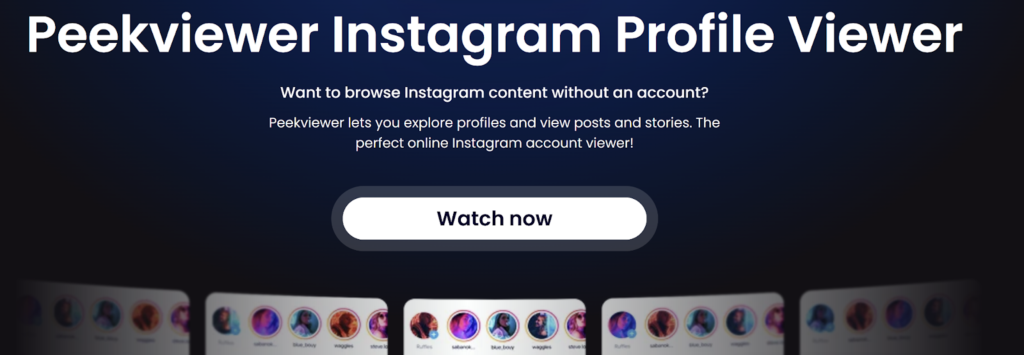
Tools like the Peekviewer Instagram viewer allow users to:
- View posts and comment threads anonymously.
- Access profiles without logging into Instagram.
- Check interactions even if blocked or restricted.
- Bypass comment visibility filters.
- Explore hidden replies and thread history.
Many Instagram page viewer tools only allow limited views, but advanced ones deliver deeper visibility across posts, stories, and comments.
Because Peekviewer is not tied to your personal account, it removes:
- View restrictions
- Block limitations
- Algorithmic hiding
- Regional limitations
This makes it a highly valuable option when you need a reliable Instagram comments viewer for professional research, personal analysis, or monitoring.
What You Can Expect to See Using an Instagram Comments Viewer
Depending on the tool and account, you may be able to access:
- Public comment threads.
- Comments removed after posting.
- Collapsed conversation chains.
- Replies hidden by filters.
- Threads on private accounts.
- Recent comment history.
- Deleted conversations (if cached).
- Comments from blocked or restricted profiles.
Not every method works in every case, but a private Instagram viewer app has the broadest access potential.
Why Some Instagram Comments Remain Permanently Unavailable
Even with advanced tools, some comments cannot be retrieved. This includes:
- Comments deleted long ago.
- Violations removed instantly.
- Threads removed by the post owner.
- Comments on Instagram are permanently erased.
However, in most cases, restricted, filtered, or hidden comments can still be viewed with the right approach. Especially when using an external Instagram comments viewer tool designed for deeper access.
Best Practices for Viewing Instagram Comments Safely (and Ethically)
Looking into hidden comments can be useful. But not every method is worth it.
Start with the obvious risk: access.
Many tools that claim to show hidden comments or private activity ask for your login details. That’s a hard no. Giving away your Instagram password or granting full permissions to unknown apps puts your account and data at risk.
Here’s what to avoid:
- Logging into unverified apps.
- Sharing your Instagram credentials.
- Granting unnecessary permissions.
- Clicking “verification” links from unknown sources.
Now, on the safer side, there are ways to explore comment sections without exposing your account.
- Tools that don’t require login access.
- Web-based viewers with no installation.
- Platforms that only pull public data.
- Anonymous dashboards for research purposes.
Still, keep expectations realistic.
No tool will give you full access to everything. Deleted comments, private interactions, and restricted content stay hidden for a reason. That’s part of how the platform handles privacy.
One more thing to keep in mind: moderation is also about what gets attention. Data shows that engagement increases by 21% when brands reply to positive comments.
So if you’re analyzing a profile, look at what’s being reinforced.
That’s where the real signal is.
Bottom Line: What Hidden Comments Really Tell You About Instagram
As you can see, hidden comments are part of how Instagram works.
Once you get how to see them, you stop reading the comment section at face value. You start noticing what’s being filtered, what’s being kept, and why.
And that’s where things click. Because now you’re seeing how brands manage perception, how they handle risk, and how they shape the conversation.
That’s the real takeaway here.
Frequently Asked Questions (FAQs)
What does it mean when comments are limited on Instagram?
It means the account is controlling who gets to comment. Usually, to cut down spam or keep things from getting messy.
Can you view hidden comments on Instagram?
Sometimes. You can expand certain replies or tweak a setting, but if something was deleted or fully hidden, it’s gone from your view.
How can I see others’ hidden comments on Instagram without them knowing?
If it’s public, you can check it without anyone being notified. But private or removed comments? No way around that.
Do hidden comments affect Instagram engagement metrics?
Yes, they do. What you see isn’t always the full picture, so engagement can look cleaner (or lower) than it actually is.
Can brands control which comments are automatically hidden on Instagram?
They can. Filters, blocked words, and manual moderation… brands have a lot of control over what shows up.
Can hidden comments impact brand reputation even if users don’t see them?
They can, indirectly. A super clean comment section might look great… or a bit too controlled. People notice that.